


Researchers at Stanford University have used artificial intelligence to design and build 16 new bacteriophages, viruses that infect bacteria, with enhanced abilities to infect, replicate, destroy their hosts, and evolve. Despite this particular study’s constraints, the technology should concern us: AI can now rapidly design functional viral genomes containing dozens to hundreds of genetic changes, potentially accelerating virus engineering far beyond conventional methods.
This represents a dangerous new frontier for gain-of-function research. AI-assisted genome design could make the engineering and enhancement of viruses dramatically faster and more sophisticated. It is not a leap to anticipate the application of this technology to to human pathogens. After the enormous consequences of dangerous GoF research in recent years—and the genetic injection assault that followed—we cannot afford to allow this technology to advance.
I would like to thank my friend and colleague Nic Hulscher for bringing this recent study to our attention. Please share this alert. We urgently need public attention and scrutiny on this research.
If our work resonates with you and you value independent medical investigation, informed consent, and health sovereignty, please consider supporting our ongoing work at DrTrozzi.news.
d

AI Was Used To Create Functional Viruses
The researchers at Stanford University used artificial intelligence to design new versions of PhiX174, a naturally occurring bacteriophage that infects E. coli bacteria. Bacteriophages are viruses that attack bacteria rather than human cells, and in this experiment, the researchers successfully built 16 new phages designed using AI.
These were not merely simulations or theoretical genetic sequences. The resulting viruses functioned biologically: they infected their bacterial hosts, replicated, and killed them. Their genomes contained extensive modifications compared with the natural PhiX174 virus, involving dozens to hundreds of genetic changes.
Some Designs Outperformed Natural Phages
Several of the AI-designed viruses displayed enhanced characteristics. Some replicated substantially faster than comparable natural phages, while others were more effective at killing E. coli. Used together, the newly designed viruses were also able to overcome defenses developed by their bacterial targets.
Importantly, their evolution did not stop when the original genomes were constructed. Once the viruses were replicating in a live setting, they could continue to mutate and evolve, generating new variants. This introduces an additional layer of unpredictability: artificially designed viruses introduced into biological systems may not remain exactly as they were originally designed.
AI Could Transform Virus Engineering
Scientists have already been conducting gain-of-function research. What changes here is the extraordinary speed and sophistication that artificial intelligence brings to the process. AI can explore enormous numbers of genetic possibilities and propose combinations of changes that would be extremely difficult for human researchers to design individually.
To put things into perspective, it took decades of technological development before engineered pathogens could be unleashed on the public. In the case of COVID they were followed by the mass deployment of dangerous mRNA genetic injections, which only made the problem worse. This was even more disturbing when we discovered the military funding behind these apparently “medical” developments. AI could compress previous timelines enormously.
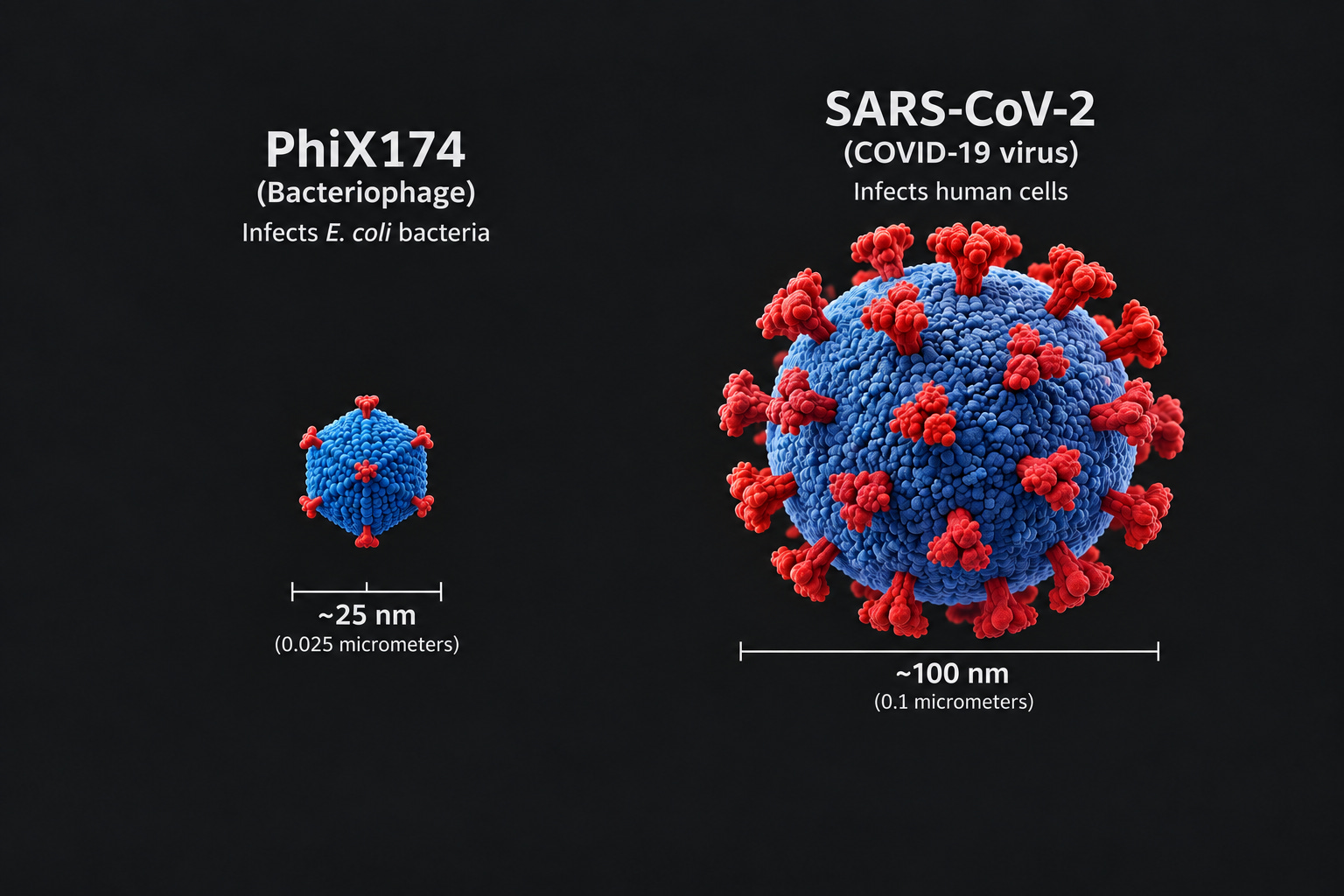
The study concerns the ability to harm bacteria, not humans. But the startling development is the speed at which increasingly sophisticated viruses can now be designed. PhiX174 is a small virus, measuring roughly 30 nanometres across, compared with SARS-CoV-2 at roughly 80–120 nanometres. However, size alone does not determine how difficult a virus is to engineer.
Addressing The Potential Medical Benefit
There is conceivably an argument for developing this technology in an ideal world. Bacteriophages can kill harmful bacteria and have long been investigated as potential treatments for bacterial infections. Phage therapy faded into the background as biochemical antibiotics became dominant.
AI could potentially make phage therapy considerably more powerful. Instead of relying exclusively on naturally occurring phages, researchers could design customized viruses to attack particular bacterial strains or overcome bacterial resistance. Unfortunately, in the current landscape, the potential benefits are eclipsed by the risks.
The Risks Cannot Be Ignored
The greatest concern is not what these 16 bacteriophages can do today, but what this research demonstrates is now possible. AI could dramatically accelerate virus engineering, allowing increasingly complex genetic modifications to be designed and tested in a fraction of the time previously required.
Applied to human pathogens, this could take gain-of-function research to entirely new heights, bringing with it enormous consequences. I believe we have far more reason to be concerned than to celebrate this development.
Read the Study
King, S. H., Driscoll, C. L., Li, D. B., Guo, D., Merchant, A. T., Brixi, G., Wilkinson, M. E., & Hie, B. L. (2026). Generative design of bacteriophages with genome language models. Science, 393(6811), eaec2657. DOI: 10.1126/science.aec2657. Link↗
Additional Resources
Scientific Digest (Further Reading)
Researchers at Stanford University and the Arc Institute used the genome language models Evo 1 and Evo 2 to generate complete bacteriophage genomes, using ΦX174, a small virus that infects E. coli, as the design template.
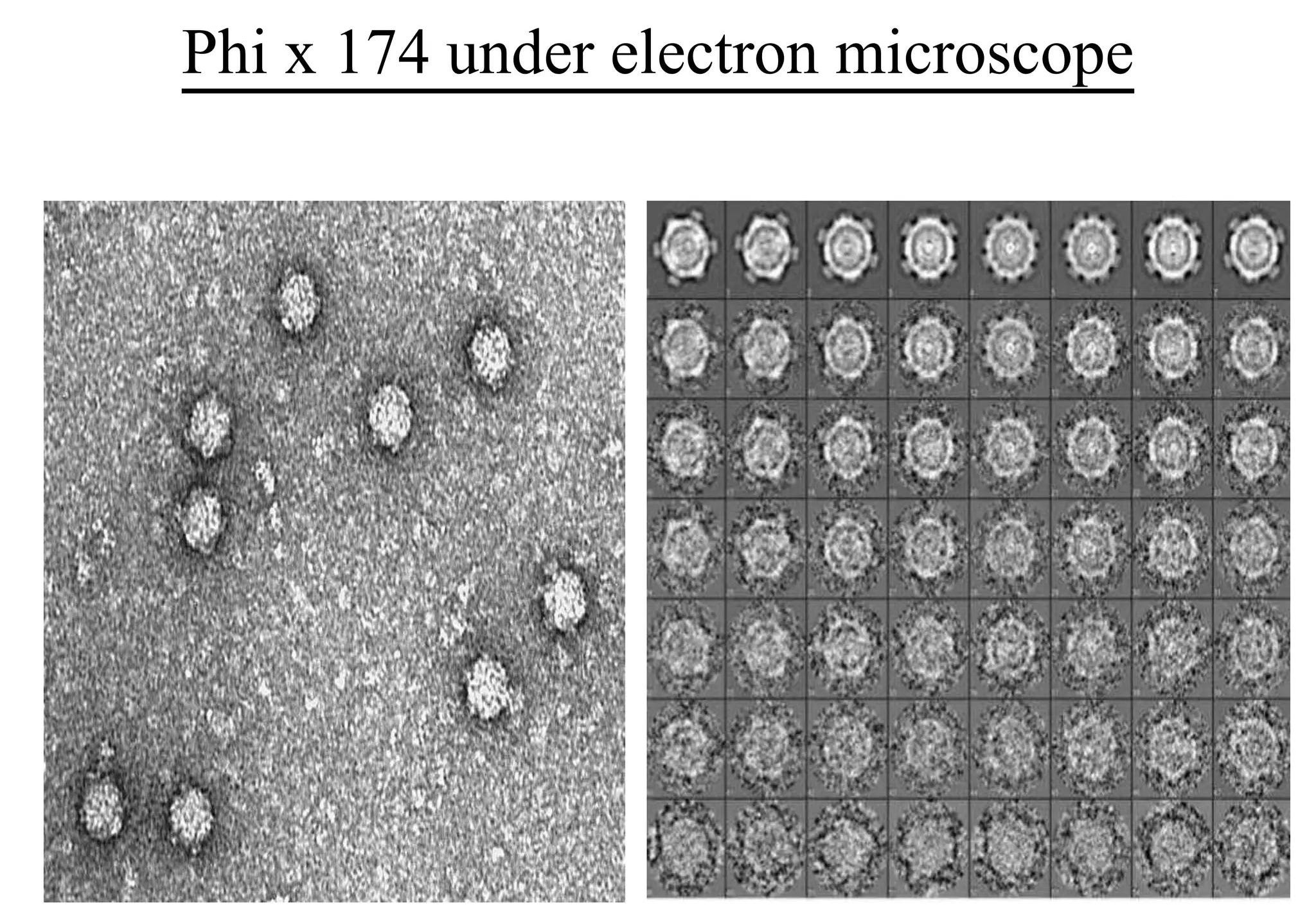
The models had been pretrained on large DNA datasets containing more than two million bacteriophage genomes and were further specialized using genomes related to ΦX174. Generated sequences were computationally screened for features including genomic architecture and predicted host specificity before selected genomes were physically synthesized and tested.
The researchers experimentally screened nearly 300 AI-generated genome designs and obtained 16 viable bacteriophages. These viruses successfully infected their intended bacterial host and displayed substantial genetic diversity relative to known natural phages. Cryo-electron microscopy also showed that one generated phage incorporated an evolutionarily distant DNA-packaging protein into its capsid, demonstrating that functional viral structures could emerge from substantially novel genome designs.
The generated phages varied considerably in biological performance. Several displayed faster lysis kinetics than natural ΦX174, while others outcompeted ΦX174 in laboratory growth experiments. The researchers also produced three E. coli strains resistant to ΦX174. Whereas the natural virus alone could not overcome this resistance, a cocktail containing AI-generated phages rapidly suppressed all three resistant bacterial populations.
The study therefore demonstrates that genome language models can generate complete viral genomes that remain functional despite substantial sequence divergence from known natural viruses. Rather than modifying individual genes or proteins, the approach operates at the scale of an entire genome while selecting for specified characteristics such as genomic organization and host tropism.
The experiment was limited to bacteriophages based on ΦX174 and E. coli hosts. The authors nevertheless describe their work as a foundation for generative design at the whole-genome scale and suggest that related methods could eventually be extended to larger and more complex biological systems.
Pandora’s Box comes to mind. Fools rush in where the wise fear to tread.