


Introduction
COVID-19 marked a bold convergence of organized crime dynamics, government authority, and medical institutions. Standing against this corruption brought together experts from diverse fields, including physicians and professional criminal investigators. I am grateful to have become a friend and fellow advocate for justice alongside Donald Best, a highly experienced investigator in organized crime and systemic corruption. In this interview, we examine a series of developments that reveal the danger of institutions and the government in Canada, including: the prosecution of Helen Grus after investigating unexplained infant deaths, the expansion of MAiD under Bill C-14 and Bill C-7, and ongoing concerns around organ procurement systems.
Please consider supporting our ongoing work to raise public awareness, uphold informed consent, and care for those who have been harmed. You can help by making a one-time donation or by becoming a paid Substack subscriber.
About Donald Best
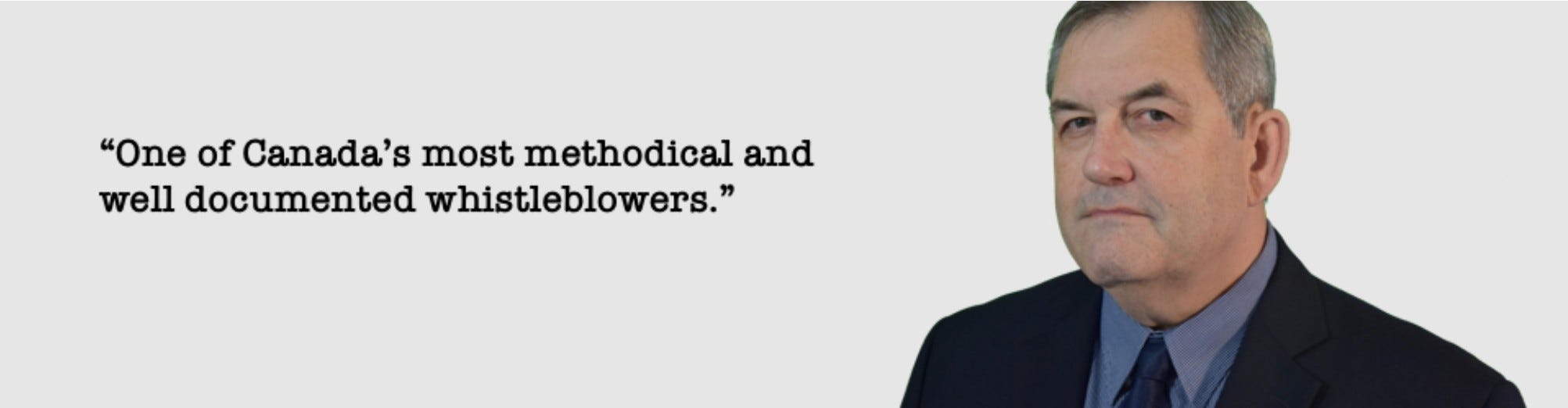
Donald Best is a former Sergeant (Detective) with the Toronto Police Service who spent 15 years conducting undercover operations and investigating organized crime—including corruption involving police, lawyers, and politicians. With over four decades of experience as an investigator and Certified Fraud Examiner, he has become one of Canada’s most persistent and methodical heroes in the resistance against tyranny. His work has come at significant personal cost, including 63 days in solitary confinement under false charges before being vindicated. Donald Best is the sole recipient of the 2018 Ontario Civil Liberties Award, and now operates as an independent journalist and filmmaker. He documents cases, supports whistleblowers, and advocates for transparency, accountability, and justice in Canada.

This interview with Donald Best is rich with insights, but we know time is limited. Below is a concise summary highlighting the key takeaways from our discussion for your convenience.
The Prosecution of Helen Grus
The prosecution of Detective Helen Grus, as outlined by Donald Best, marks a clear break from more than 200 years of established policing principles. As part of her role in Ottawa’s Sexual Assault and Child Abuse unit, she was responsible for reviewing sudden infant deaths occurring outside hospitals. In 2021, she was informed of a doubling or tripling of such deaths compared to previous years. When she examined the files, she found that basic investigative questions—such as recent medical history, medications in the home, and COVID injection status—had not been consistently asked or recorded.
Instead of prompting a broader investigation, her actions triggered disciplinary measures. She was suspended, her devices were seized, and her communications were monitored through measures typically reserved for serious criminal investigations. Donald Best explains how she was later charged and prosecuted through an internal process in which expert witnesses were not permitted to testify in her defense. No formal investigation into the increase in infant deaths was initiated, despite this pressing issue being put into the spotlight.
Ottawa Police Inspector Hugh O’Toole, who oversaw the investigation into Helen Grus, allegedly issued threats to her prior to her testimony, warning that presenting certain evidence could result in further charges. He subsequently retired from the force without facing charges.
Decades of Police Corruption
The circumstances surrounding this case did not emerge in isolation. Donald Best points to earlier incidents within the Toronto Police Service where officers were explicitly instructed by senior leadership to ignore illegal operations tied to politically connected individuals. In one case, Sergeant Harry Darcy was ordered by the Chief of Police to leave certain establishments alone, including unlicensed gambling venues and organized crime-linked operations. The unit refused. They proceeded with raids, seized assets such as the Mariposa Belle, and laid charges despite direct orders to stand down.
Decades ago, officers who defied improper orders did so at personal risk, but many were able to remain within the system and continue their work. Over time, that space has narrowed through incremental shifts—disciplinary pressure, internal complaints, and administrative actions used to justify suspension or prosecution. In cases like Helen Grus, those who pursue politically sensitive investigations are no longer contested internally but removed from the force altogether. This gradual filtering compounds across years, reducing the number of individuals willing or able to challenge directives. As that cohort diminishes, the institution transitions into a system that reinforces compliance rather than critical thinking and ethical action.
MAiD Expansion and the Redefinition of Killing
A rising concern in Canada is the inception and subsequent expansion of the MAiD program. Donald Best emphasizes that MAiD has authorized physicians to directly administer life-ending interventions, distinguishing it from systems in the United States where “assisted suicide” laws require the patient to self-administer the substance.
The scope of MAiD has since extended beyond cases of imminent death to include individuals whose death is not reasonably foreseeable. There are growing concerns about plans to extend eligibility to those with mental illness, including patients presenting with suicidal ideation. This is stated directly on the Government of Canada’s own website in its description of Bill C-7, which outlines broader eligibility criteria. The same material also quantifies the economic impact of killing patients with MAiD, projecting approximately $109 million in annual gross healthcare savings and a net reduction of roughly $86.9 million. This explicit acknowledgment of potential economic benefit raises serious questions about how such policies are structured and justified.
Further complicating the picture, there are now many documented cases in which patients are steered toward MAiD in the absence of adequate care—individuals denied access to housing support, pain treatment, or disability assistance have reported being offered MAiD as an alternative. Veterans Affairs Canada has acknowledged instances where veterans seeking support, including for mobility adaptations such as wheelchair ramps, were instead offered MAiD.
At the same time, most provinces instruct physicians to record the underlying illness—not MAiD—as the cause of death. This effectively removes the intervention from official records and minimizing its perceived impact.
Organ Transplants and Ethical Complications
The implications extend further when considering organ procurement systems, where medical decisions and resource constraints intersect. Donald Best recalls an incident in 1980 at Toronto General Hospital, where he overheard two physicians discussing whether to withhold treatment from a head-trauma patient in order to let them die and ensure organ viability for another recipient. He intervened, escalated the situation to homicide investigators, and the patient ultimately survived and recovered. That incident, combined with decades investigating organized crime, informs his view that systems under financial and institutional pressure can shift decision-making in subtle but consequential ways. He also points to established international cases—particularly in jurisdictions like China—where organ procurement has been linked to state-controlled systems. Donald Best also highlights ongoing efforts in Western countries to restrict transplant tourism due to ethical concerns around sourcing.
Restoring Legitimacy
Institutions that once functioned through internal challenge, ethical standards, and open inquiry are increasingly structured around control, the removal of dissent, and managed outcomes. As authority expands without transparency, the space for independent judgment and investigation continues to shrink. Reversing this trend is essential. It requires us to restore the ability to question authority without fear of structural retaliation, ensuring reporting reflects reality, and once again holding institutional power subject to meaningful oversight.
Additional Resources
COST ESTIMATE FOR BILL C-7 “MEDICAL ASSISTANCE IN DYING” (2020) Link↗
CPSO - Advice to the Profession: Medical Assistance in Dying (2026) Link↗
How Much Money Did Barbados Labour Party Receive From Stem Cell Clinic? (2012) Link↗
Healthy Ukrainian Newborns Murdered For Body Parts (2006) Link↗
The Nation Newspaper Tackles Barbados Clinic – Baby Murder Story (2006) Link↗
COMMON SENSE & EVIDENCE: Snake-oil and other charms (2008) Link↗
Wayback Machine - BBC The Stem Cell Swindle (2011) Link↗
Canada is putting a stop to Cannibalism Tourism (2012) Link↗
Daily Mail - The babies who are murdered to order (2012) Link↗
Donald Best - Disturbing Toronto Police organ harvesting story (2025) Link↗
Very good interview on the state of some departments in our government, sadly this goes on in many other parts of the bureaucracy, where there is power given to unelected people, who are able to pass out fines, and walk all over peoples rights, and ignore property rights. Just imagene this interview being shown right in the commercial space, during the 6,o clock news?
This was another awesome interview. I volunteered for Dying with Dignity many years ago. The process had the utmost integrity (from my perspective). I had no idea it was the precursor of the MAID protocol which has emerged since 2020.
There is no doubt that we are seeing the implementation of the Eugenics movement on many fronts (essential for getting rid of "useless eaters". A Chinese doctor has confirmed that organ harvesting takes place in China - victims include: innocent civilians, the Uyghurs, Falun Gong practitioners, prisoners, etc.
The film Silencing Detective Grus was truly excellent. Room standing only!
I wish this interview could be disseminated widely. Thank you Donald Best and Mark Trozzi!