


Based on many clinical observations and over two decades of experience, Dr. Ute Krüger concludes a marked shift in cancer behavior following the COVID-19 “vaccination” rollout. Her observations include unusually large and fast-growing tumors, aggressive disease appearing in younger patients, and sudden recurrences in individuals long considered cured. These changes, grounded in routine pathological measurements and timelines, suggest a deviation from established oncological patterns which warrants serious scientific attention.
Presentation Summary
For those of you who are short on time, this brief summary highlights the key points of the presentation.
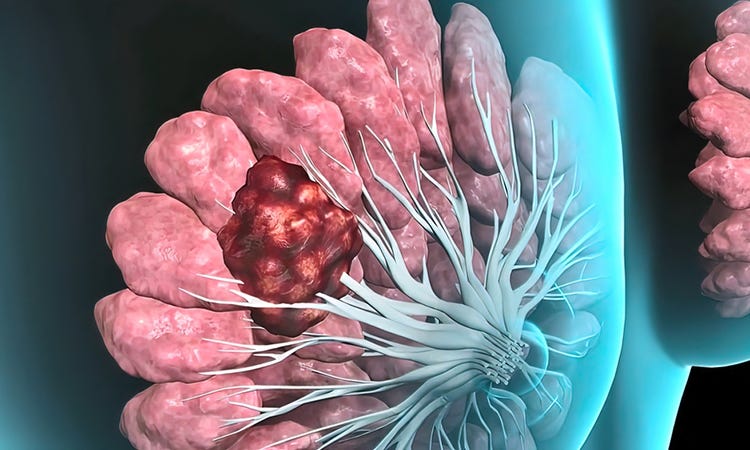
A shift in expected tumor presentation
Dr. Krüger explains that in routine breast cancer diagnostics, tumor size, growth rate, and patient age tend to follow stable and predictable distributions. Large tumors are generally associated with advanced disease or late diagnosis and are relatively uncommon in populations with established screening programs.
Beginning in late 2021, Dr. Krüger observed a shift in this pattern. Tumors larger than 4 cm appeared more frequently at initial diagnoses, including rare cases reaching up to 16 cm in diameter. Such sizes typically indicate aggressive biological behavior rather than gradual progression, particularly when detected within standard healthcare systems.
Faster growth and broader symptoms
Dr. Krüger says that alongside increased size, tumor growth appeared accelerated. Instead of developing slowly over years, some cancers progressed rapidly over short intervals, suggesting a disruption in normal regulatory or immune mechanisms.
She also highlighted a noticeable rise in multifocal tumors and bilateral disease, with malignancies present in multiple locations or in both breasts simultaneously. These features are clinically significant, as they often indicate systemic influences rather than isolated local events.
Shift in age groups affected
Dr. Krüger reports another deviation involving patient age. A higher proportion of cases appeared in individuals between 30 and 55 years old, many presenting with advanced or high-grade tumors at first diagnosis. While aggressive cancers can occur in younger patients, the clustering of large, fast-growing tumors within this age range represented a departure from prior expectations. From a pathological standpoint, simultaneous shifts in tumor size, malignancy, and age distribution are difficult to dismiss as random variation.
Unexpected cancer recurrences
Dr. Krüger addresses particularly concerning cancer recurrences in patients previously considered cured. Individuals who had undergone successful breast cancer treatment 10 to 20 years earlier developed aggressive malignancies shortly after receiving COVID-19 “vaccination.”
In these cases, she describes disease progression unfolding over months rather than years, with rapid metastasis and clinical decline. Some patients died within a short period after recurrence, a timeline inconsistent with typical late-onset cancer relapse.
Related

Limits placed on scientific investigation
Dr. Krüger explains how attempts to explore potential mechanisms faced institutional barriers. Requests for immunohistochemical tools capable of distinguishing “vaccine”-derived spike protein from markers of viral infection were denied, preventing deeper tissue-level analysis.
Alongside these oncological shifts, she notes that similar immune disturbances were observed across other organ systems. In separate post-mortem investigations documented by colleagues, myocarditis appeared with striking frequency, often marked by lymphocytic infiltration and tissue necrosis. This increasing prevalence of myocarditis strengthens the broader concern that immune dysregulation following COVID-19 “vaccination” may underlie multiple pathological processes, including the altered cancer behavior observed in routine breast cancer diagnostics.
Related

A clinical signal which cannot be ignored
Dr. Krüger emphasizes that pathology functions as an early warning system. When established patterns shift across multiple variables—tumor size, growth speed, patient age, and recurrence timing—it signals the need for urgent investigation.
Dr. Krüger’s observations do not rely on isolated cases or speculative inference. They describe a consistent clinical signal arising across routine practice, involving coordinated changes in cancer behavior that fall outside established expectations. Such correlations, when persistent and structured, warrant scrutiny and thorough investigation. This issue must be immediately addressed.
Dr Ute Krüger
Dr Ute Krüger is a German-trained, Sweden-based pathology specialist with 25 years of experience, including 18 years as a consultant physician at hospitals in Växjö and Kalmar Hospital, where she worked primarily in breast cancer pathology and also served as medical director of the pathology department in Växjö. Alongside her clinical work, she spent eight years engaged in breast cancer research at the University of Lund, resulting in several scientific publications. In autumn 2021, she began observing unusual changes in routine pathological findings that she associated with COVID-19 genetic injections, leading her to coin the term “turbo cancer.” Since then, she has collaborated with international colleagues to investigate post-vaccination pathological changes and contributed to disseminating novel findings by Professors Burkhardt and Lang in the book: Vaccinated – Dead.
This oncologists panel was hosted and recorded by The World Council for Health.
Healing After Harm Fundraiser Campaign (29% Raised)
We need your support to launch our cutting-edge, evidence-based supplement line designed specifically to aid recovery, detoxification, and long-term prosperity for those affected by Covid-19 “vaccines”. These premium formulations draw on the latest independent research to empower healing, restore vitality, and build resilience for a healthier future.
I know many people who had cancer after the Covid jabs. I also know people who continue to take boosters but they don't want to listen to me.
Two former co workers in their late fifties died from cancer within two years of injection.