


Dear friends in Europe: As we know, the COVID-19 genetic bioweapon injections have already inflicted widespread harm on the public, including damage to the body’s genetic integrity. Now, the old-world institution known as the European Union is preparing to push patented, dangerous, genetically-modified food onto shelves — without consumer labels.
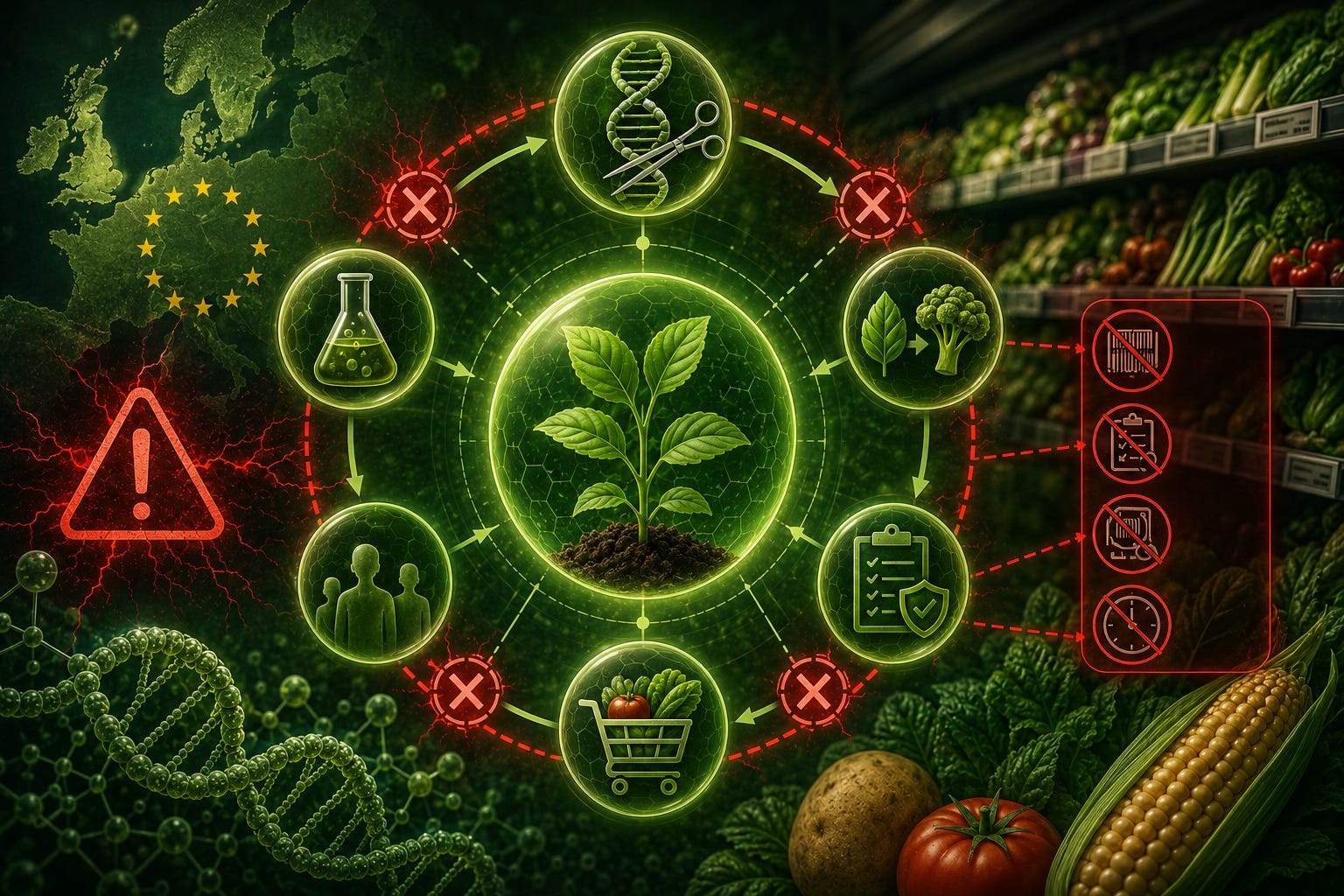
Artificial genetic modification of crops began in the last century with transgenic techniques that inserted foreign genes called transgenes from one species into another. These transgenic GMOs moved from labs to farm fields in the late 1980s and became a major industry in the mid-1990s. Popular traits included pest resistance (Bt toxin from Bacillus thuringiensis) and herbicide tolerance (Roundup Ready crops).
Governments around the world created rules for these products. The US established its coordinated framework (USDA, FDA, EPA) starting in the 1980s, while the EU introduced even stricter controls. International guidelines came from the OECD in 1986. Years of grassroots activism eventually secured mandatory GMO labeling in Europe by the late 1990s and stronger rules in the United States by 2022.
Importantly, older mutagenic techniques using radiation or chemicals — which deliberately induce thousands of random mutations across the genome — were grouped under “conventional breeding.” These non-transgenic methods avoided GMO regulations, risk assessments, and labeling entirely. They produced many commercial crop varieties that are still eaten today. The upcoming NGT rules heavily rely on this highly questionable precedent to permit almost no meaningful regulatory treatment for certain modern gene-edited plants.
Now a far more powerful technology has arrived: CRISPR. Promoters claim it is cheaper and more accurate than previous methods, and that it can achieve nearly any genetic modification that older transgenic techniques could, only faster and more precisely. Since around 2020, CRISPR has made sophisticated gene editing routine and affordable for laboratories and companies, though it is not without potentially severe risks. This is one of the main developments regulators are using to justify slashing meaningful oversight through the new NGT framework.
The 2026 NGT Regulation
On 17 June 2026, the European Parliament approved the New Genomic Techniques (NGT) Regulation. It was published on 26 June 2026 and will take full effect on 17 July 2028 after a two-year transition.
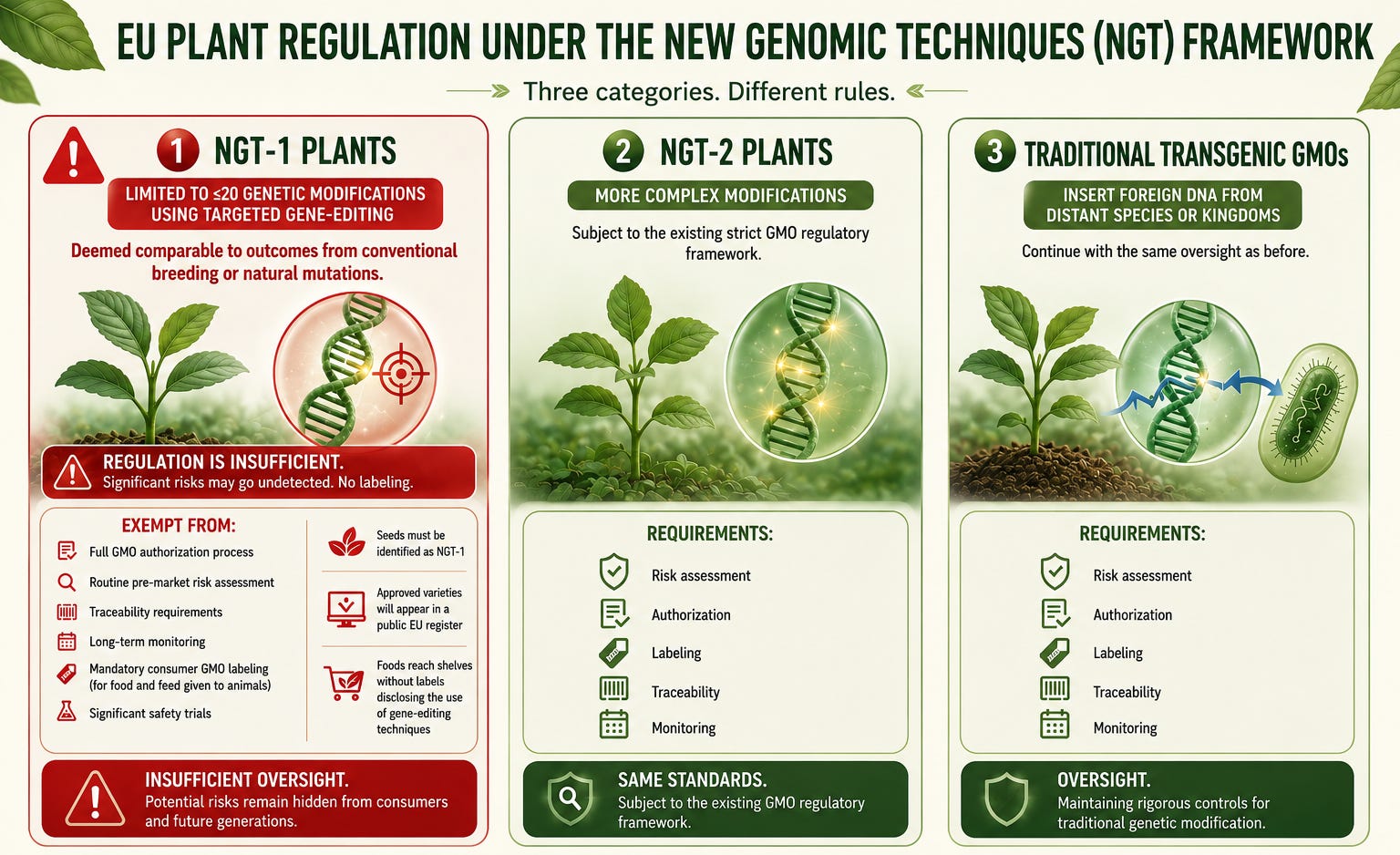
The law sets up a two-tier system that strongly benefits the producers of a certain category of gene-edited crops:
NGT-1 plants (limited to no more than 20 genetic modifications using targeted gene-editing): These are deemed comparable to outcomes from conventional breeding or natural mutations. They are exempted from the full GMO authorization process, routine pre-market risk assessment, traceability requirements, long-term monitoring, and mandatory consumer GMO labeling for food and feed given to animals. Seeds must be identified as NGT-1, and approved varieties will appear in a public EU register. However, the resulting foods will generally reach supermarket shelves without labels disclosing the use of gene-editing techniques. This also means significant reductions in the necessary safety trials.
NGT-2 plants (more complex modifications): These remain subject to the existing strict GMO regulatory framework, including risk assessment, authorization, labeling, and traceability.
Traditional transgenic GMOs, which insert foreign DNA from distant species or kingdoms, will also continue with the same oversight as before.
Key Definitions and Technical Scope
The regulation states: “NGTs include targeted mutagenesis and cisgenesis, including intragenesis, which introduce genetic modifications without transgenesis, that is without inserting genetic material from non-crossable species.”
Mutagenesis: The process of inducing random or targeted mutations (changes) in an organism’s DNA.
Cisgenesis: Transfer of genes from the same species or a closely related/crossable species into the target plant. The gene is taken from a “compatible” source with no foreign DNA from distant organisms.
Intragenesis: Similar to cisgenesis, but involves rearranging or combining genetic elements (such as promoters or coding sequences) from within the same species or closely related species.
Transgenesis: Introduction of foreign genes (transgenes) from a different species or even another kingdom into the target organism. This remains the old-school form of genetic modification that still requires full labeling and oversight.
How Different Are These “Crossable” Plants?
The definition of “crossable” (sexually compatible) species is very broad. It includes plants that are dramatically different in appearance and use.
Examples of these “crossable” species include:
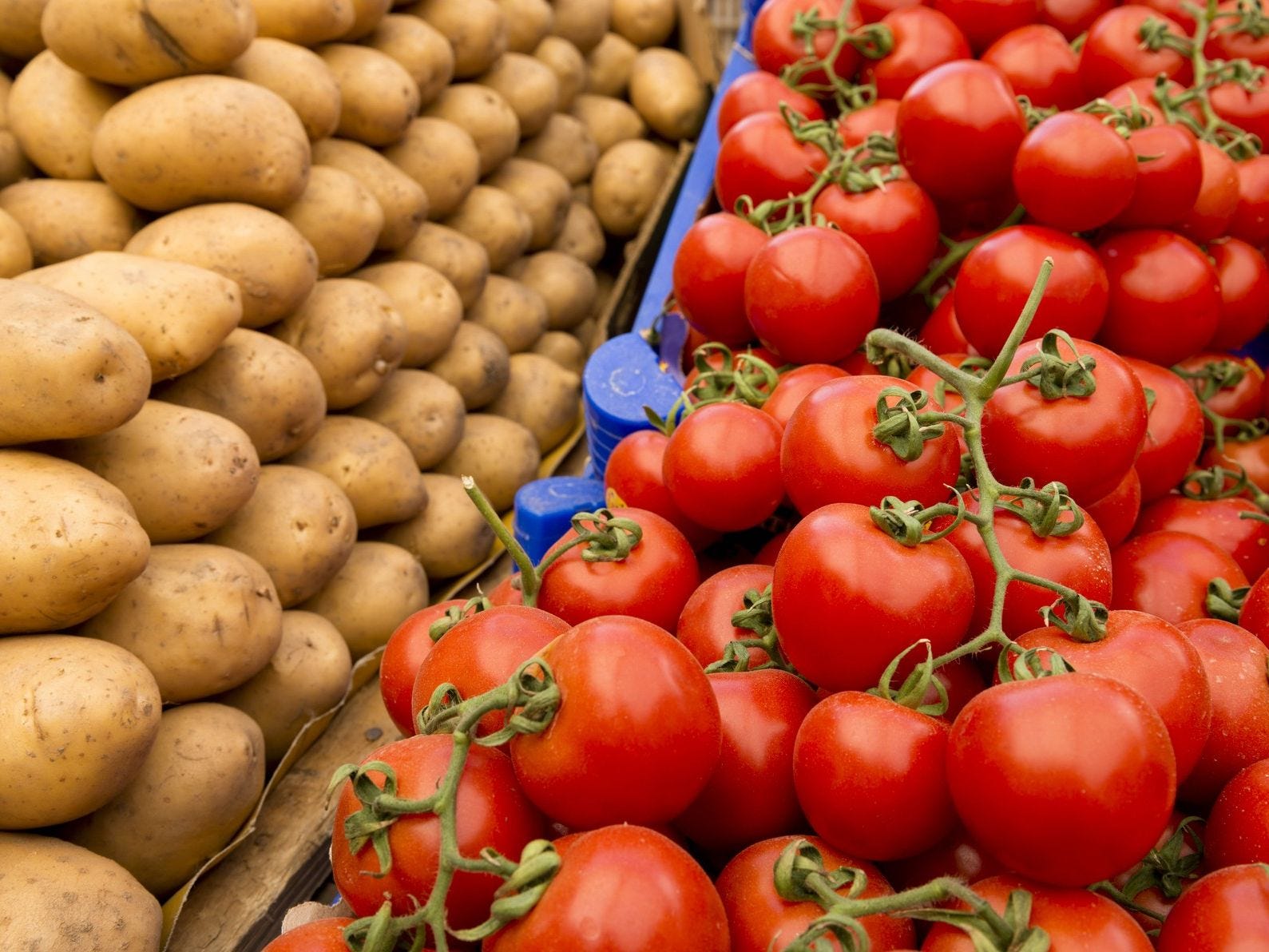
Potato (Solanum tuberosum) and tomato (Solanum lycopersicum)
Oriental Plane Tree (Platanus orientalis) and American Sycamore (Platanus occidentalis)
All Brassica species (cabbage, broccoli, kale, mustard, turnip)
Various Curcuma (turmeric) and other members of the ginger family (Zingiberaceae), such as Curcuma longa, C. petiolata, ginger lilies (Hedychium), shell gingers (Alpinia), torch gingers (Etlingera), and many others that range from small ground-hugging plants to tall showy species.
Look at how different these plants are. Do you think people have a right to know if they are eating genetic chimeras of tomatoes and potatoes, or mixes of cabbage, broccoli, mustard, and kale?
With CRISPR, companies can now modify the genes of virtually anything at liberty, all while enjoying massive profits that are ultimately subsidized by taxpayers who are being poisoned and being subjected to harm across many areas.
Consumers are also facing potential long-term health consequences, including chronic malnutrition or worse. Even small, targeted edits can alter gene regulation, protein function, metabolic pathways, or interactions with the environment and microbiome in ways that may not appear in short-term studies. Since NGT-1 plants face reduced safety trials and no long-term monitoring, the general public will be the test population.
Basic Human Rights Developments Reversed
It took decades of public pressure to win GMO labeling requirements. Now the EU is removing labels for the most common gene-edited foods for three main reasons: CRISPR has made genetic modifications cheap and routine, regulators are using the old unregulated radiation and chemical mutagenesis methods as political cover, and they are once again promising the same benefits (innovation, higher yields, climate resilience) that first-generation GMOs failed to deliver. This is a major step backward that undoes years of hard-earned progress.
Regulators are using the same familiar rhetoric we heard to justify mRNA technology when they promised rapid “innovation,” greater efficiency, and benefits for humanity, all while sidelining transparency and precaution. This simply shows that regulators are serving industry interests instead of protecting the public.
How to Resist and Stay Healthy
Europeans must push back strongly, demanding full labeling, traceability, and major changes to the law before it fully kicks in during mid-2028. People and businesses should choose clearly labeled non-NGT food wherever possible, since any unlabeled foods may have been produced through these methods. The rest of the world should treat European agricultural exports with serious caution and consider boycotts or bans on these products.
The good news is that organic standards still prohibit the use of NGT methods. Now more than ever, sourcing certified organic food is one of the best ways to avoid gene-edited products.
Are You Avoiding Gene-Edited Foods?
We’ve included a short poll below to learn more about our community’s experiences. Paid subscribers are also invited to join the discussion in the comments. We’d love to hear your thoughts and questions. I read every comment personally, and our community is consistently thoughtful and encouraging. Your feedback also helps guide future articles, so thank you for being part of the conversation.
Important Considerations
Avoiding unlabeled gene-edited foods can be challenging due to the lack of transparency. However, supporting local producers who are focused on organic crops is one practical step toward improving the quality of your diet and reducing exposure.
Thank you for a superb article.
Some 10 years ago I learned that the Canadian Parliament had voted against the labelling of genetically modified foods. I was shocked to learn this and wrote to my MP, Catherine McKenna (Minister of either Environment or "Health" at the time) asking her the explain why she voted against GMO labellilng. I never heard back from her.
Two months later I sent another email this time to her consituency office asking for an explanation. I never received a response.
A few months later we were in the lead up to an election. I went to McKenna's constituency office and told the manager that while I would normally have McKenna's election signs of my property, I would not do so this time because she never responded to my emails. The manager took all of my contact information and promised me that I would get a response. She would see to it personally! So in my naivety I agreed to have two McKenna election signs erected on my property. You guessed it! For the third time, I never received a response.
I did some research and learned that Canada is a major exporter of Genetically Modified Foods. The Global Agenda is unfolding before our eyes and it is anti-human and anti-health. In short it is the transhuman agenda. The Covid narrative has brought all of this to light. This global agenda has been in the works for decades. As early as the 1800s, U.S. Presidents were alluding to the coming New World Order.
It is up to us to stand up for the truth and never relent in doing this no matter the circumstances. No one is coming to save us. Thank you Mark for keeping the conversation alive.
"...the resulting foods will generally reach supermarket shelves without labels disclosing the use of gene-editing techniques. This also means significant reductions in the necessary safety trials..." These lying fakes, falsely called politicians, are obviously hiding the truth on purpose! They are ALL below the quality of life that planet earth has created over millennia! They are destroying that life and destroying themselves, but way too stupid to know! All they "know" is they are hiding reality, so idiots like them can make more money at the expense of everybody else, the exact opposite of real politicians!