


Over the last four years, scientist and engineer Sally Clark has undertaken an extensive, independent examination of national vital statistics from countries around the world. Her work focuses on the most basic demographic indicators available: births, deaths, excess mortality, and natural population change.
It reveals a consistent and troubling pattern. Across nations with vastly different cultures, political landscapes, and healthcare systems, population health indicators shift abruptly beginning in 2021. Deaths rise sharply and remain elevated, while births decline well beyond expected trends. These changes do not resemble the familiar signature of an infectious disease outbreak. Instead, they point to a broad and ongoing harm affecting entire populations, one that correlates heavily with the COVID “vaccine” rollout.
Thank you to Sally Clark for this comprehensive presentation and conversation. You can follow her on substack at SuperSally888
Join the Conversation
The last two weeks have been full of great comments from our community!
Please join the dialogue with Dr. Trozzi and others across all of our posts, including Wins of the Week, by choosing or upgrading to a paid subscription. You’ll also be helping fund this ongoing mission for truth, freedom, justice, and health.
How Population Data Reflects Health
Vital statistics are among the most stable datasets societies produce. In healthy populations, births and deaths change gradually, shaped by aging, economics, and social conditions. Seasonal fluctuations are normal, but year-to-year changes typically remain in a small range. When large, rapid, and sustained deviations occur, they suggest a specific variable at play.
Sally Clark emphasized a critical distinction to counter-claims that the recent trends are solely related to the COVID virus itself. When an infectious disease disproportionately affects already vulnerable individuals, deaths rise temporarily but are usually followed by a compensatory decline in subsequent years, because the most at-risk have already been lost. This is not what recent trends have been revealing.
Global Trends in Births and Deaths
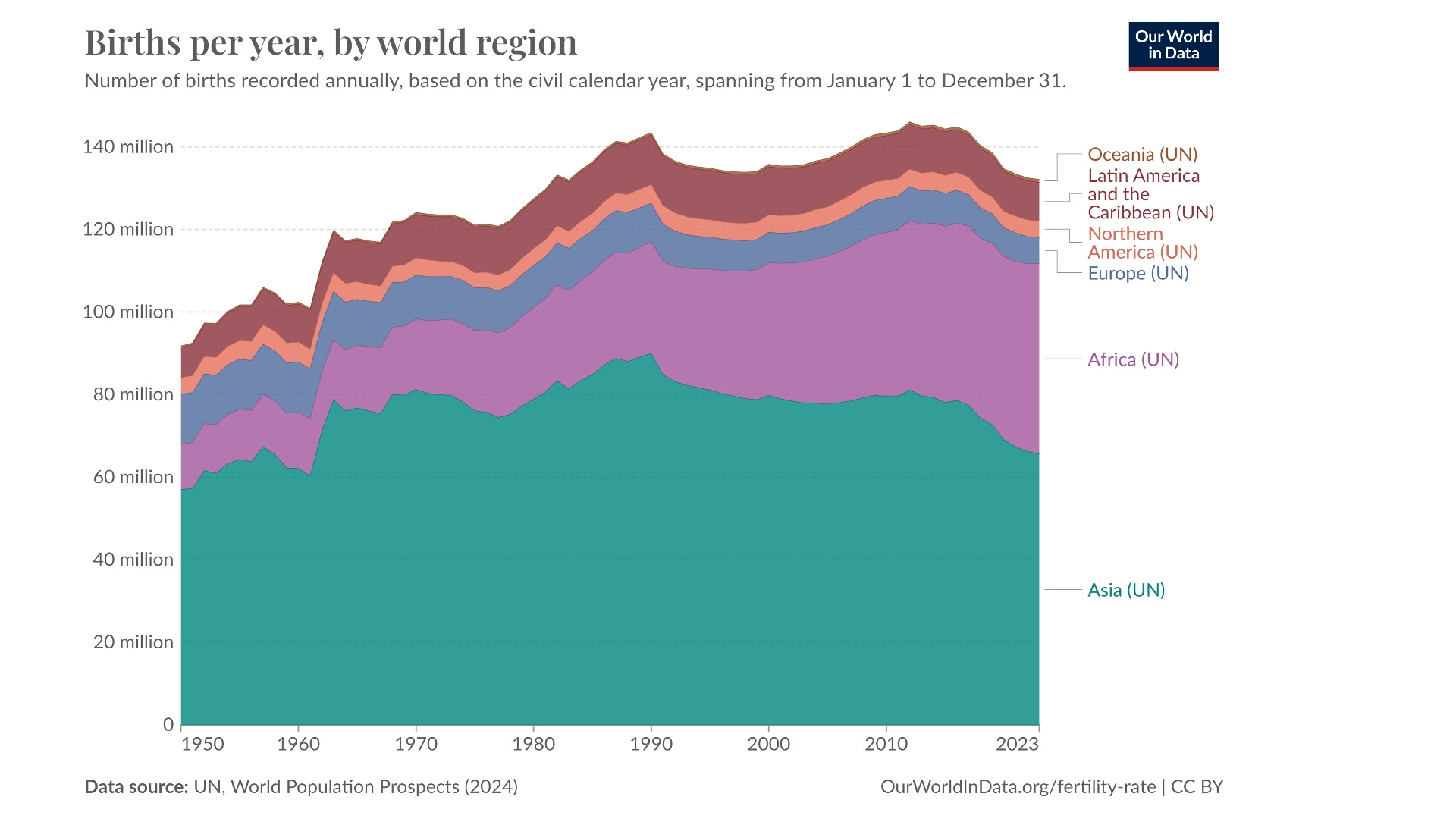
Globally, births peaked between roughly 2010 and 2018 and declined thereafter. This predated the COVID “pandemic.” Aging populations, delayed childbearing, economic pressures, and cultural shifts toward smaller families all contributed to this trend. Notably, there was no dramatic global collapse in 2020, the year when the virus was supposedly causing high rates of death and severe illness. In several countries, deaths were down in 2020 and births even increased in 2021 before the injections.
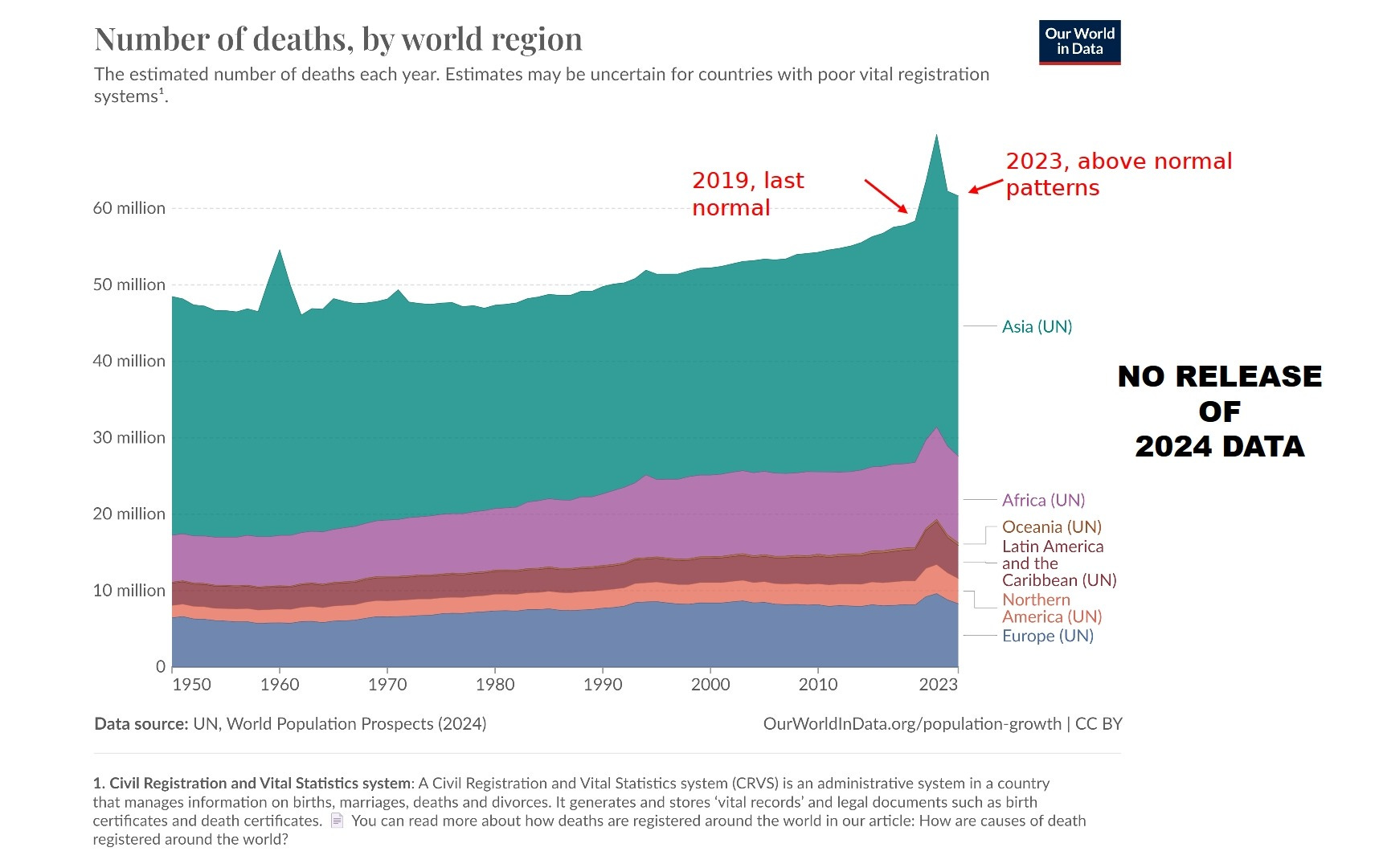
The death statistics were also revealing. While 2020 showed mixed outcomes, with some countries recording fewer deaths than expected, 2021 marked a clear inflection point. Mortality rose sharply and, crucially, did not return to baseline in the years that followed. In many countries, excess deaths far exceeded officially attributed COVID fatalities, and the elevated mortality continued through 2022, 2023, and beyond.
Australia: A Leap in Mortality From 2021
From the mid-1970s through 2019, Australia’s vital statistics followed a stable and well-understood pattern. Births and deaths rose gradually alongside population growth, while fertility remained below replacement level. This imbalance was largely offset by sustained immigration, allowing natural population change to remain positive and predictable over time.
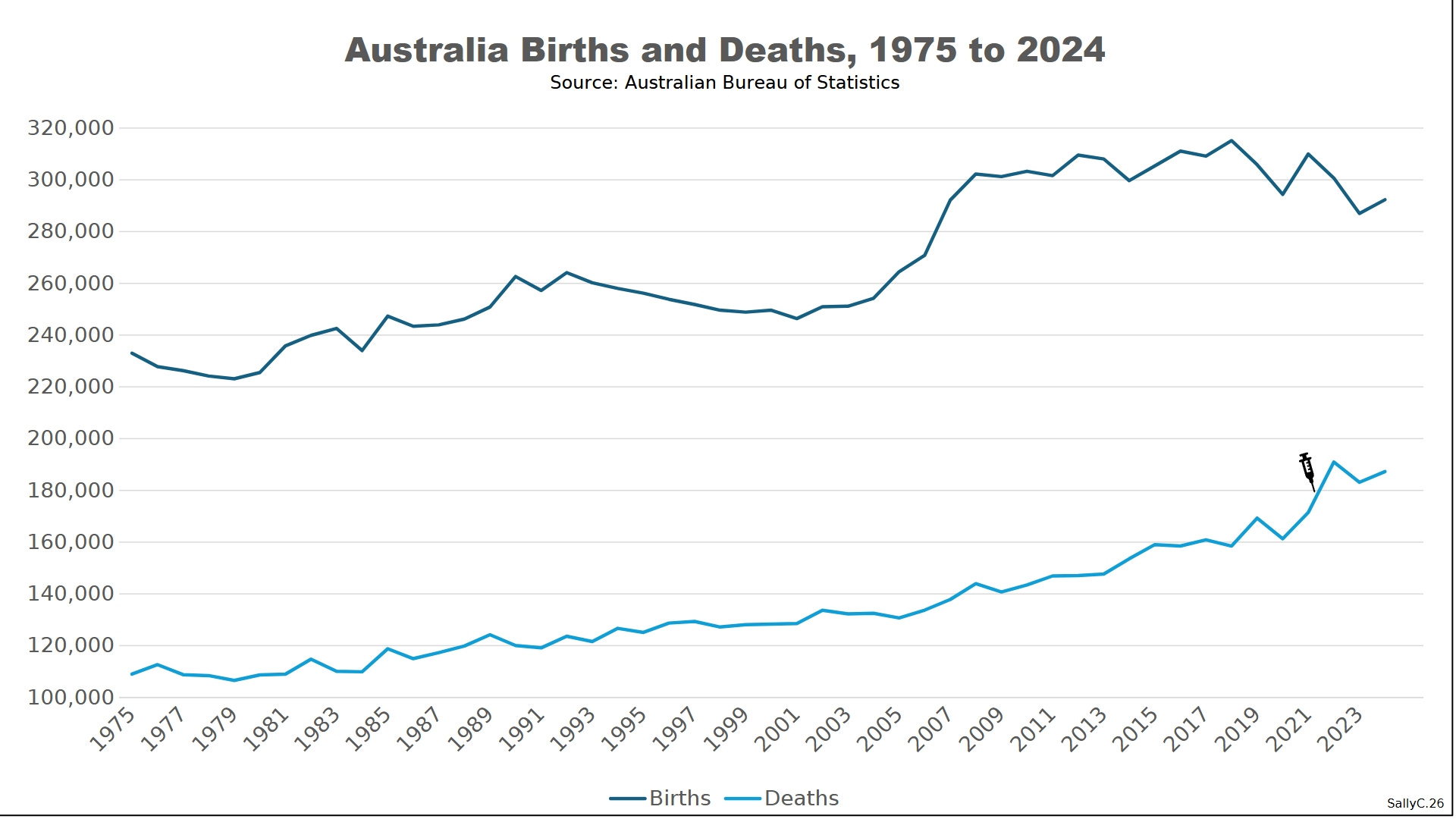
That pattern broke decisively after 2020. Despite widespread alarm surrounding the COVID “pandemic,” deaths actually declined slightly in 2020, a point Clark emphasized. This outcome was inconsistent with a deadly infectious event and instead reflected what was often seen when medical interventions and movement of populations ceased temporarily.
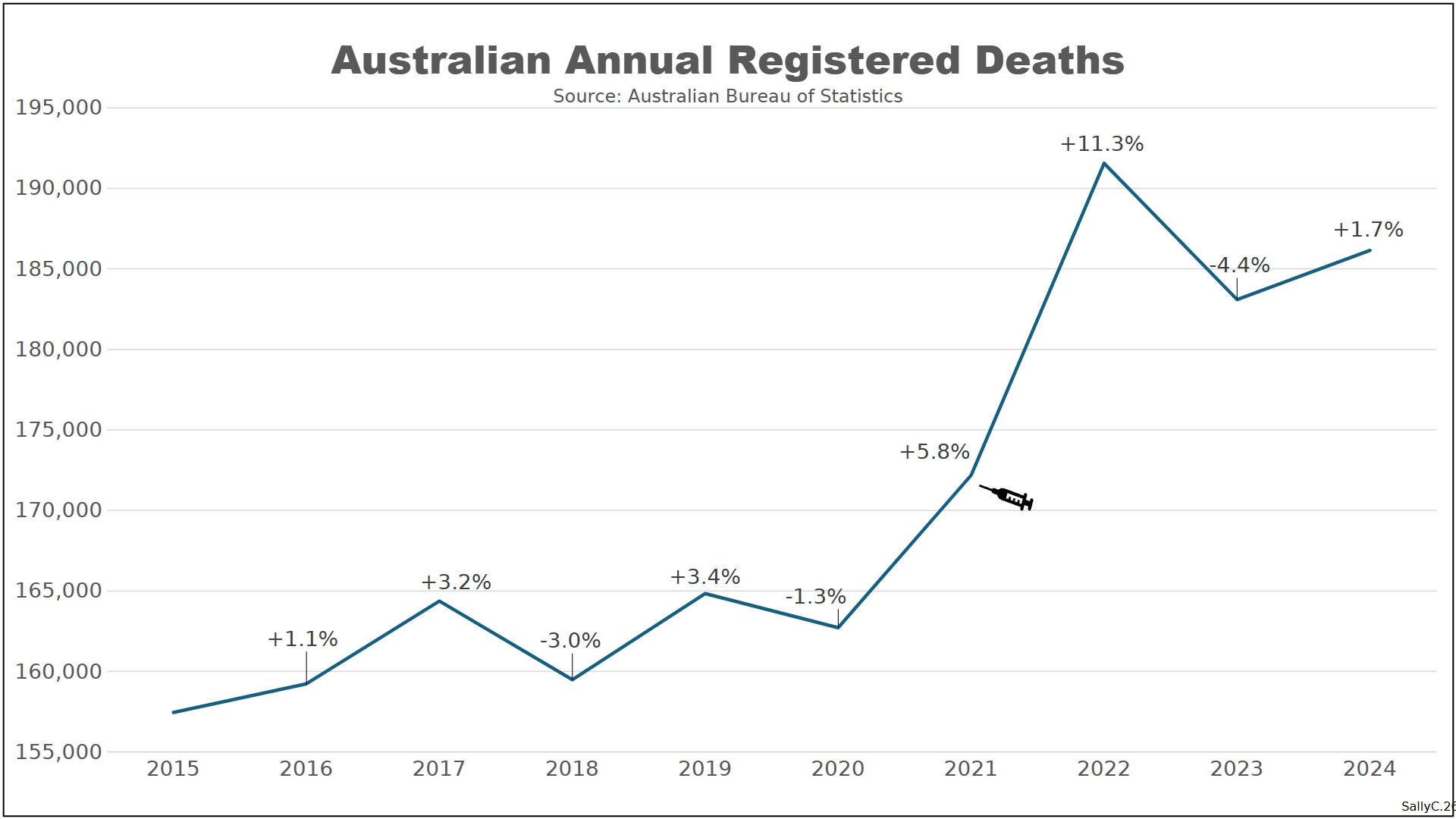
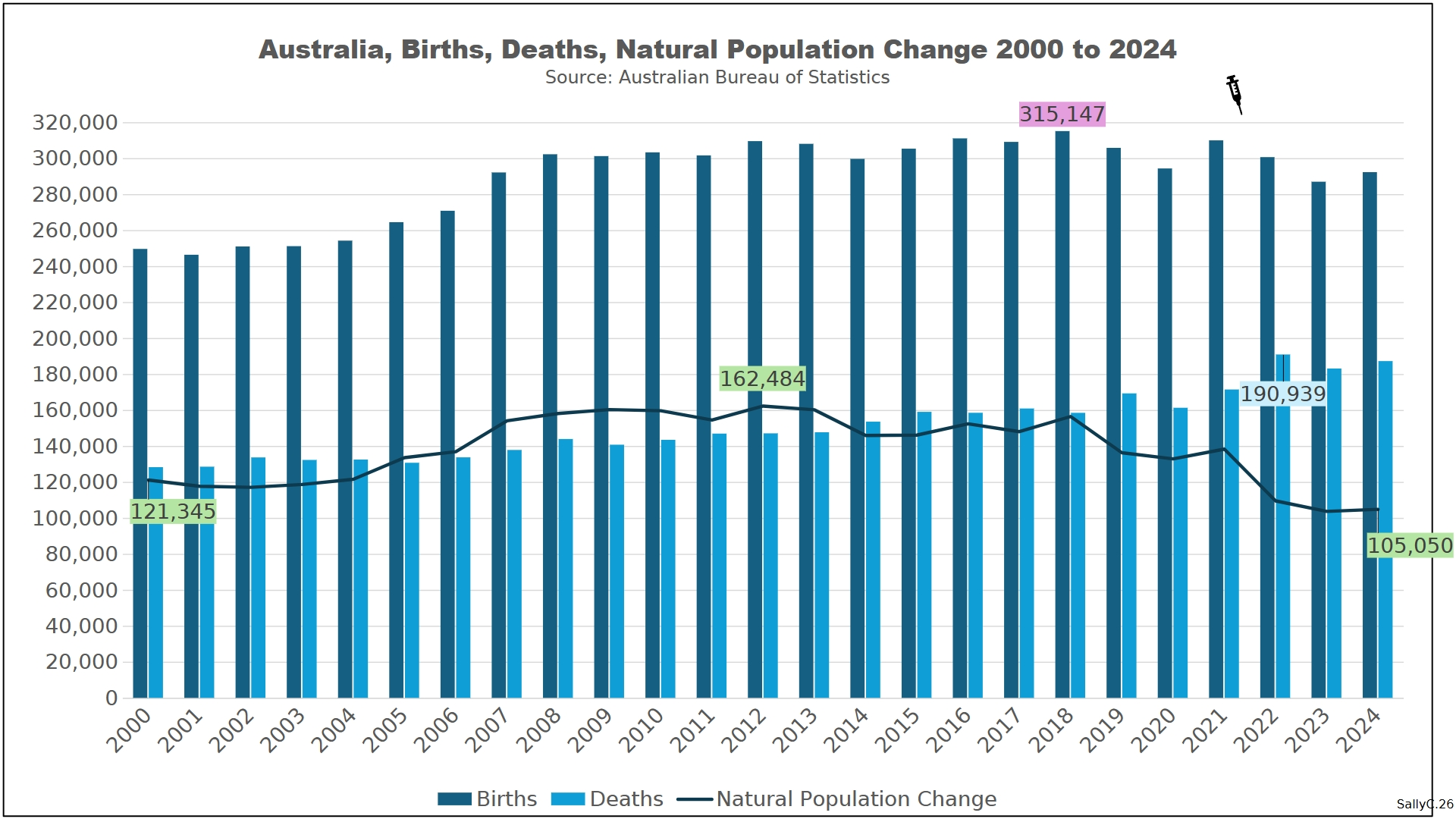
The rupture appeared in 2021, coinciding with the rollout of COVID “vaccines.” Mortality began to rise, and in 2022 deaths spiked dramatically, increasing 11.3% from the previous year, an unprecedented jump in Australia’s modern demographic record. Rather than correcting downward, mortality remained elevated thereafter, marking a permanent step change rather than a temporary fluctuation.
When examined by age and sex, the burden of excess mortality fell most heavily on older Australians, particularly those aged 75 and above. Clark also noted that female mortality accelerated faster than male mortality following the rollout period, where it would typically be males dying earlier. While younger age groups showed smaller immediate increases in death rates, their trends were rising over time, suggesting a weakening over time.
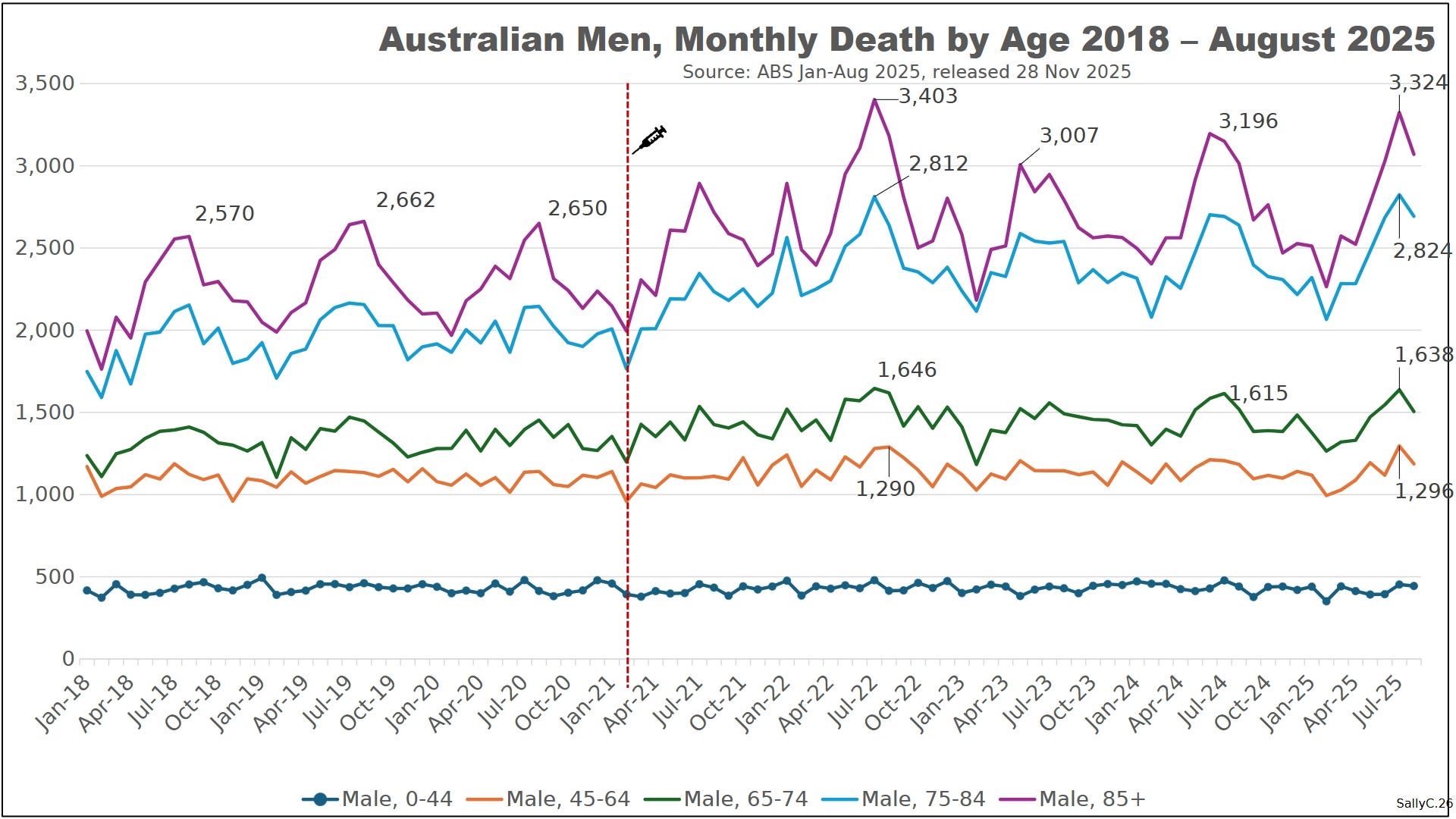
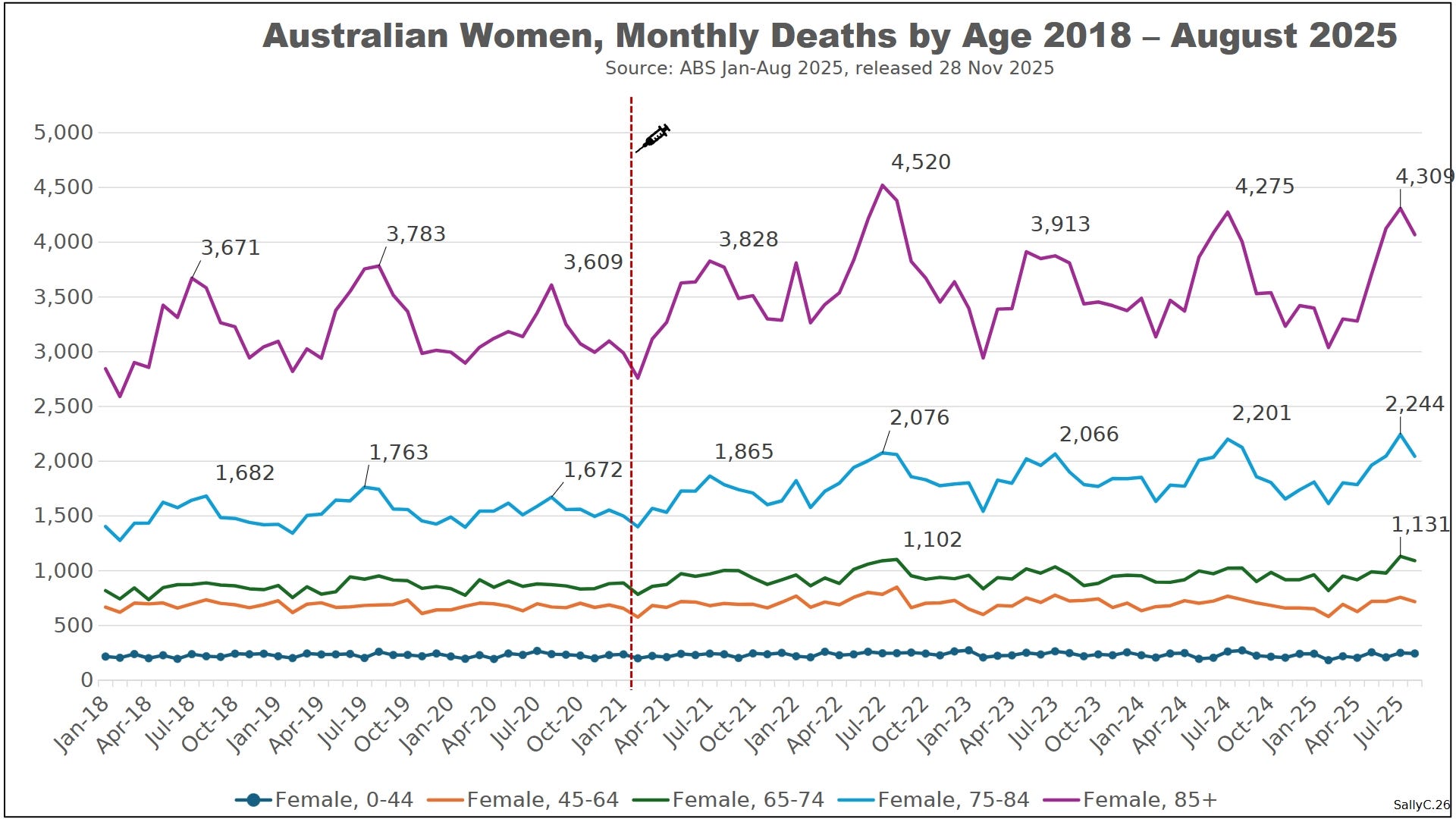
As deaths rise and births fell, Australia’s natural population growth turned negative. Even with continued migration, the underlying demographic balance has deteriorated. In short, Australia’s natural population is now decreasing.
Canada: High Mortality Affecting Population Growth
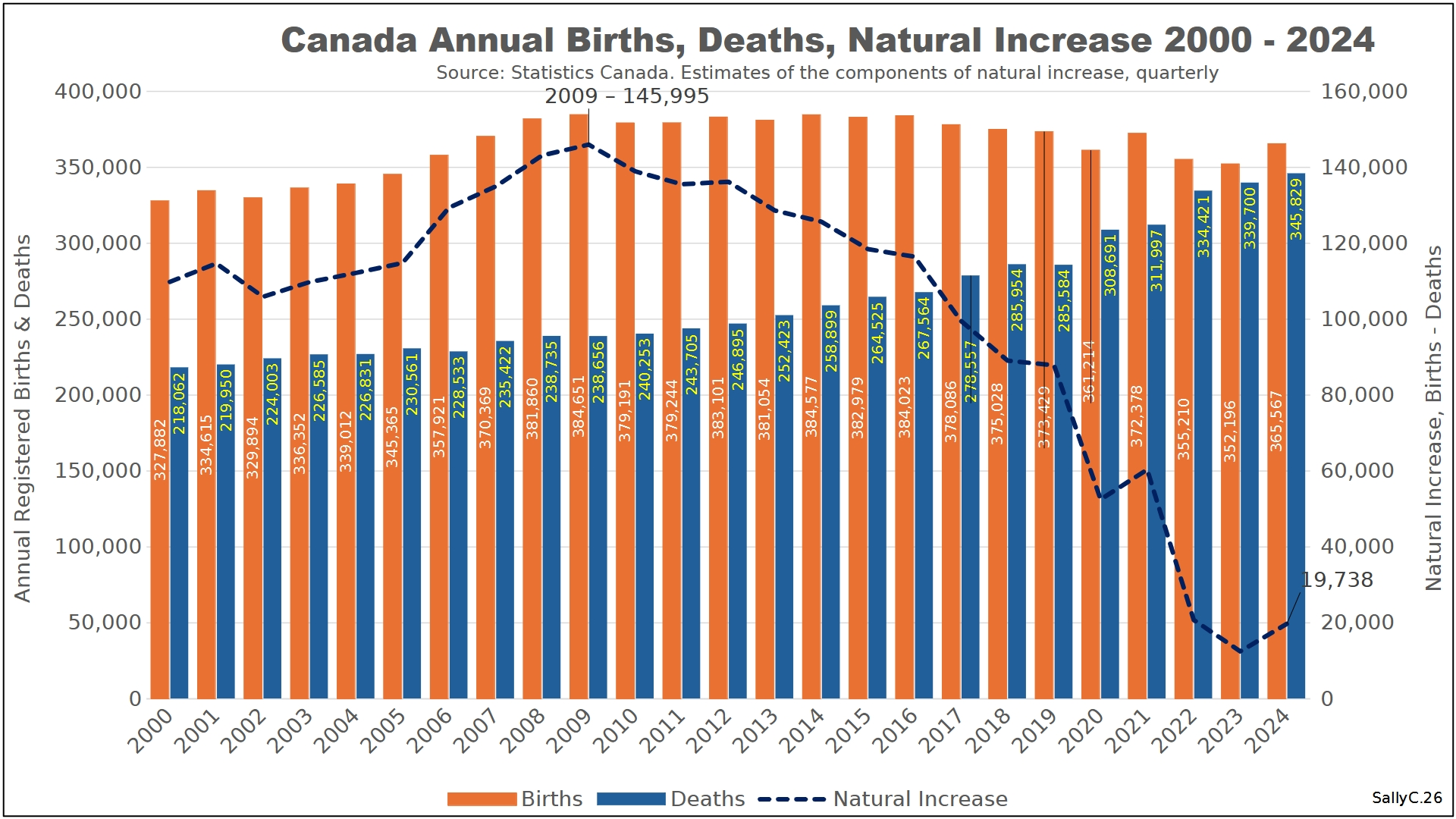
Before 2020, Canada’s births and deaths followed long-standing demographic trends typical of an aging population, with natural population growth supported in part by immigration. Despite intense public focus on the COVID “pandemic,” Canada did not experience a dramatic surge in all-cause mortality in 2020.
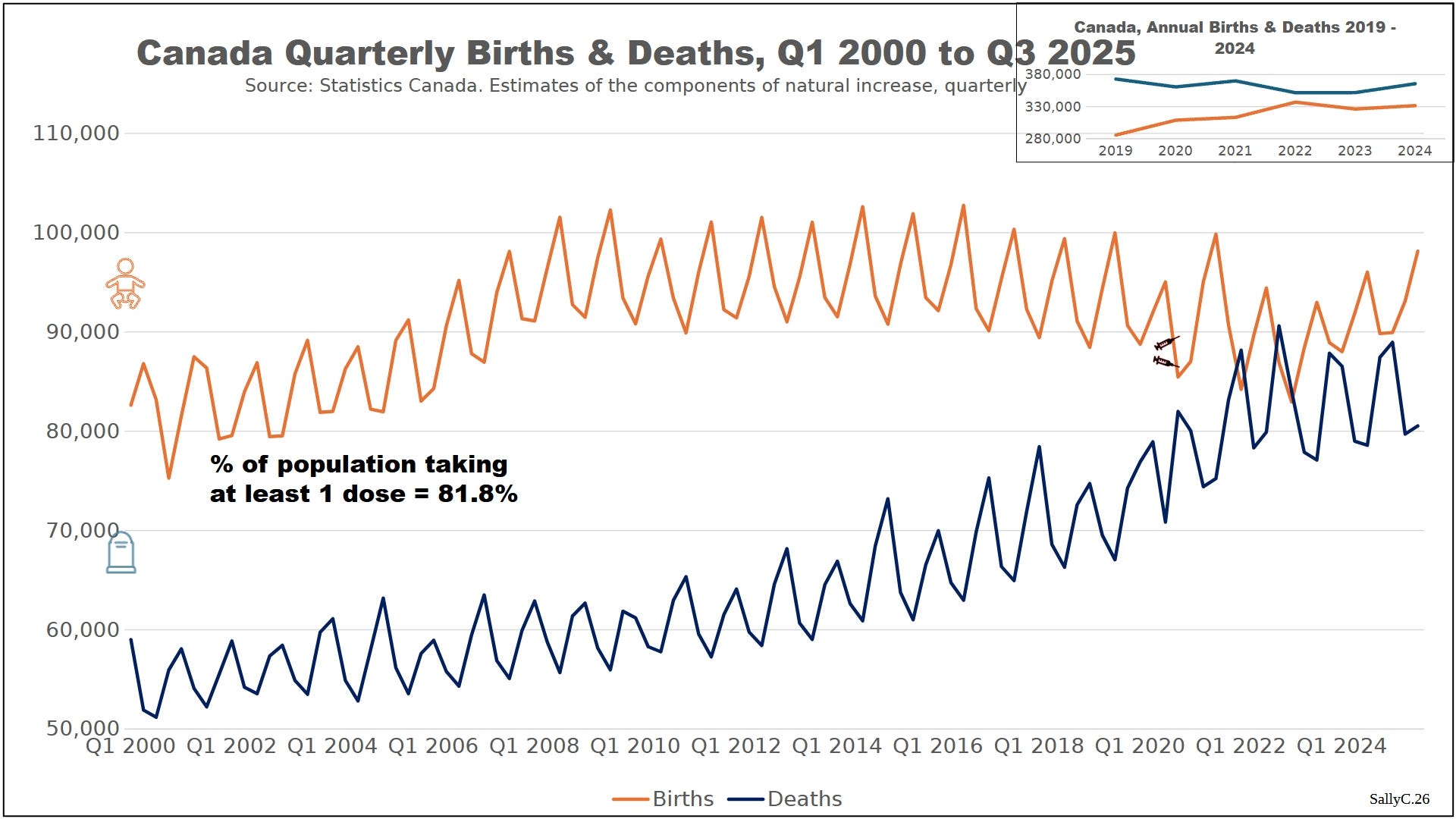
The demographic shift appears after the rollout of COVID “vaccines.” Beginning in late 2021, deaths rise above expected baselines and remain elevated through 2022 and 2023. Births trend downward over the same period, while rising deaths drive a sharp decline in natural population growth.
China: A Shift Into Negative Population Growth
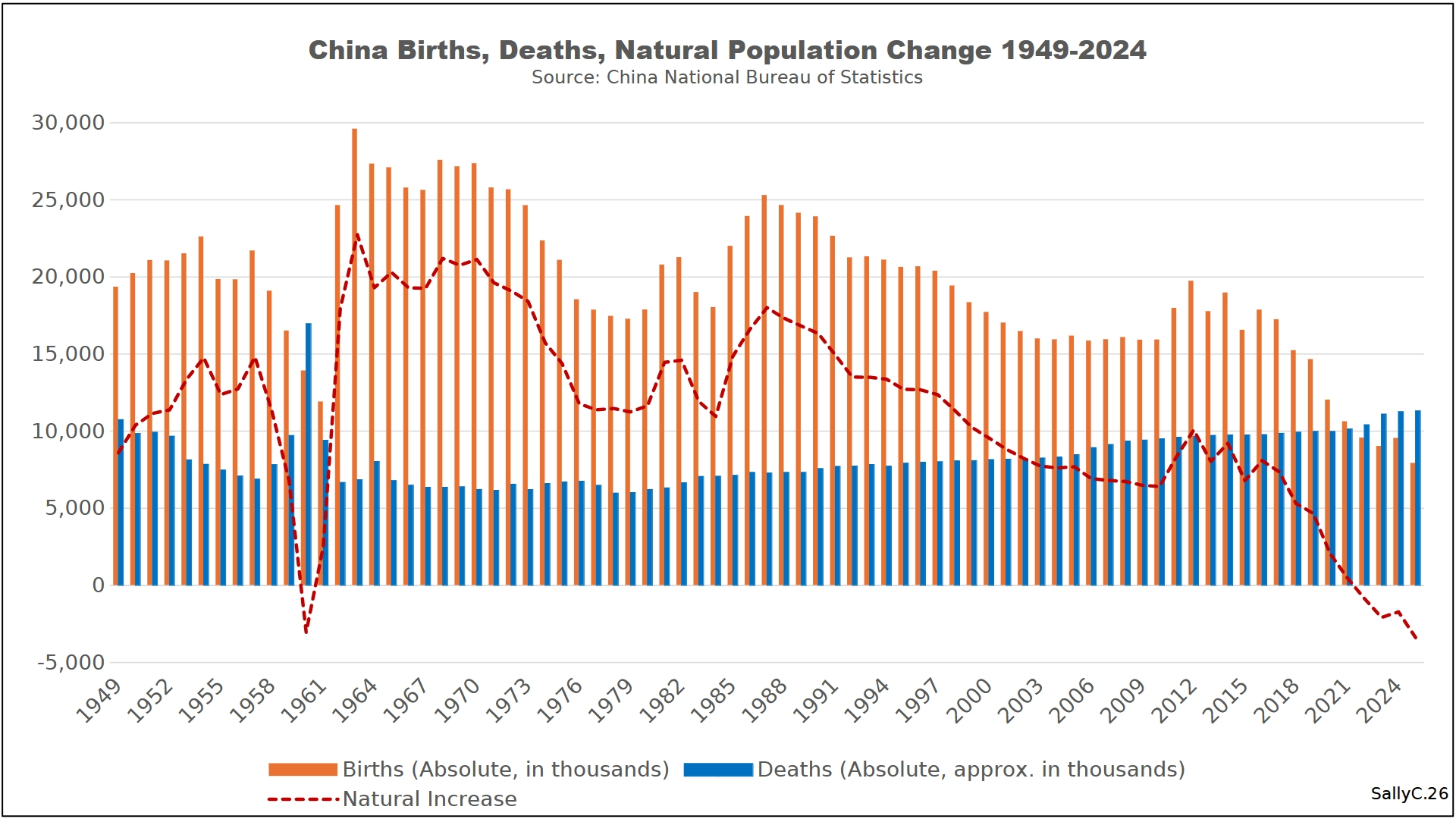
While the accuracy of China’s reported data remains uncertain, the direction of change is clear. Prior to 2020, China’s population trends were shaped by long-term demographic pressures, including an aging population and decades of low fertility following the one-child policy. Even under these constraints, births continued to outnumber deaths, allowing overall population growth to remain marginally positive.
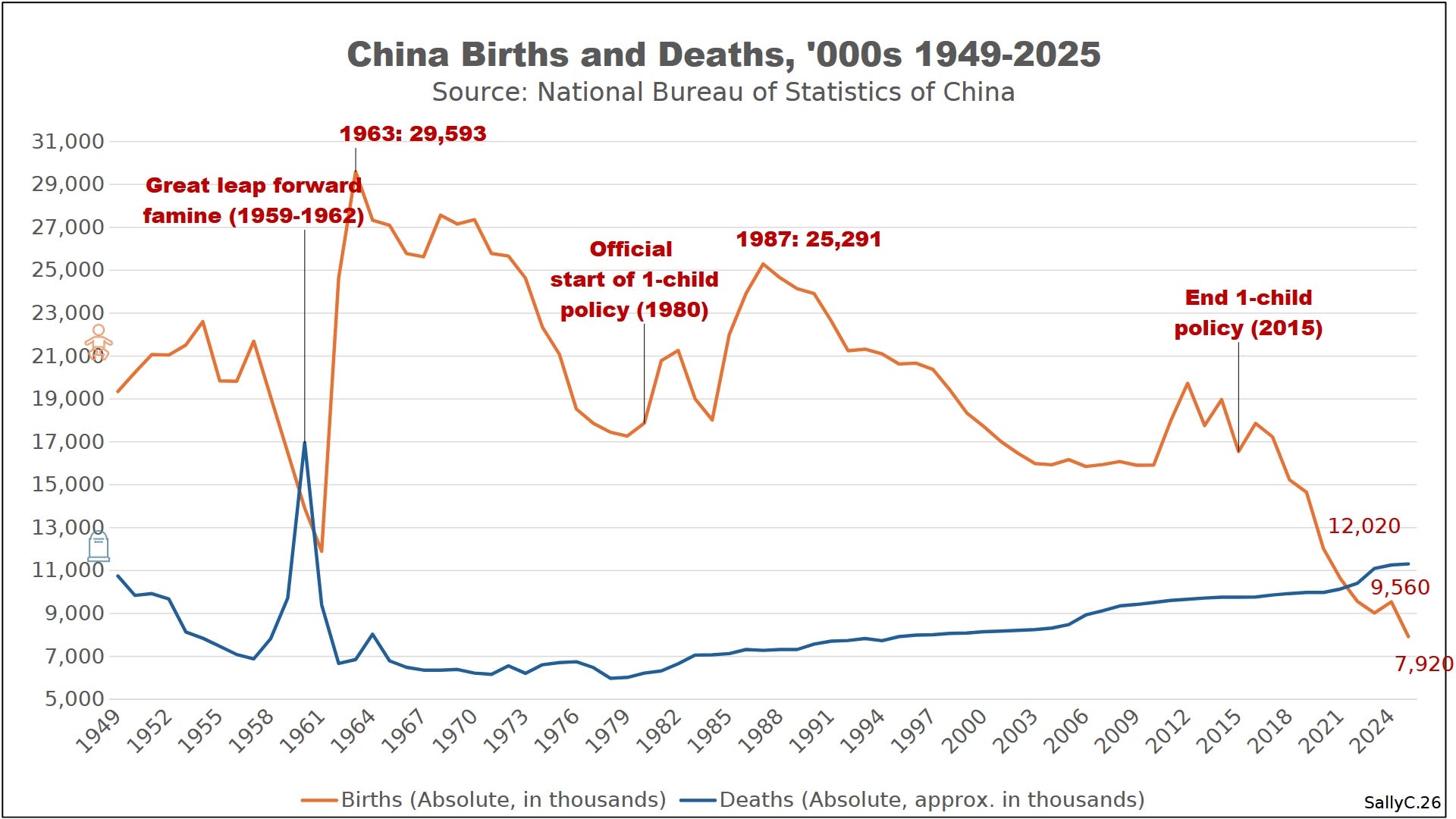
China did not deploy mRNA “vaccines,” relying instead on domestically produced injections such as Sinovac, yet exhibited the same post-2021 rise in mortality, indicating that the population-level harm is not confined to a single medical product. Deaths began to exceed births, pushing China into negative natural population growth. By 2023, official figures indicate population losses are at around one million people per year.
France: Falling Births and Infant Deaths
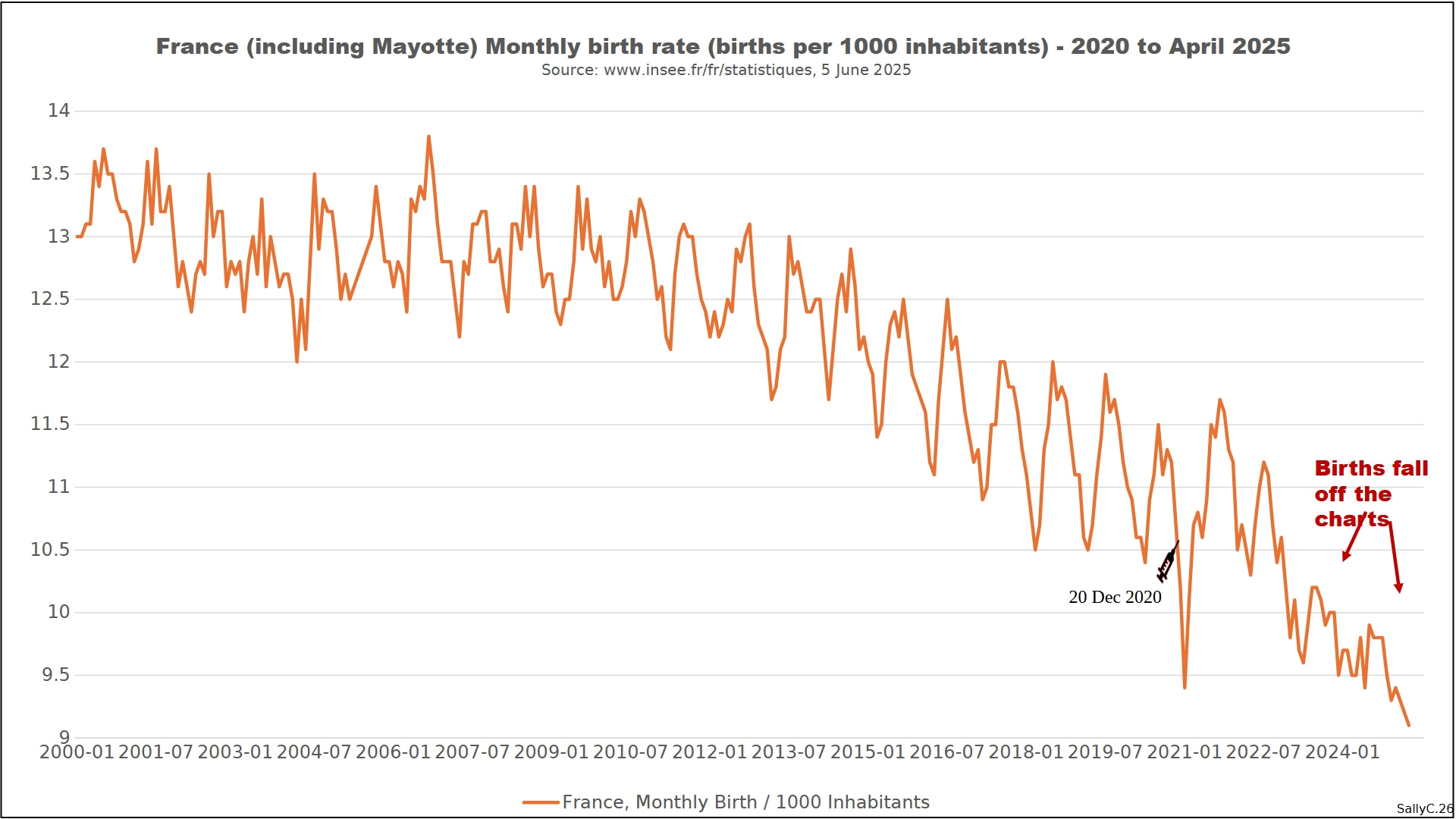
Before 2020, France’s population trends were stable and well understood. Birth rates had been slowly declining for many years, and death rates followed predictable patterns linked to aging and seasonal illness.
France did not experience a dramatic rise in overall deaths in 2020. The more significant changes appeared after 2021. From that point onward, births fell faster than expected based on previous trends.
One of the most troubling shifts involves infant mortality. After decades of steady improvement, infant deaths began to rise again from 2021 onward.
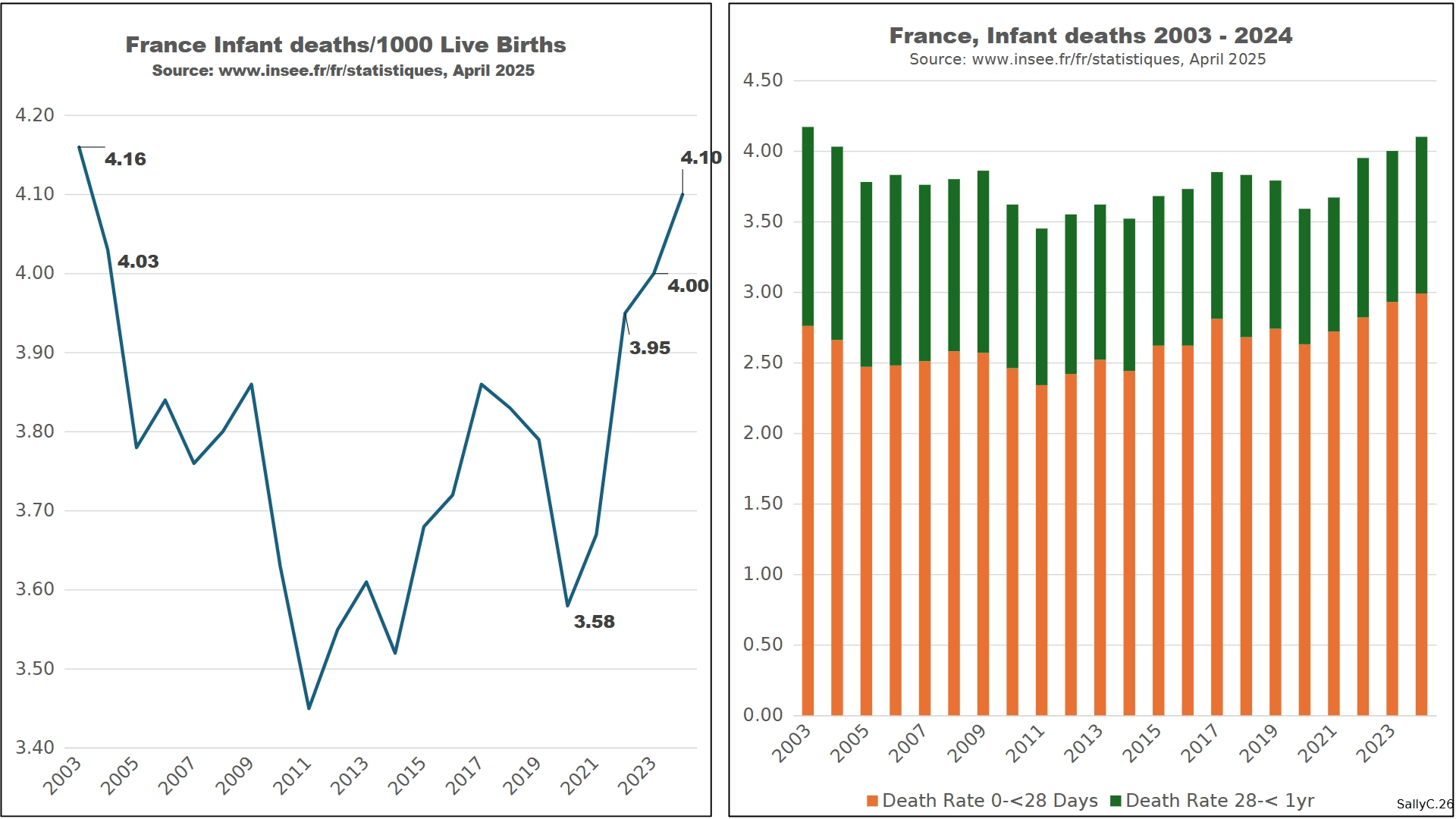
Hong Kong: A Sharp Rise in Deaths After Repeated Dosing
Before 2020, Hong Kong’s births and deaths followed clear and stable patterns typical of an aging but well-documented population. While birth rates fluctuated in response to political and economic conditions, overall mortality remained predictable from year to year.
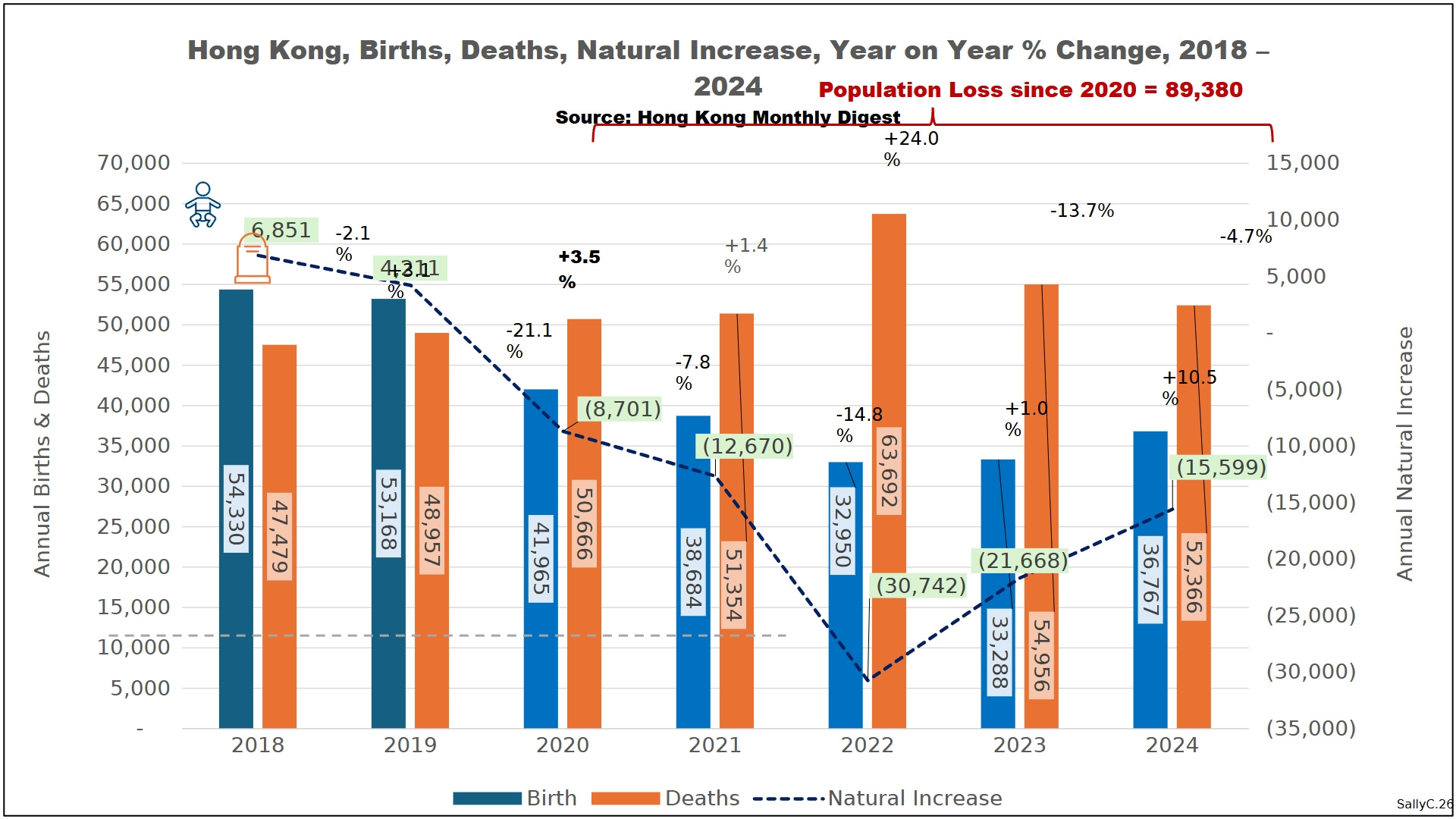
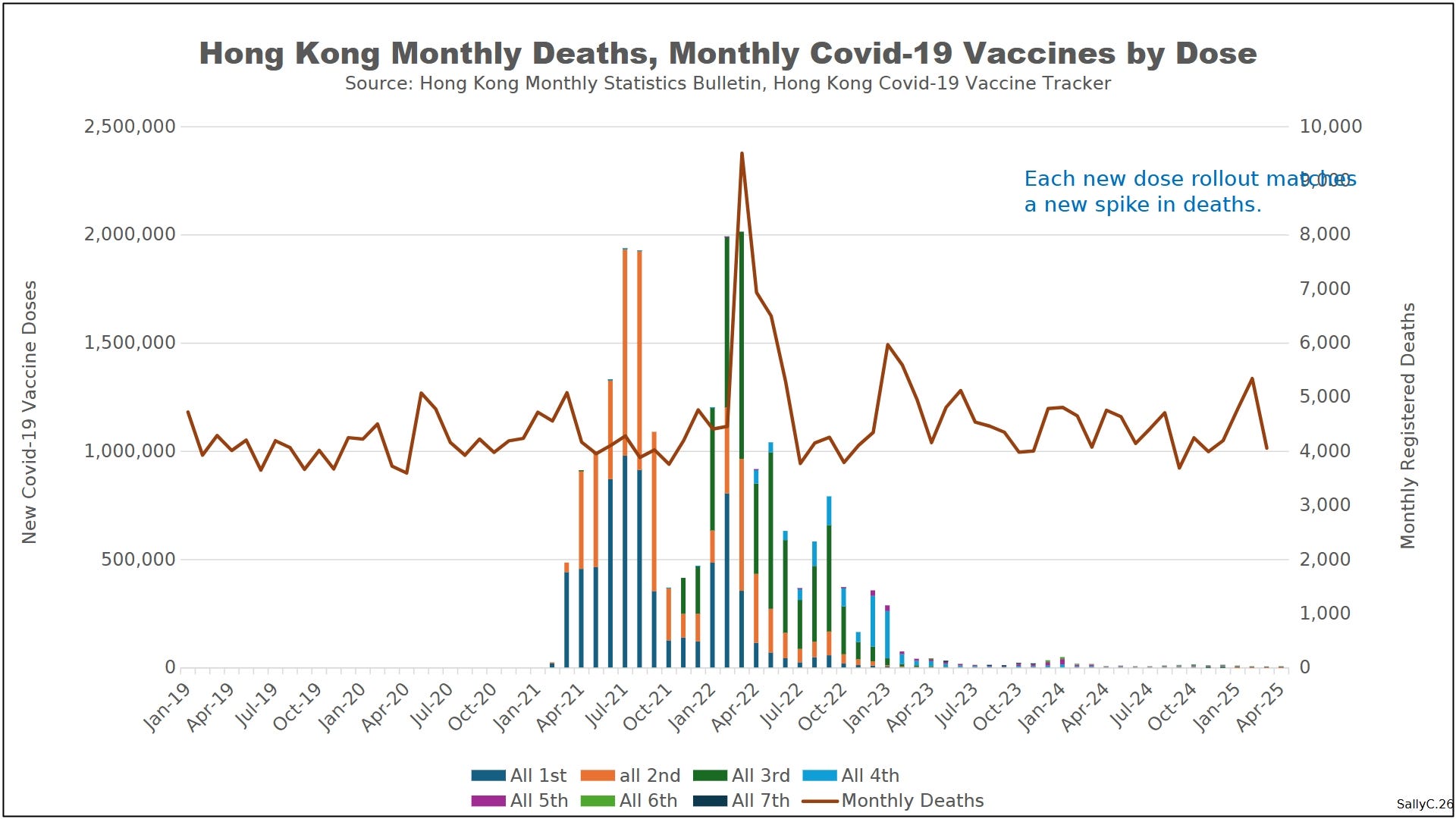
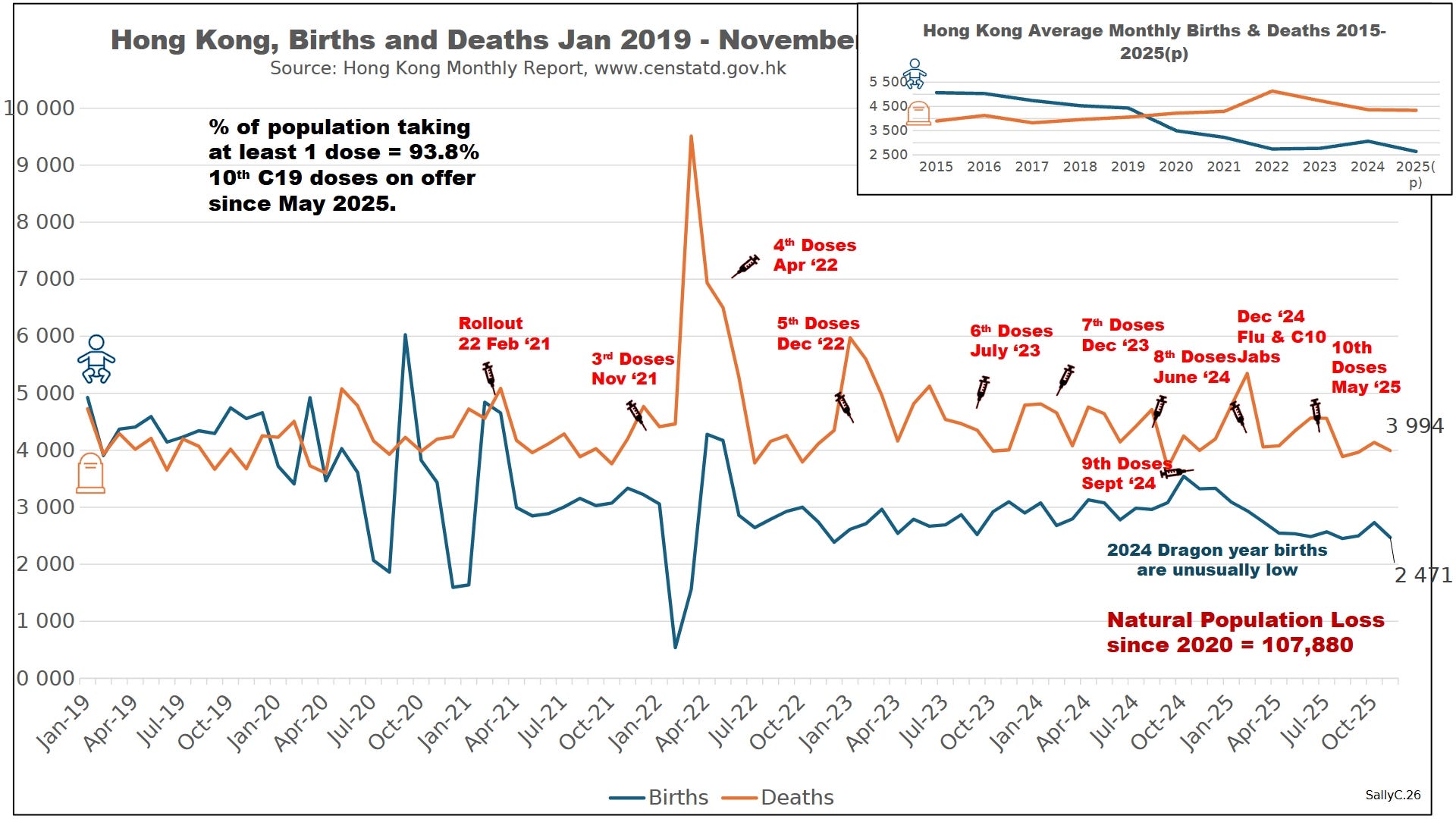
Hong Kong did not experience a dramatic increase in deaths in 2020, nor immediately following the rollout of the injections. This may reflect differences in timing, dosing, and platform, with early uptake dominated by Sinovac and later booster campaigns emphasizing mRNA products, after which mortality rose sharply and remained elevated.
Clark noted that the most pronounced spikes in deaths occurred after booster campaigns, with repeated dosing followed by repeated mortality surges. These increases were not isolated events but recurred as additional doses were promoted.
Jamaica: Elevated Deaths Following the Injection Period
Before 2020, Jamaica’s births and deaths followed gradual and predictable trends. Birth rates declined slowly over time, while deaths rose modestly in line with population growth and aging.
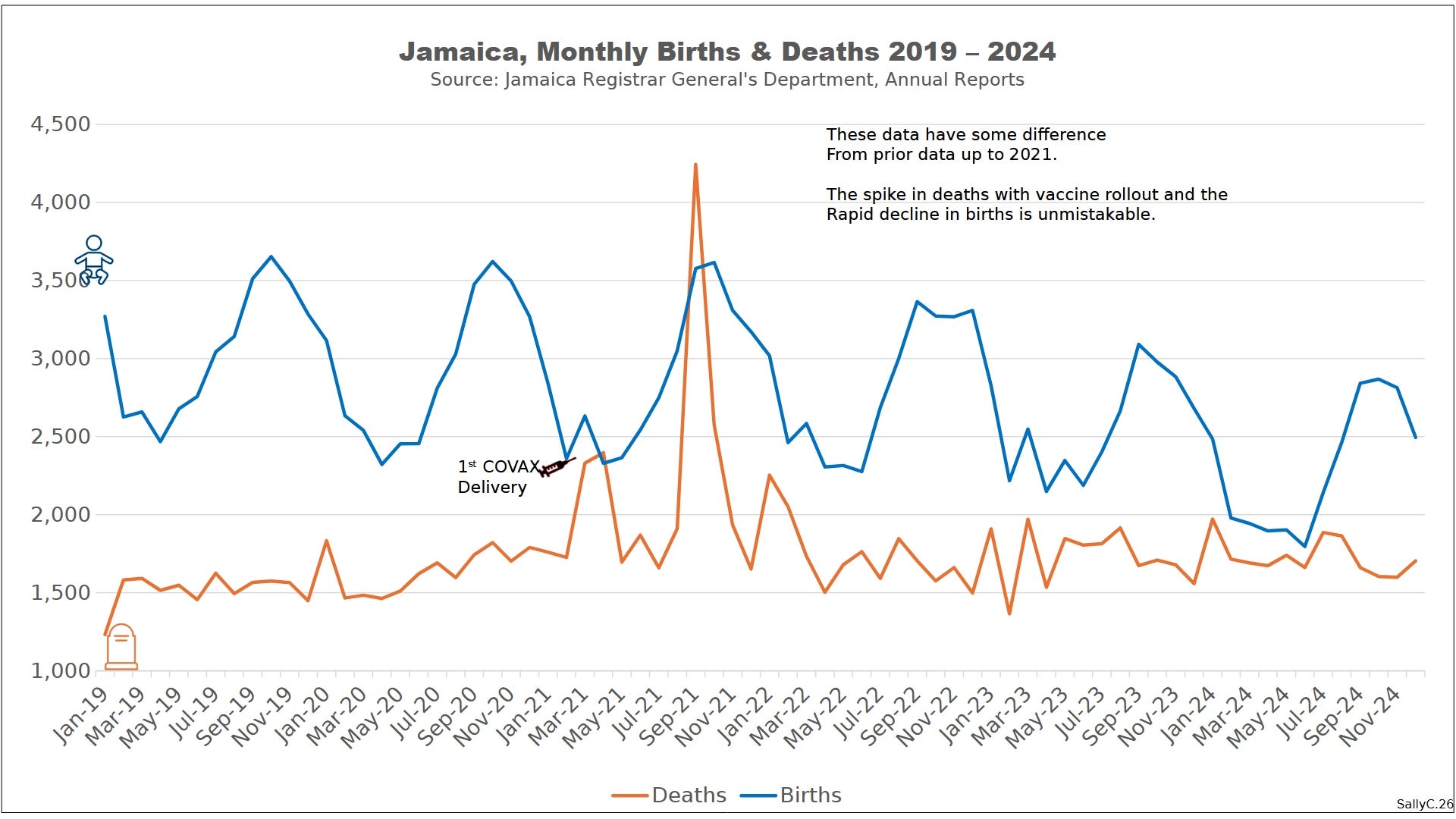
Jamaica relied primarily on non-mRNA and viral-vector COVID “vaccines” delivered through international donation programs such as COVAX, including products like AstraZeneca and Johnson & Johnson. Overall uptake remained relatively low compared to wealthier nations. Despite this, Jamaica experienced a sharp rise in deaths following the rollout period, with mortality increasing by more than 30% in a single year.
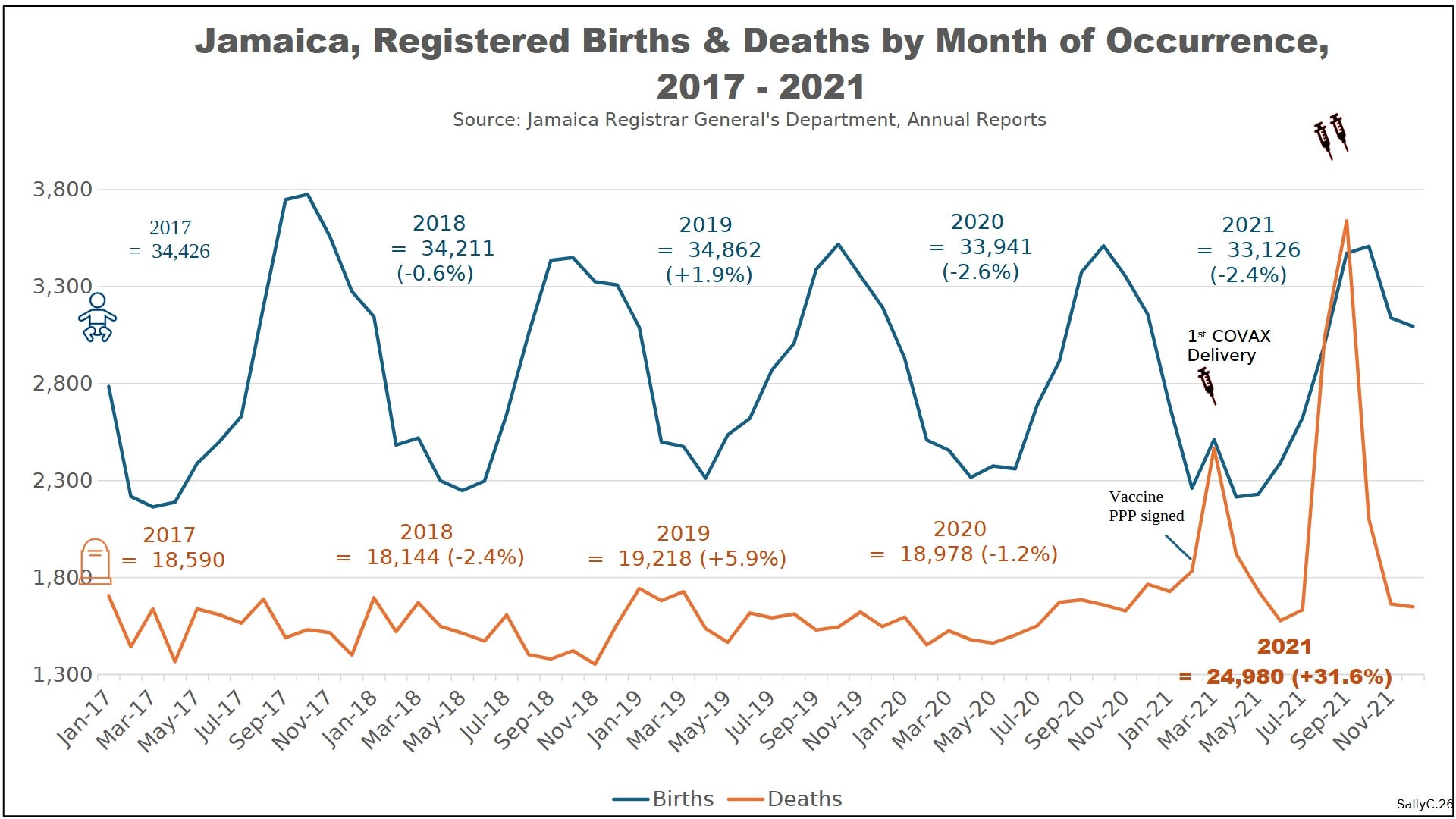
At the same time, despite fluctuations, the overall trend in births began to decline, becoming more pronounced in 2022 and continuing into 2023 and 2024.
Japan: Accelerating Population Loss After 2021
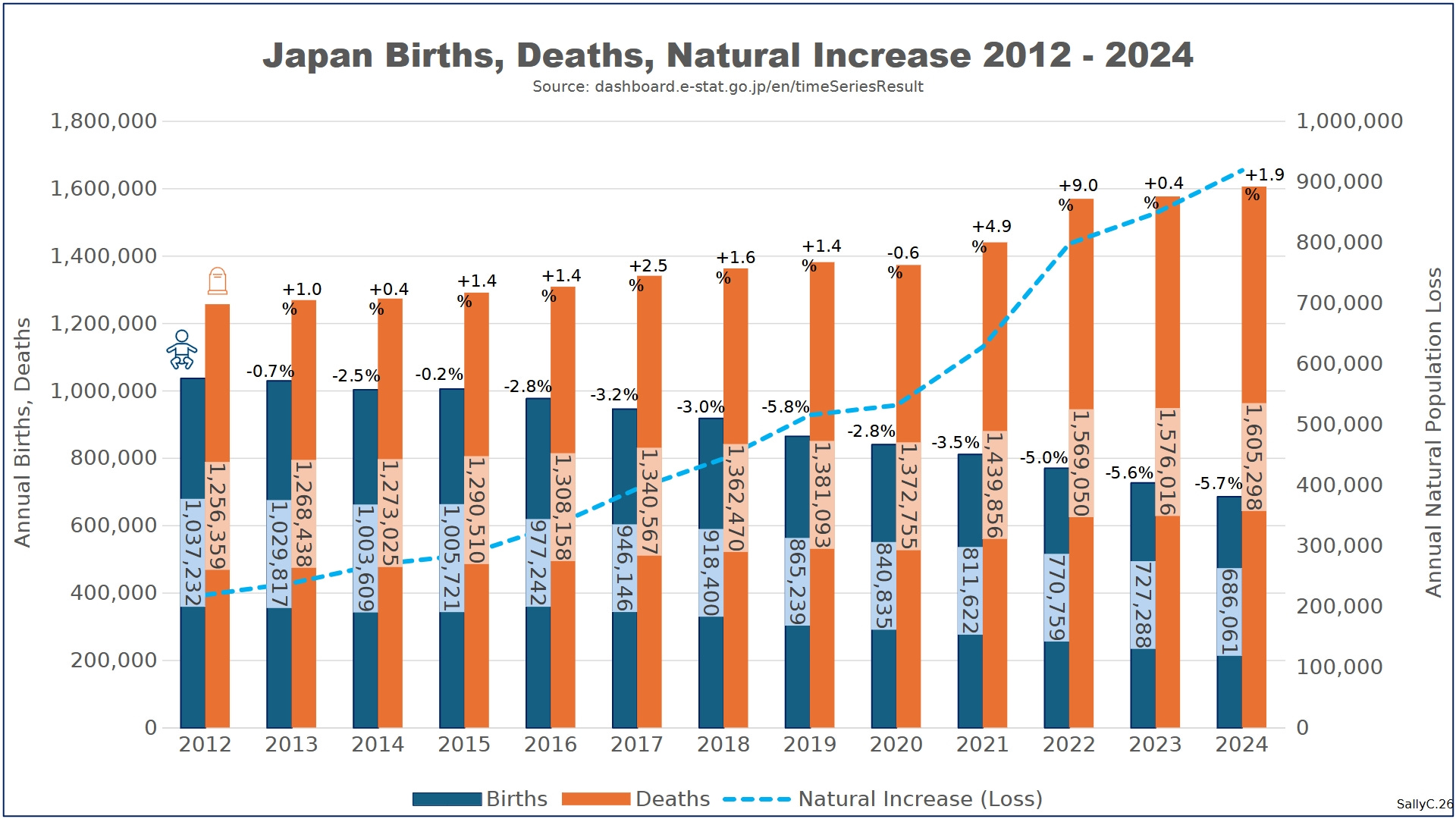
Before 2020, Japan’s demographic trajectory was already well known. The country had one of the world’s oldest populations and a long-running decline in births, yet death rates followed stable, predictable patterns shaped by seasonal illnesses and old age.
However, in 2022 there was a steep jump in death. Alongside the declining birth rate, this has created an even more pronounced population loss annually.
Macau: A Clear Post-2021 Demographic Shift
Before 2020, Macau’s births and deaths followed stable, predictable patterns typical of a small, aging population. Fertility was already low, but demographic change occurred gradually rather than abruptly.
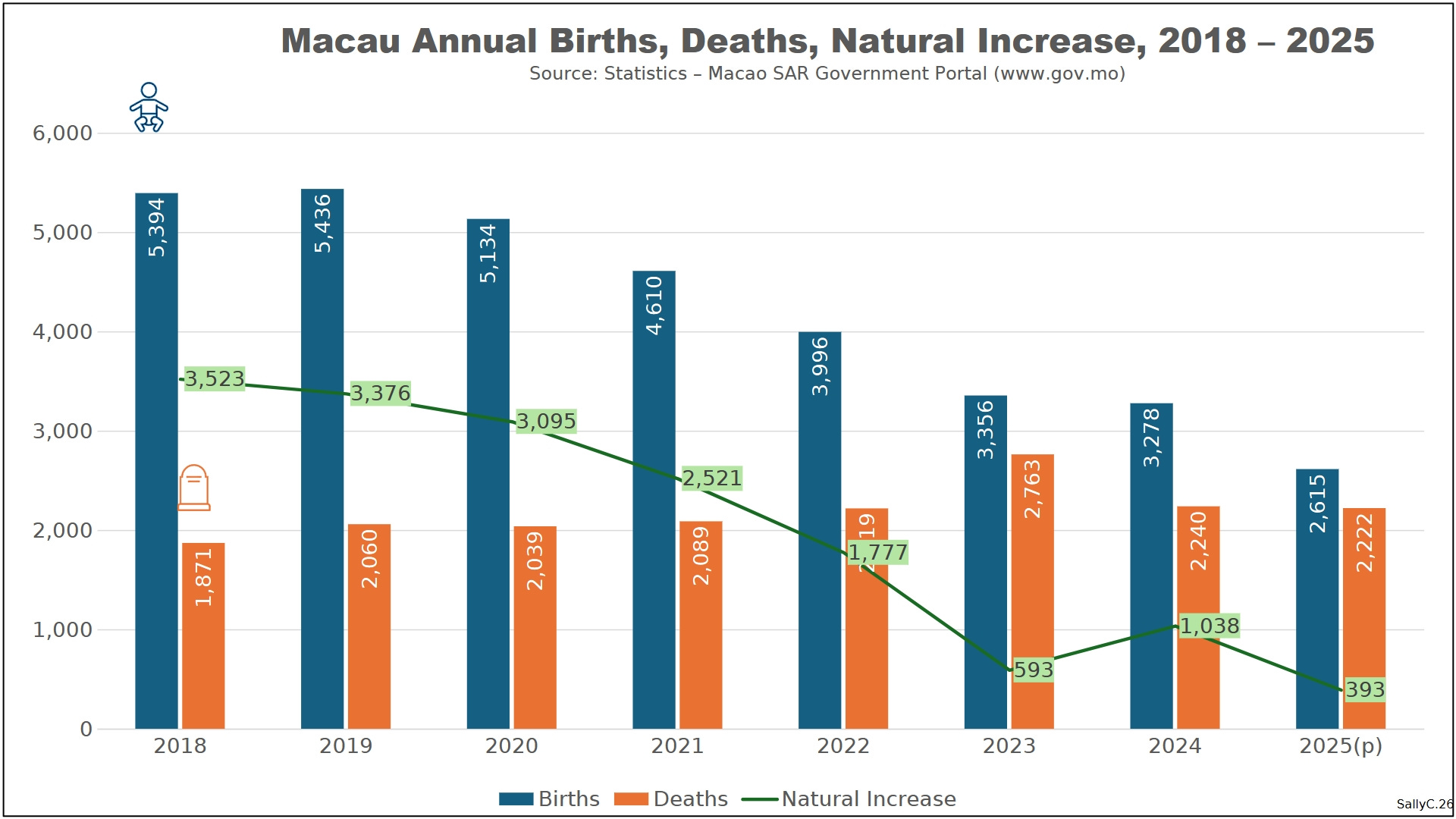
The demographic break appeared in late 2022, when mortality increased very suddenly, standing out as a clear danger signal rather than standard variation.
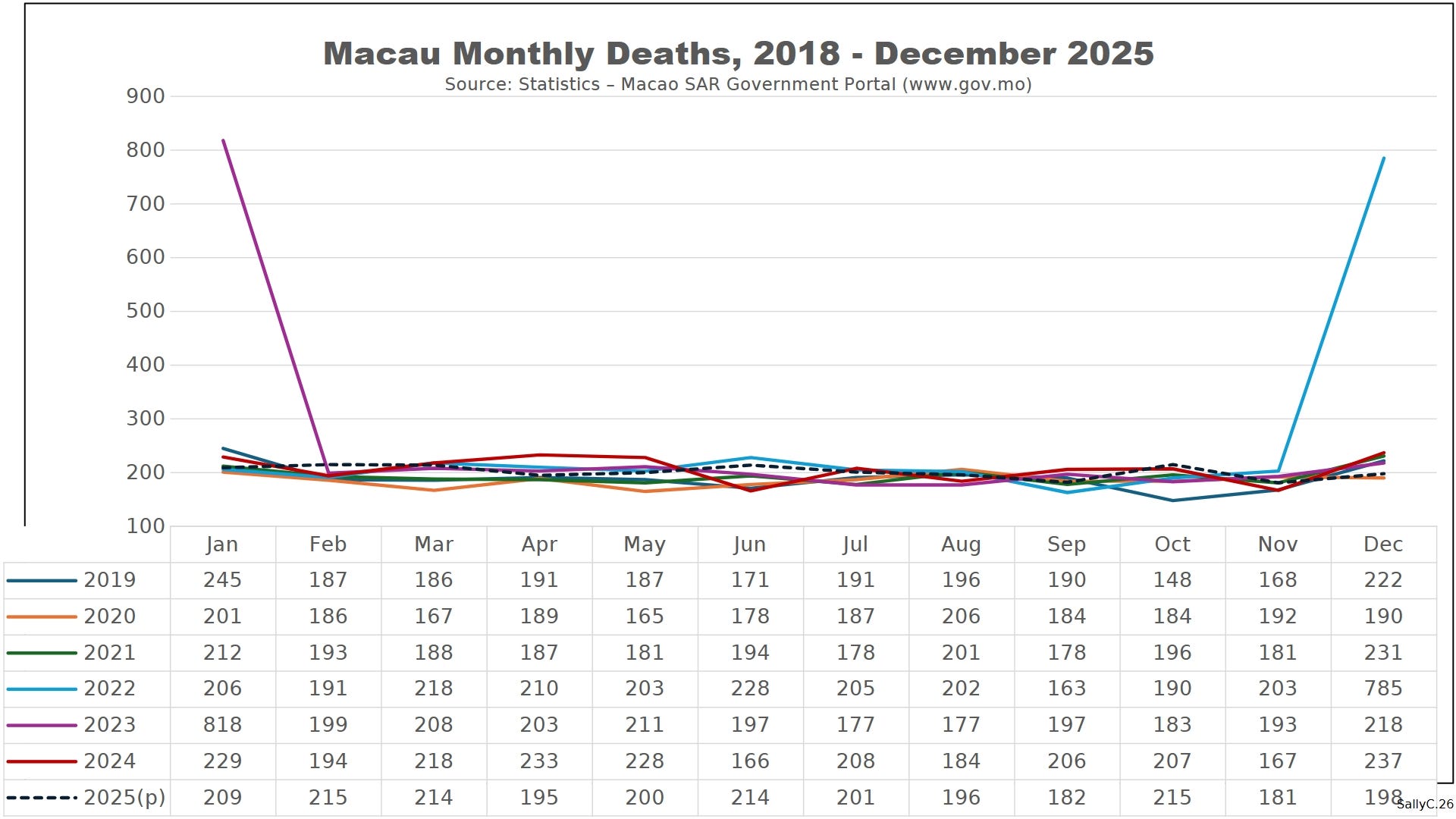
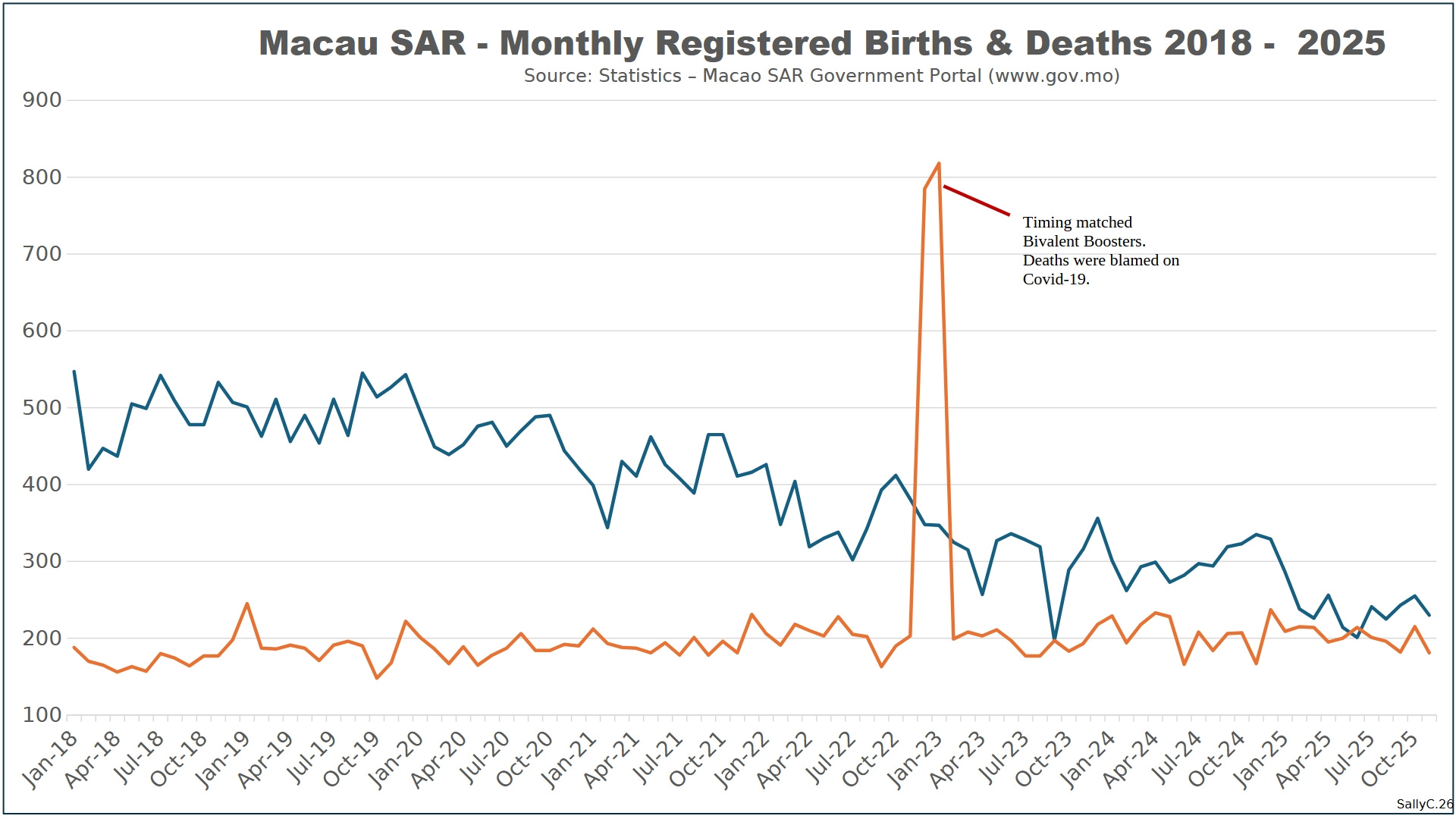
Sally Clark noted that this late-2022 surge coincided with renewed vaccination and booster promotion during the winter respiratory season, when COVID and influenza injection campaigns were combined. Rather than producing a protective effect, this period aligned with a steep rise in deaths, suggesting cumulative or compounding harm.
At the same time, births declined more sharply than factors such as aging would predict, pushing Macau into sustained natural population loss.
Malaysia: Early Mortality Rise Followed by Persistent Damage
Before 2020, Malaysia’s births and deaths followed gradual, predictable trends typical of a middle-income country undergoing demographic transition. Fertility declined slowly over time, while deaths rose modestly with population growth and aging.
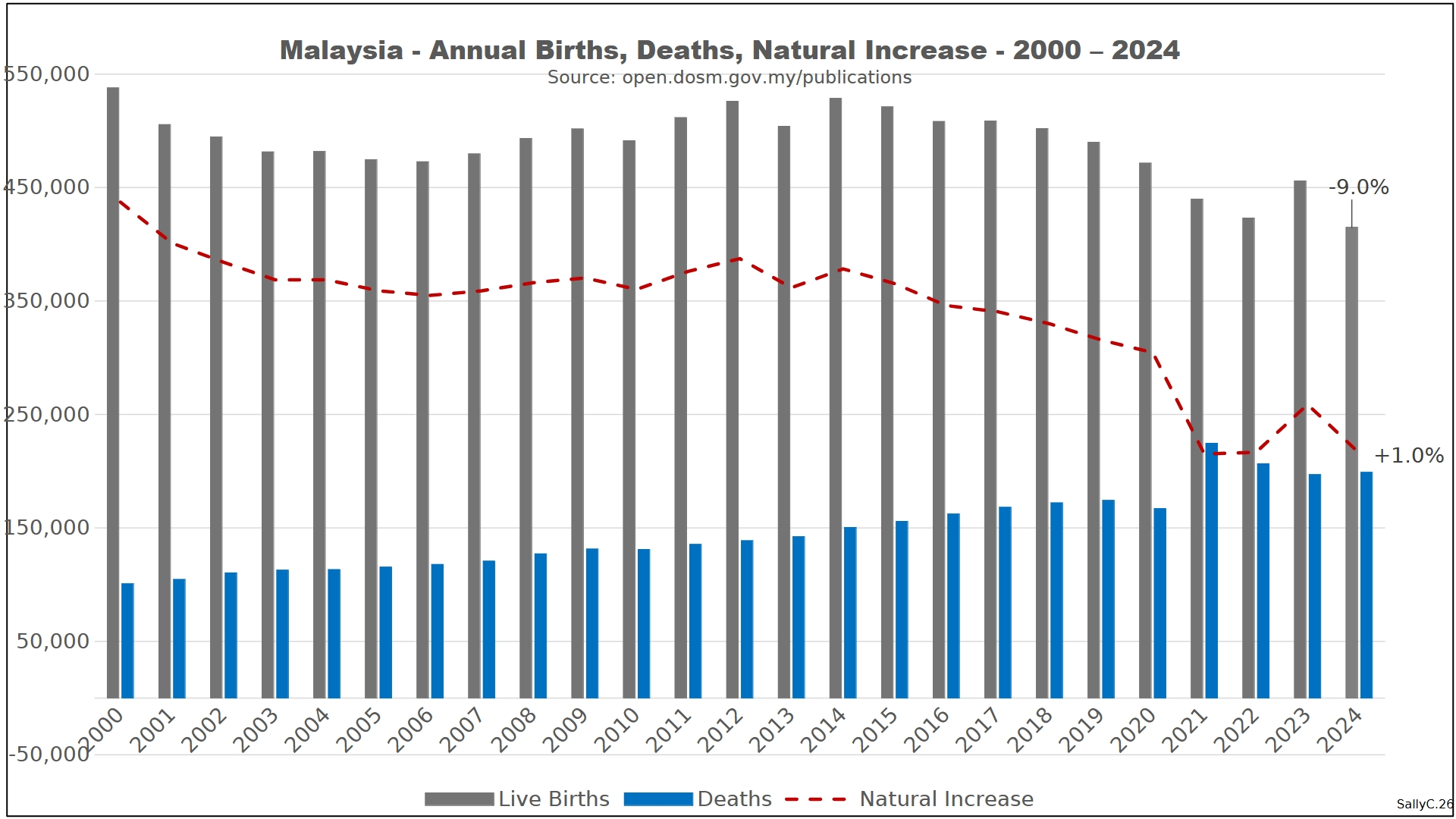
The demographic shift appeared early in 2021, coinciding with Malaysia’s rapid rollout of COVID “vaccines.” Sally Clark noted that deaths rose sharply soon after injections began, rather than later in the period.
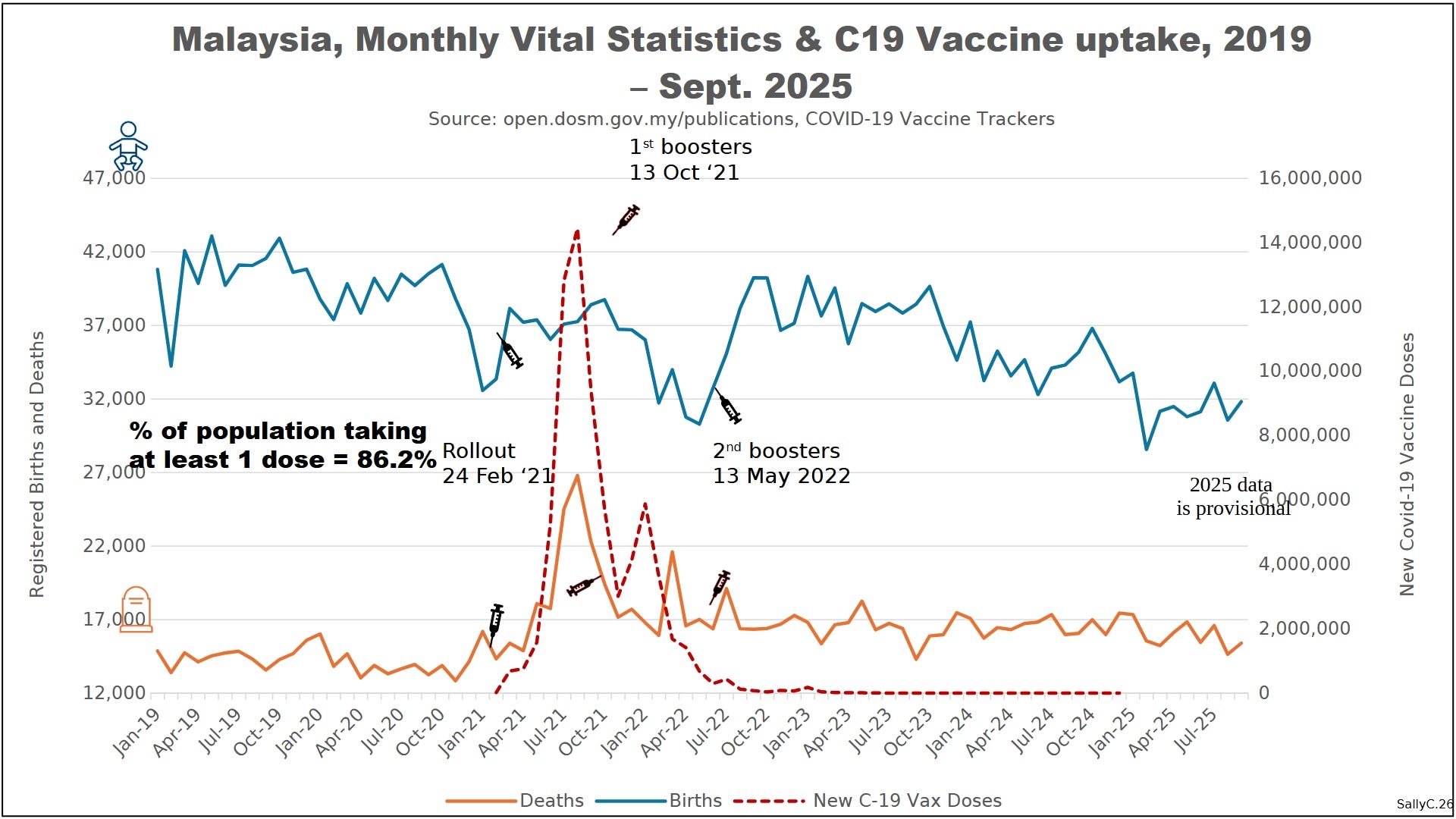
Far from a short-term spike in harm, mortality remained elevated through 2022 and beyond, failing to return to pre-2020 baselines.
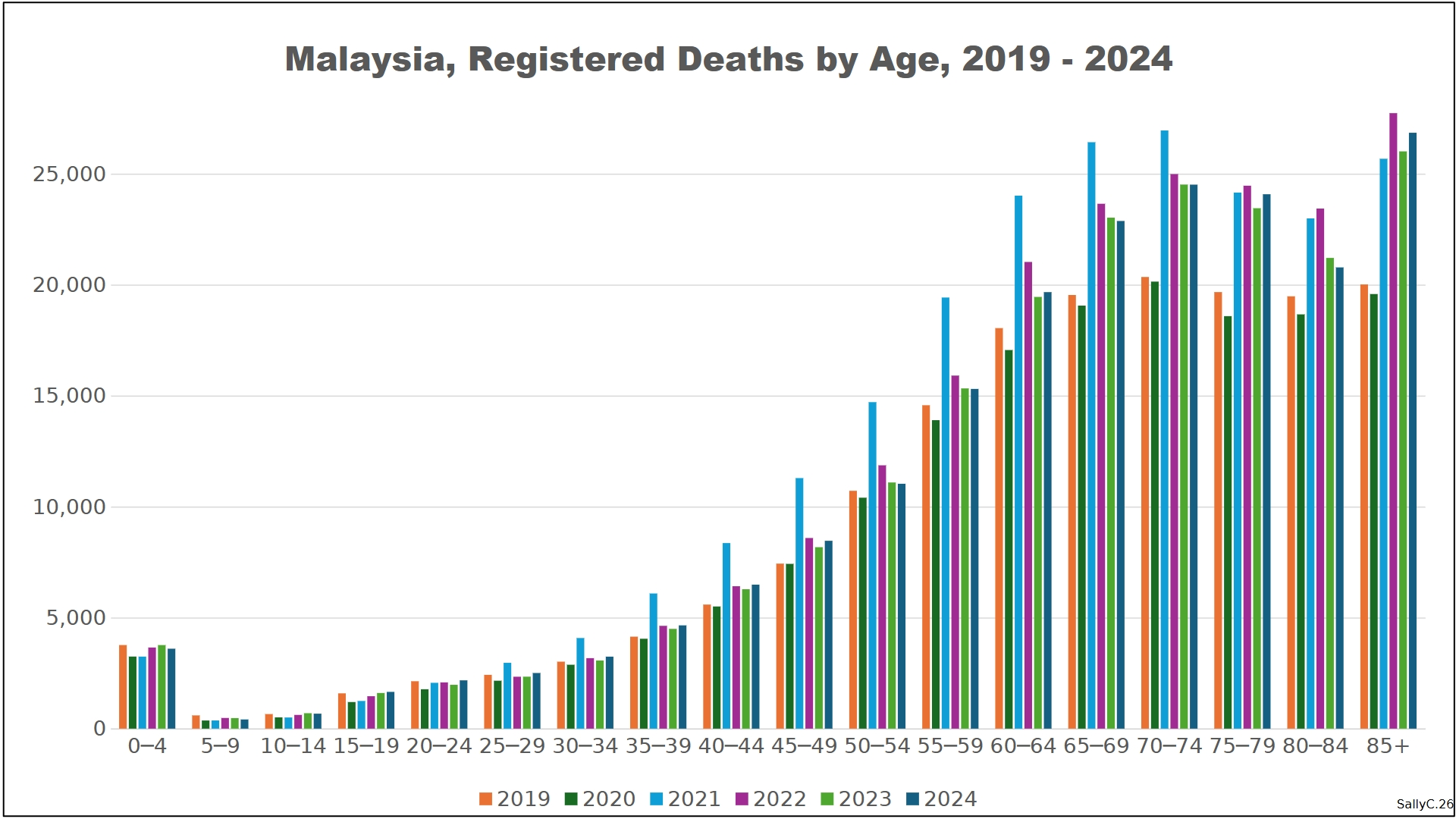
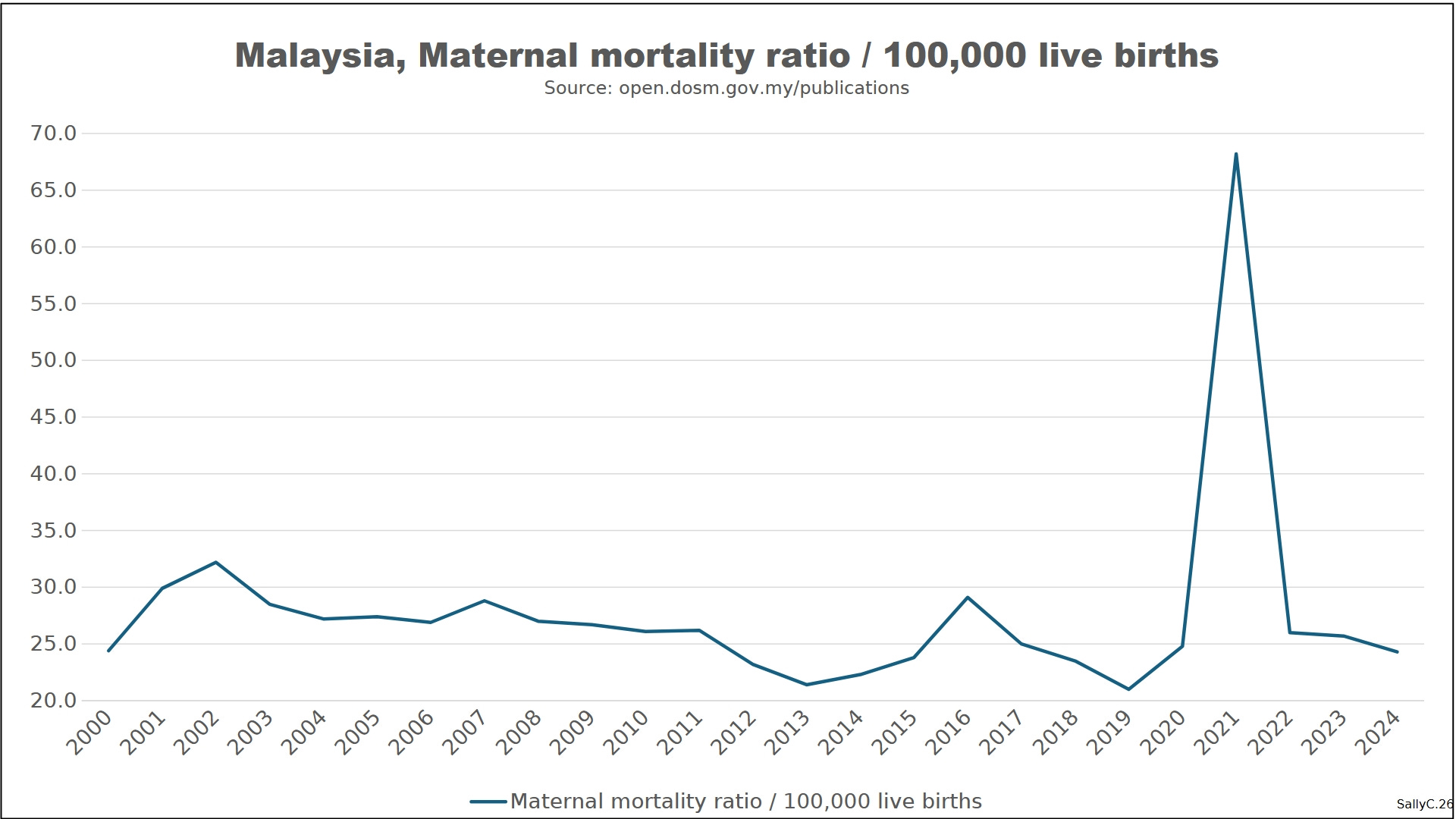
Clark also drew attention to a huge rise in maternal deaths during this same post-rollout period. The timing places maternal deaths within the broader mortality rise rather than as an isolated issue.
Births showed a delayed but pronounced response. Following a short lag consistent with biological timing, births declined steeply from late 2021 onward, continuing into 2022 and 2023.
As deaths remained high and births weakened, Malaysia’s natural population growth deteriorated significantly. Clark emphasized that the sequence matters: mortality rose first after injection campaigns began, followed by falling births, mirroring the same post-2021 pattern observed across multiple regions.
The Philippines: An Early and Unambiguous Mortality Signal
Before 2020, the Philippines’ demographic patterns followed stable and well-understood trends. Births remained relatively high compared to many Western countries, while deaths changed gradually over time in line with population growth and age structure. These patterns provide a clear baseline against which later changes become visible.
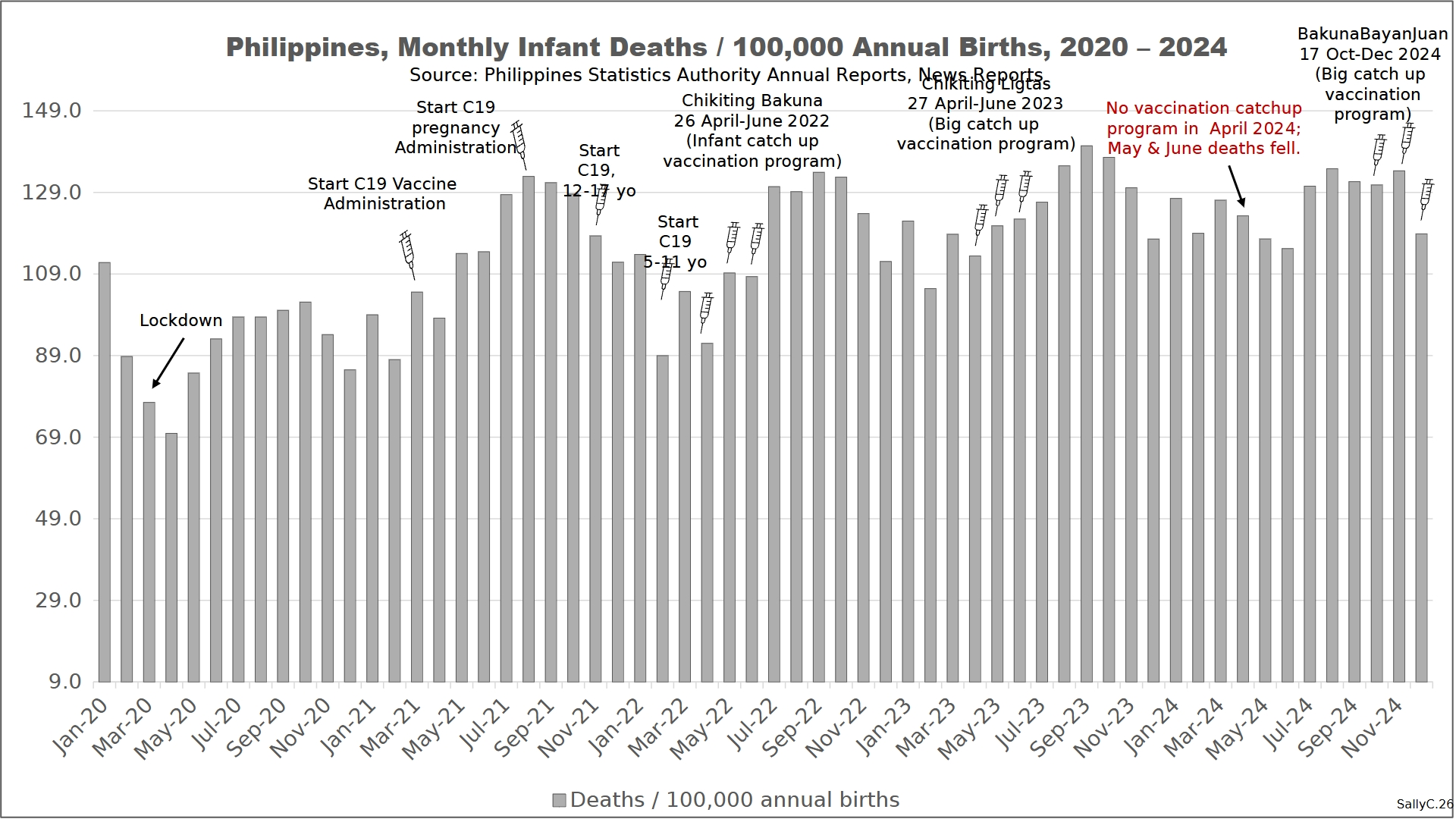
The demographic break appeared immediately after the rollout of COVID “vaccines” in 2021.The Philippines showed a rapid rise in deaths shortly after injections began.
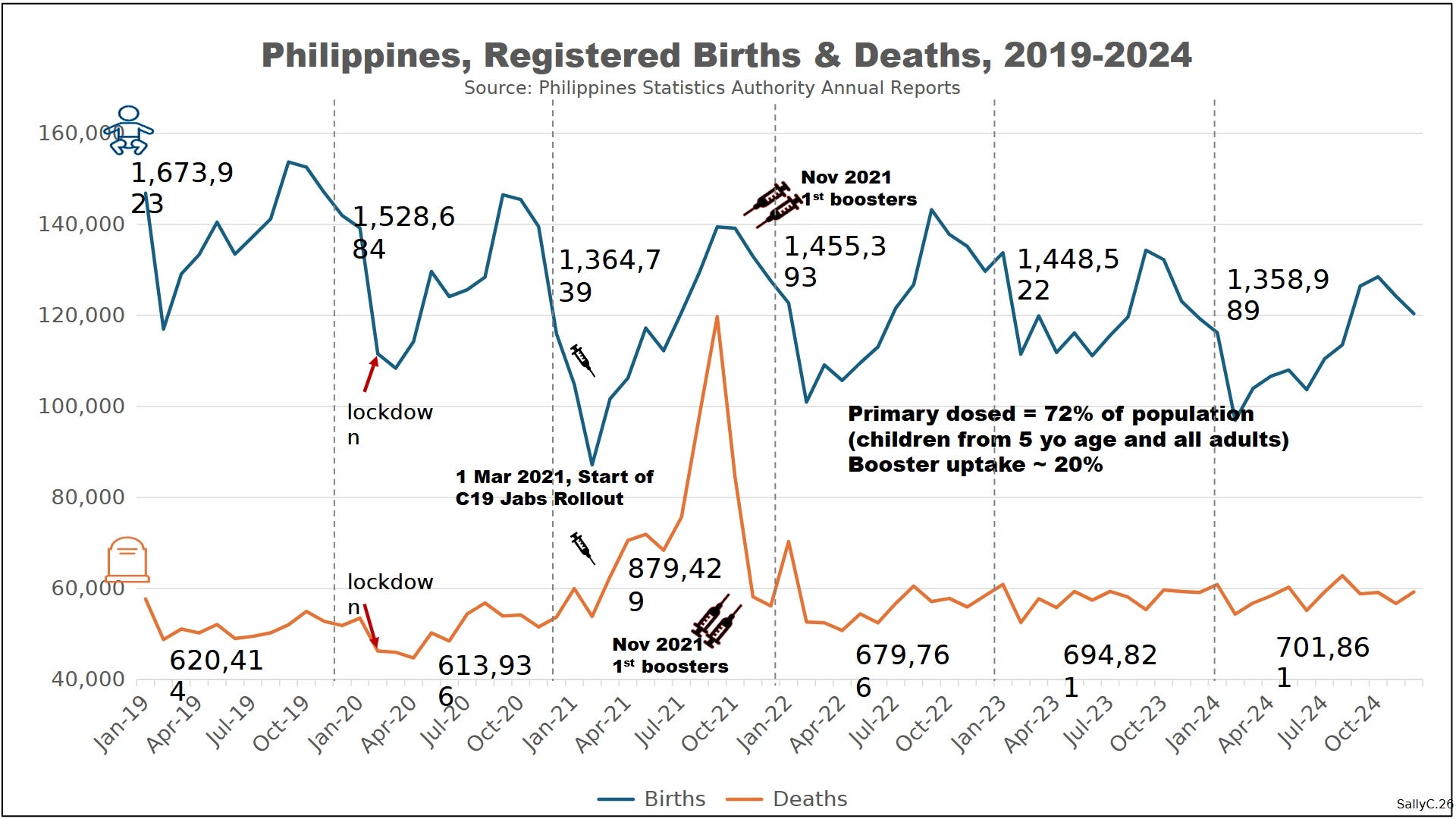
A key factor in Clark’s analysis was the quality and transparency of the data. The Philippine Statistics Authority released detailed monthly vital statistics, allowing changes in deaths to be tracked closely over time.
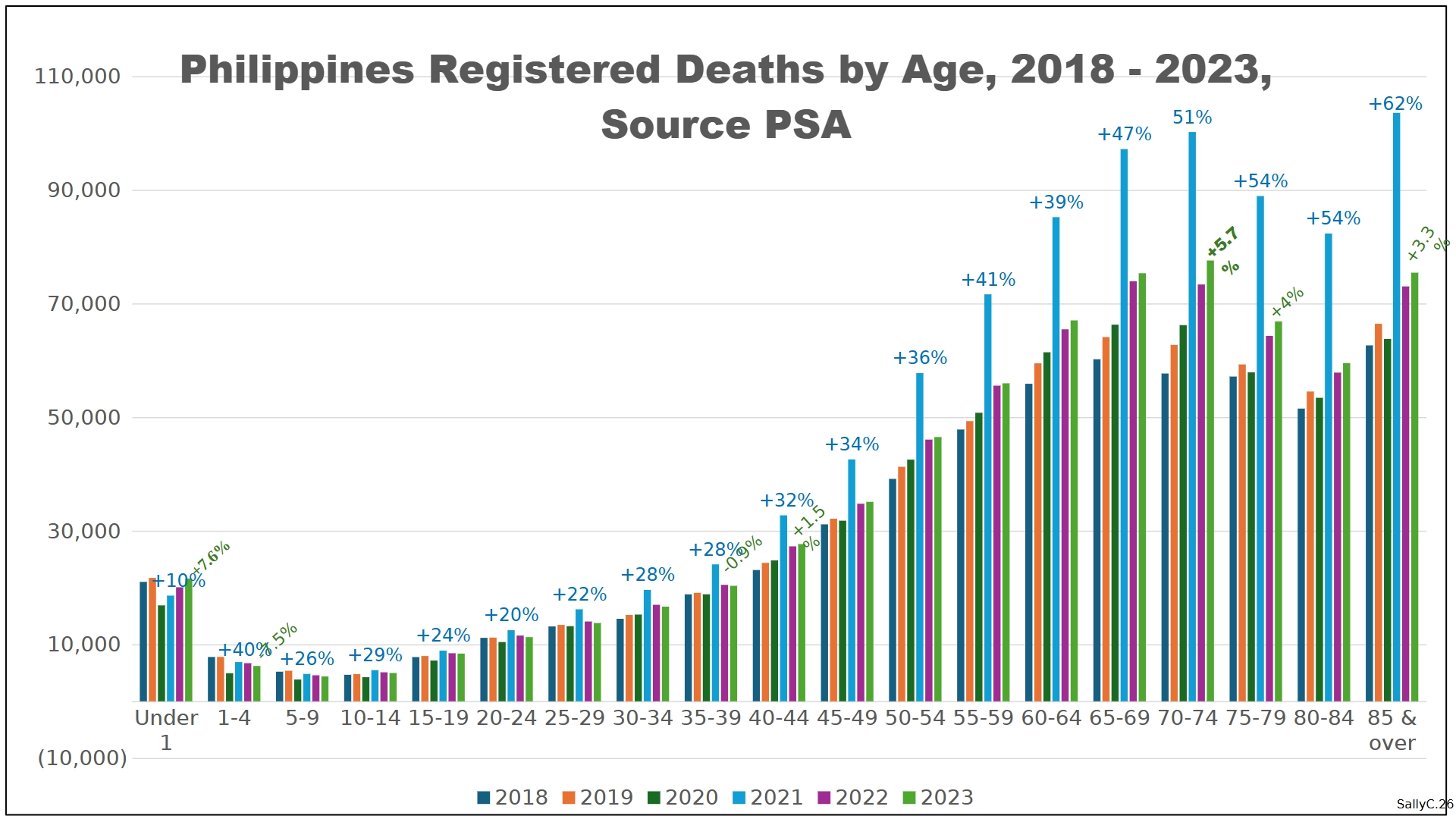
“Vaccination” in the Philippines initially relied heavily on Sinovac. Clark said that despite differences in platforms and sourcing compared to Western countries, the population-level outcome was similar. Mortality rose sharply after rollout and remained elevated rather than returning to baseline, indicating that the effect is not limited to a single product or manufacturer.
Births showed a delayed but corresponding decline. After a lag following the injection period, they fell steeply from late 2021 onward. As deaths remain elevated and births weaken, natural population growth deteriorates.
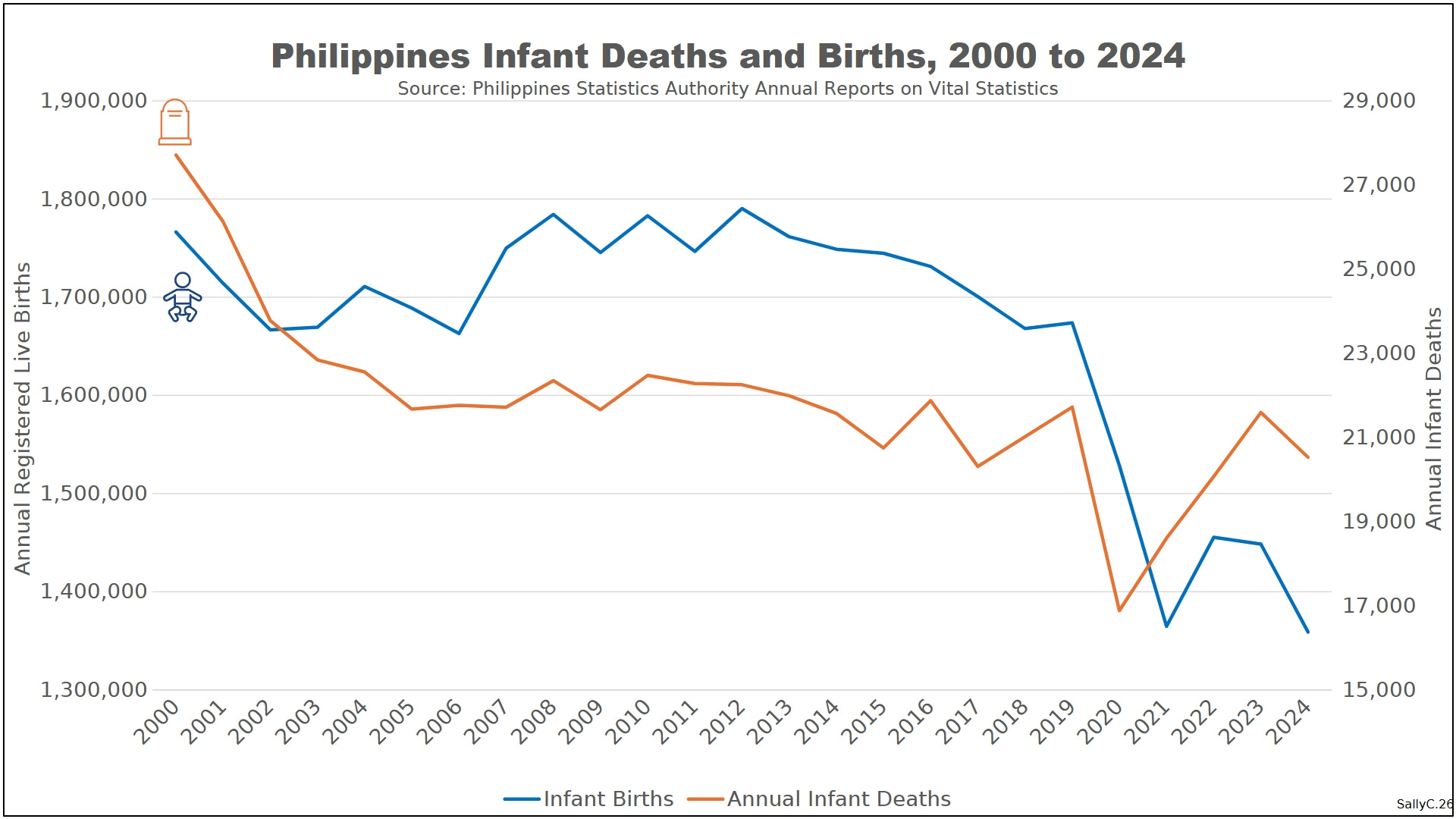
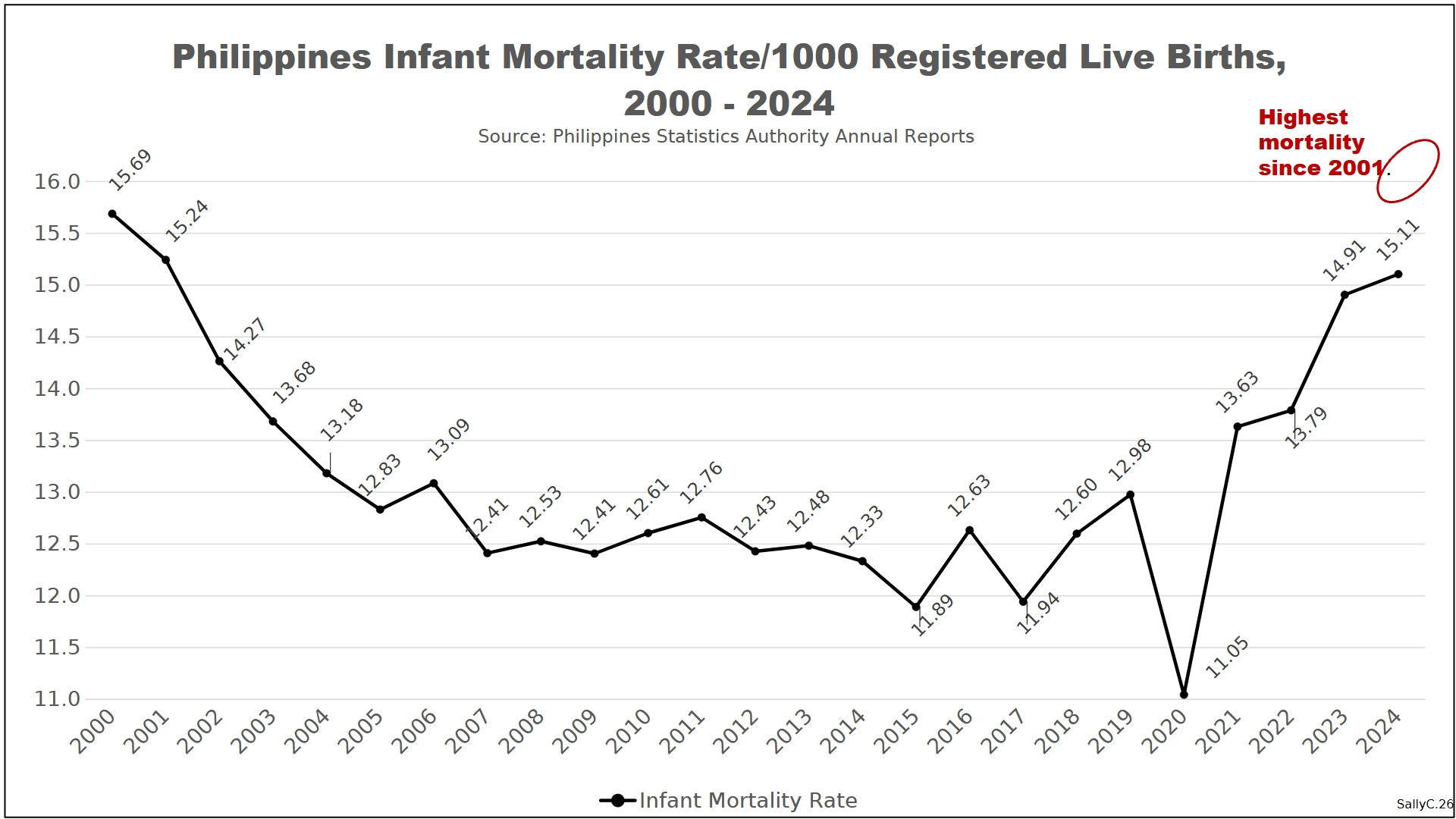
Clark stressed that the Philippines is not an outlier but an early indicator. The same post-2021 pattern seen later in wealthier nations appeared in the Philippines clearly: stability during the early period, followed by rising deaths and falling births after the injection rollout.
Singapore: High Uptake, Same Post-2021 Pattern
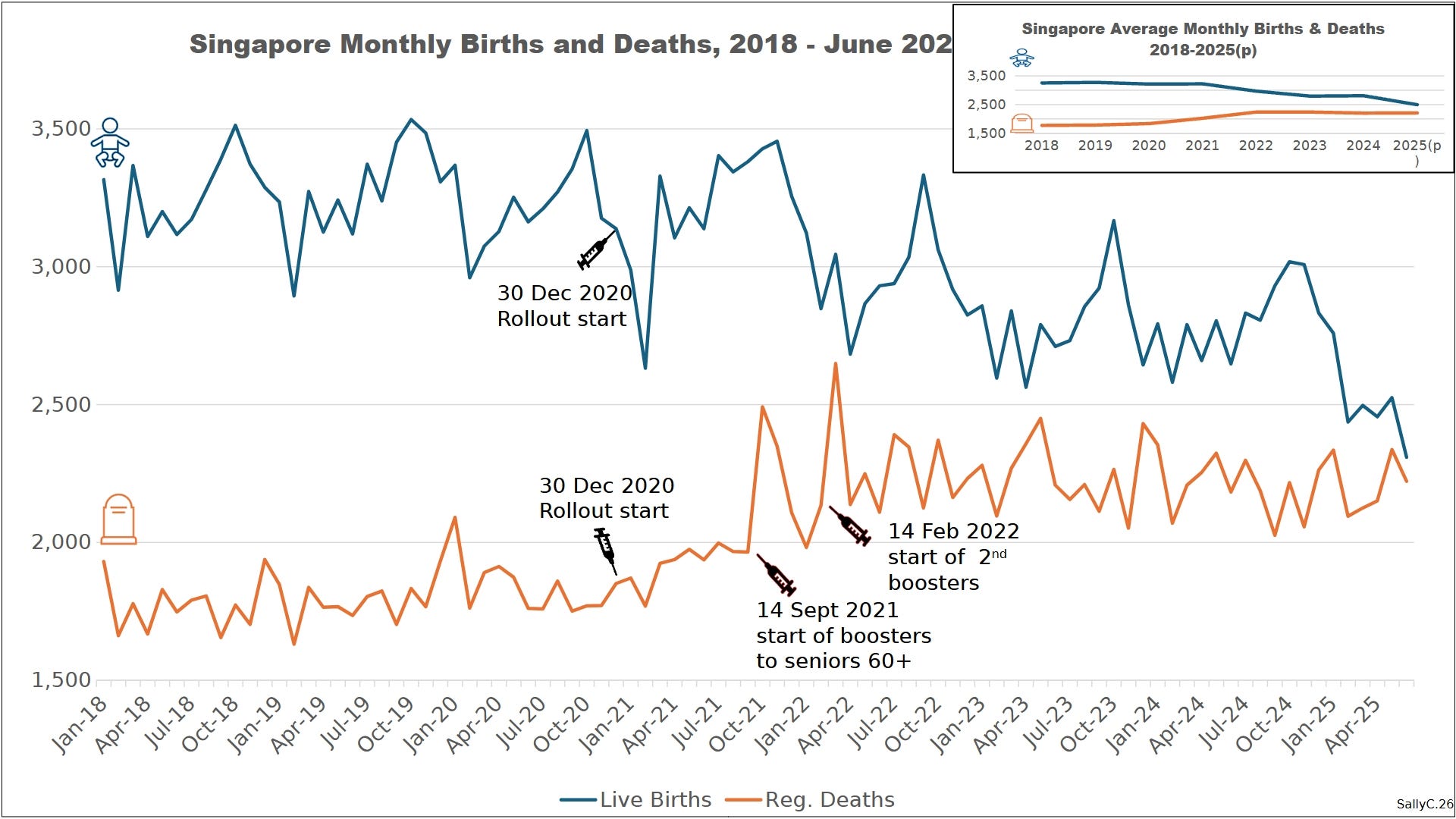
Before 2020, Singapore’s demographic trends were stable and tightly managed, with low fertility and predictable mortality in a highly regulated, high-income population. Birth and death rates changed gradually rather than abruptly, until 2021 with a large increase in deaths and 2022 with a sharp decline in births.
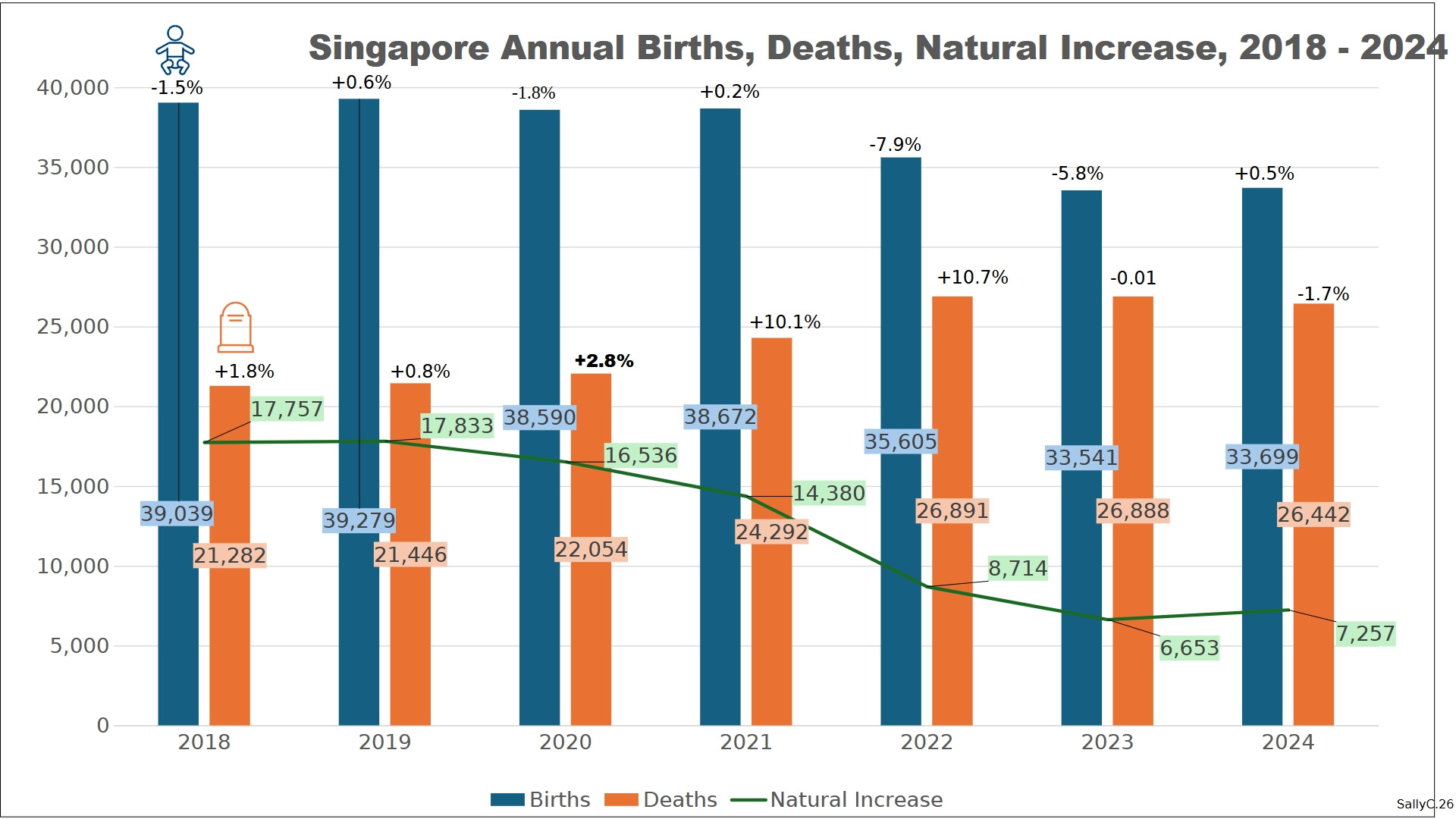
The shift appeared after 2021, following Singapore’s rapid and near-universal rollout of COVID “vaccines” and subsequent booster campaigns.
South Korea: Birth Collapse And Rising Mortality
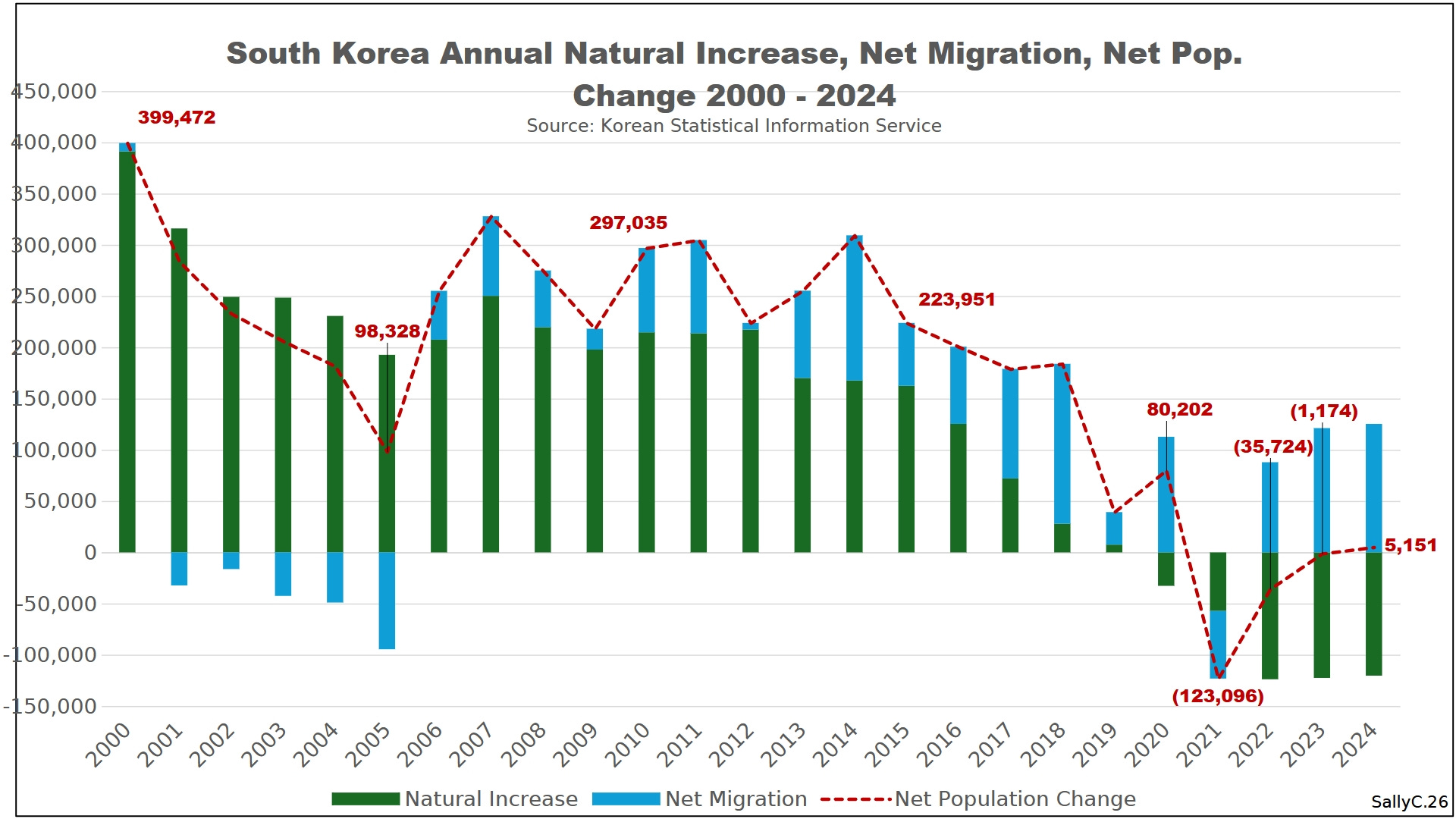
Before 2020, South Korea was already known for having the lowest fertility rate in the developed world. Births had been gradually declining for decades, driven by economic pressures, delayed marriage, and cultural shifts. Despite this, mortality remained stable and predictable, reflecting a highly developed healthcare system and long life expectancy. The challenge was serious, but it unfolded gradually.
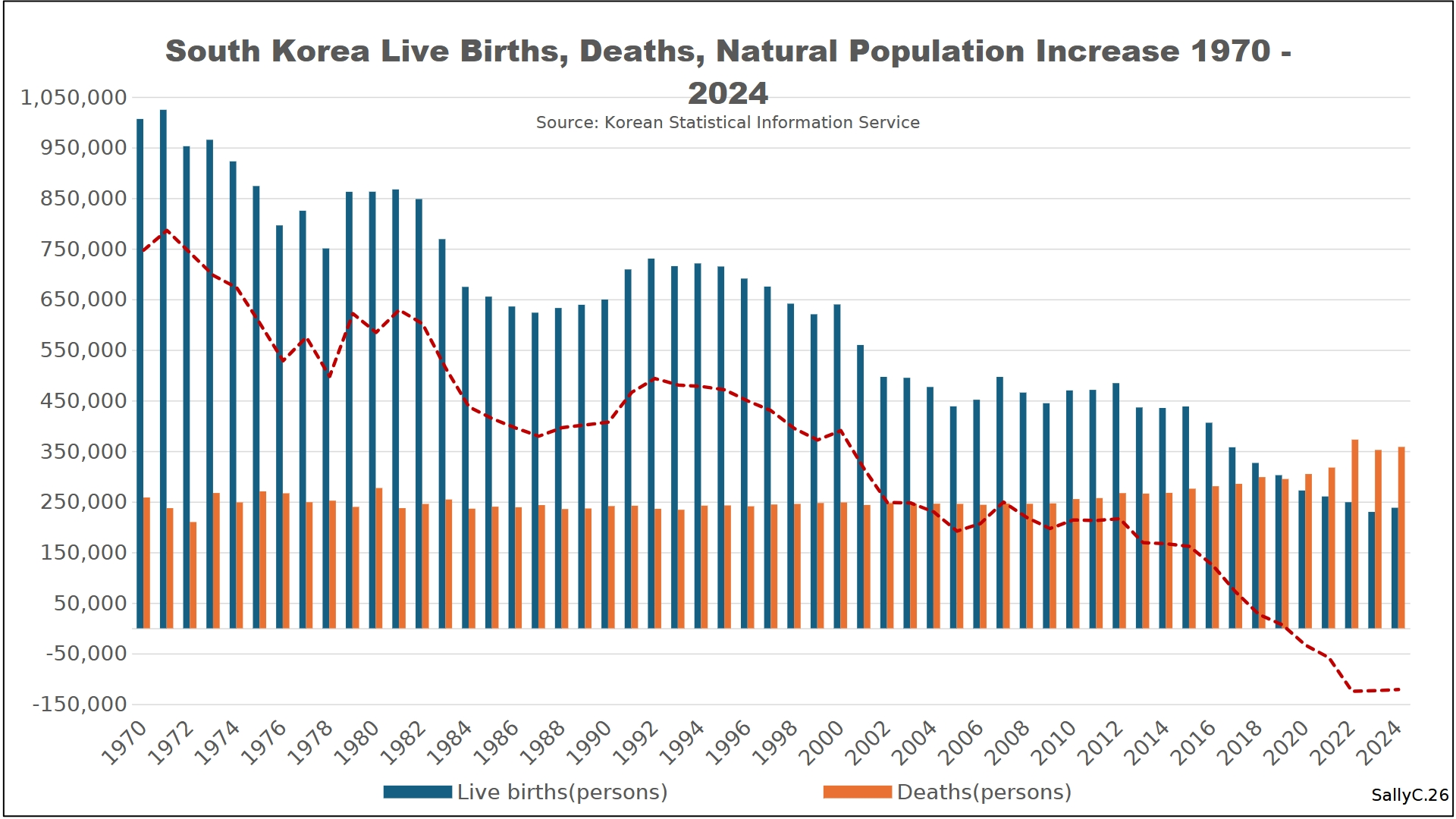
Again, the trend changed in 2021. Following the rollout of COVID “vaccines,” deaths rose above baseline expectations and remained elevated into 2022 and 2023. Rather than a short-lived increase, mortality settled at a higher level, indicating a sustained shift rather than a temporary crisis.
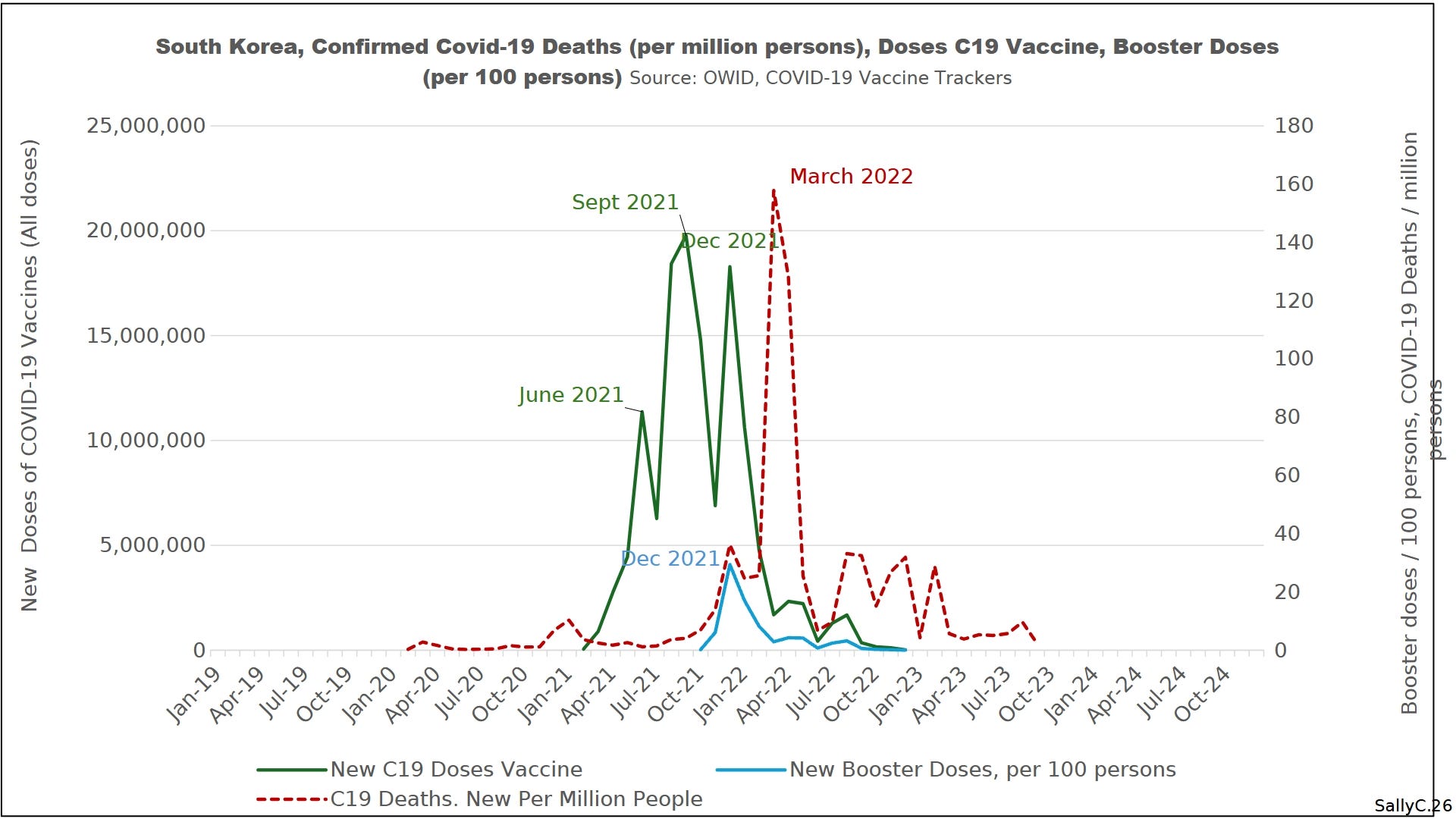
What made South Korea especially striking was what happened to births. After 2021, births fell at an unprecedented rate, dropping to historic lows well beyond previous projections. Clark highlighted that while South Korea’s fertility was already low, the post-2021 decline represented a sharp acceleration rather than a stable continuation of trend. Again, there was a slight delay in the rise in deaths, but it was still closely linked to the rollout.
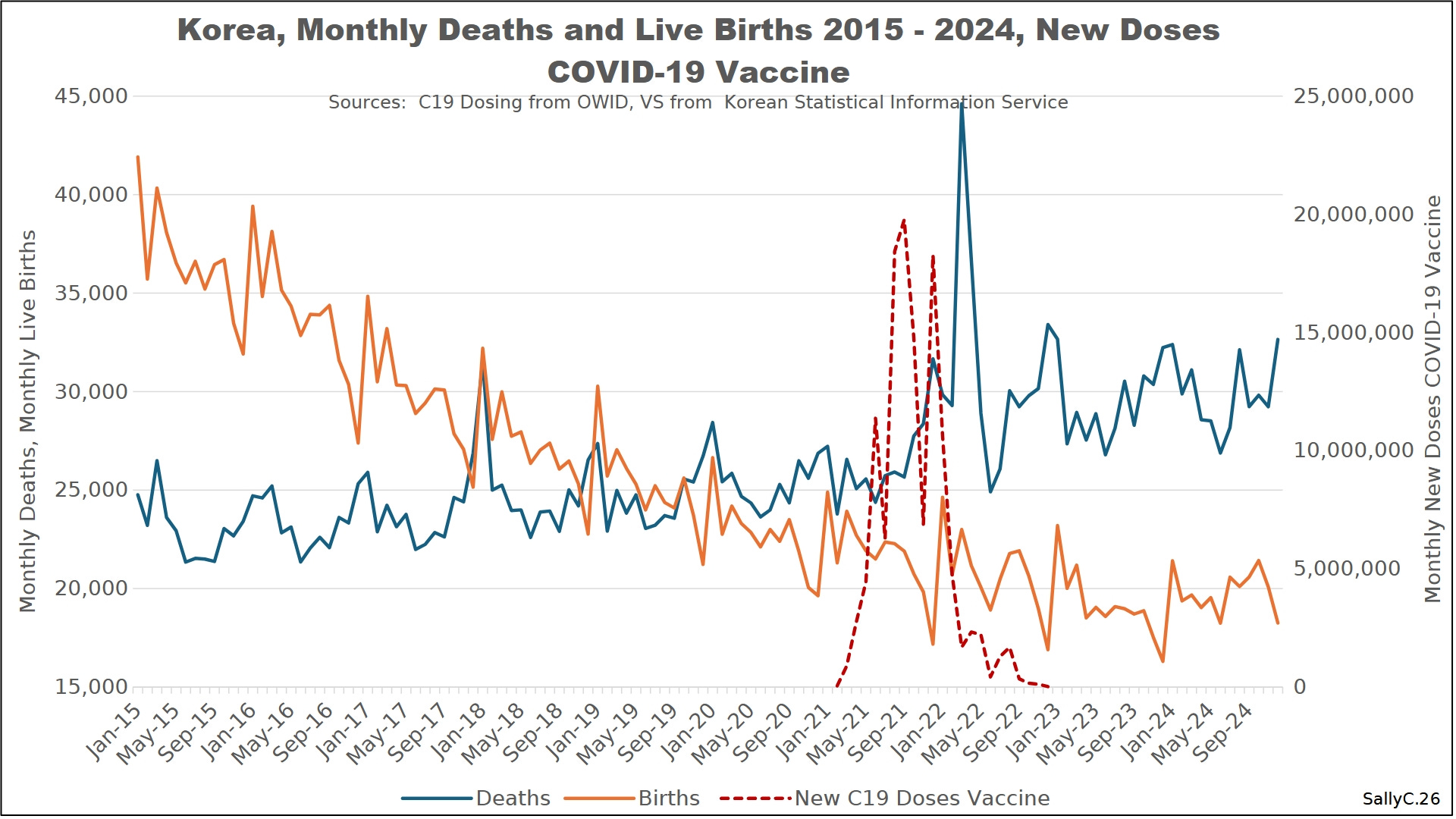
The combination of deaths and reduced births was severe, producing one of the fastest natural population declines in the world.
Taiwan: Post-2021 Mortality Rise
Before 2020, Taiwan’s demographic trends were well established. Fertility was low for many years, similar to other East Asian societies, but deaths followed steady, predictable patterns.
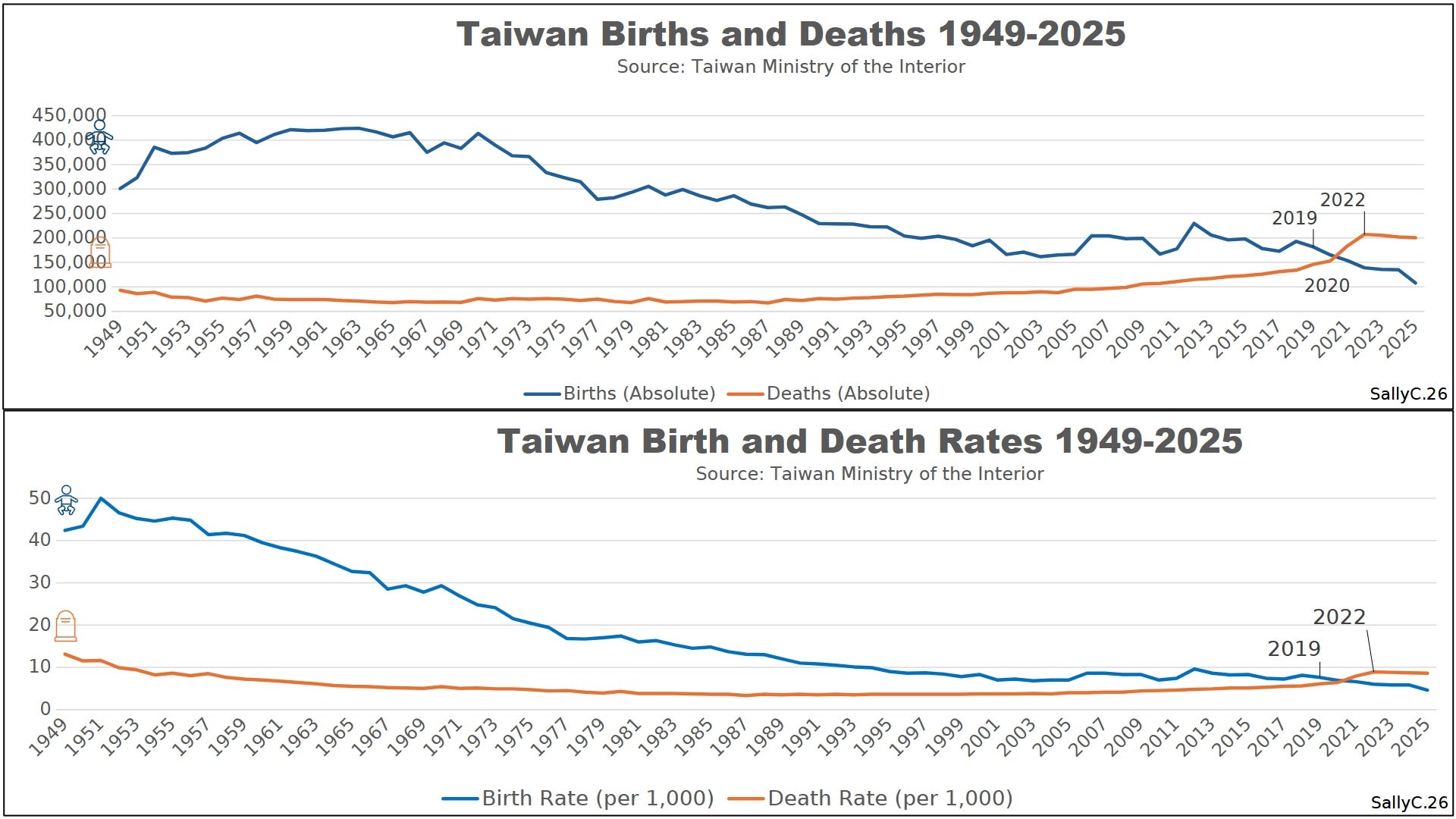
The shift appeared after 2021. From this point onward, deaths rose above baseline expectations and remained elevated rather than returning to pre-2020 norms. The increase was not confined to a single spike but persisted into subsequent years, indicating a sustained change in population health rather than a temporary issue.
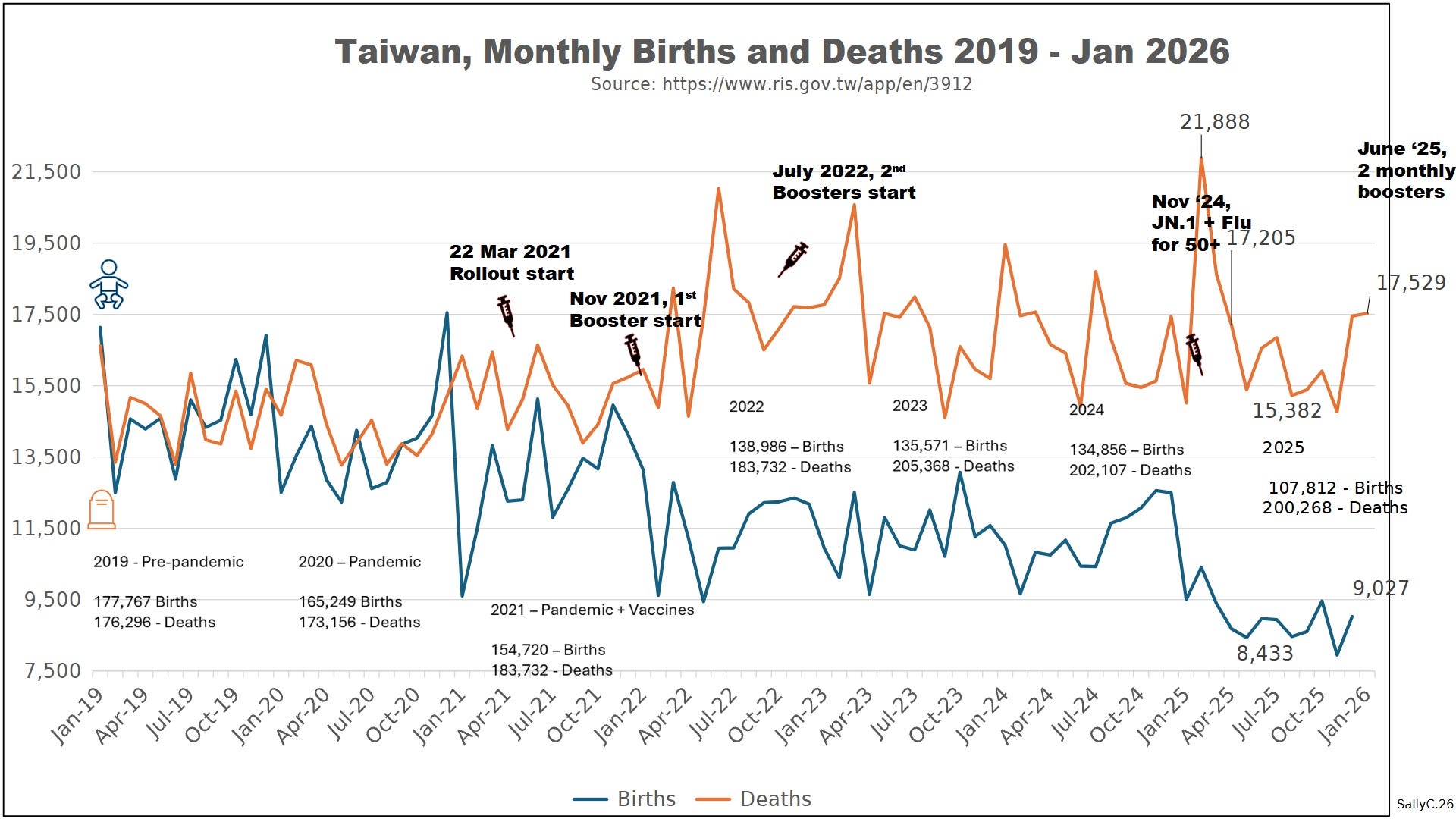
Births continued their long-term decline, but Clark noted that the post-2021 period was marked by further weakening. As rising deaths combined with already low and declining births, Taiwan’s natural population loss deepened.
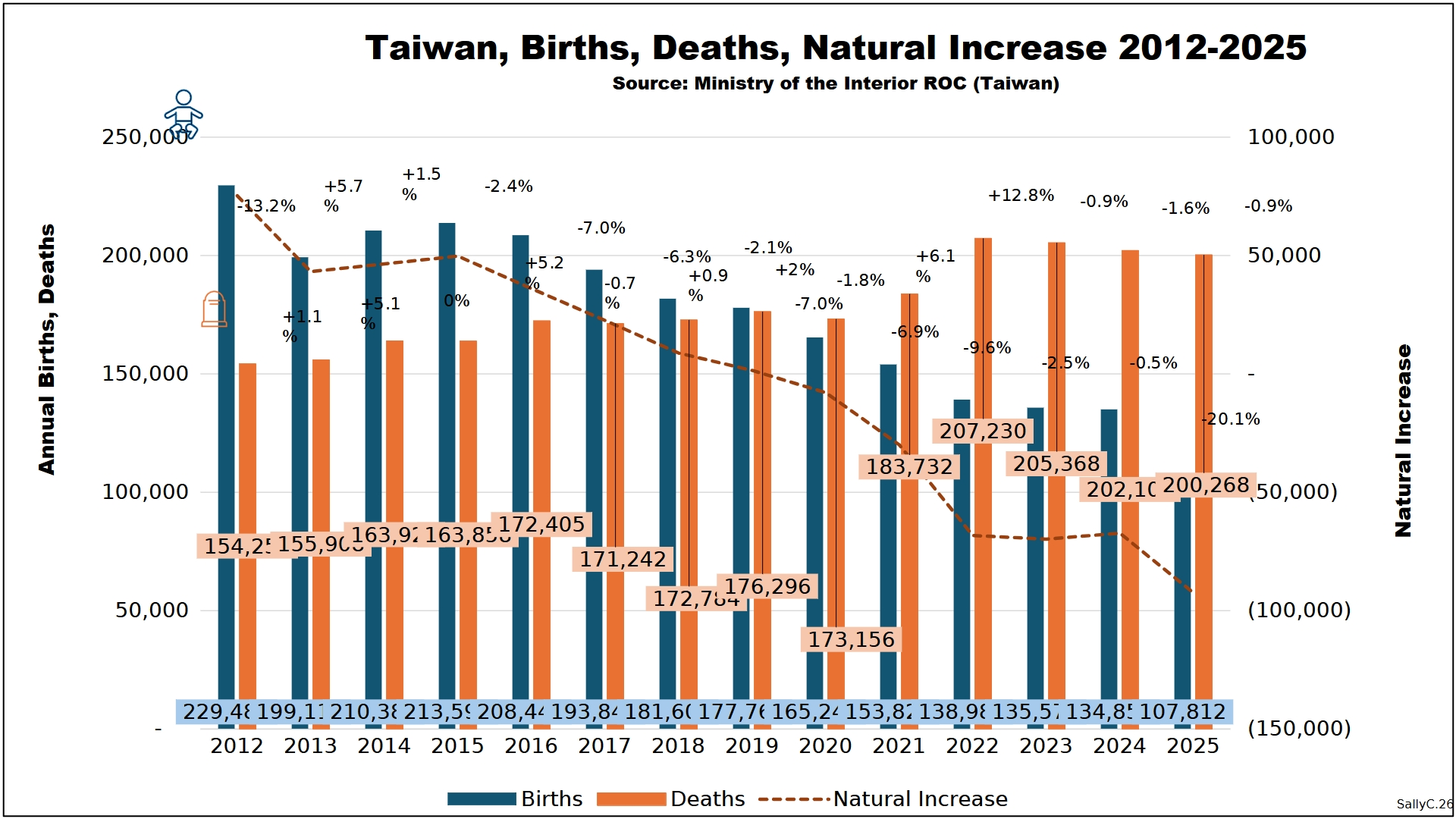
Taiwan is significant in Clark’s analysis because it provides a clear comparator to mainland China. Without a one-child policy shaping recent fertility patterns, Taiwan’s post-2021 mortality rise stands out more clearly.
A Consistent Global Pattern
Across countries, a familiar sequence repeats with striking consistency. Mortality does not peak during the initial virus year. Instead, deaths generally rise sharply beginning in 2021 and remain elevated, while births decline more steeply after a short delay. This does not resemble an infectious disease pattern, which would be expected to produce a brief mortality spike followed by normalization. It instead reflects the demographic signature of a widespread external stressor acting on entire populations.
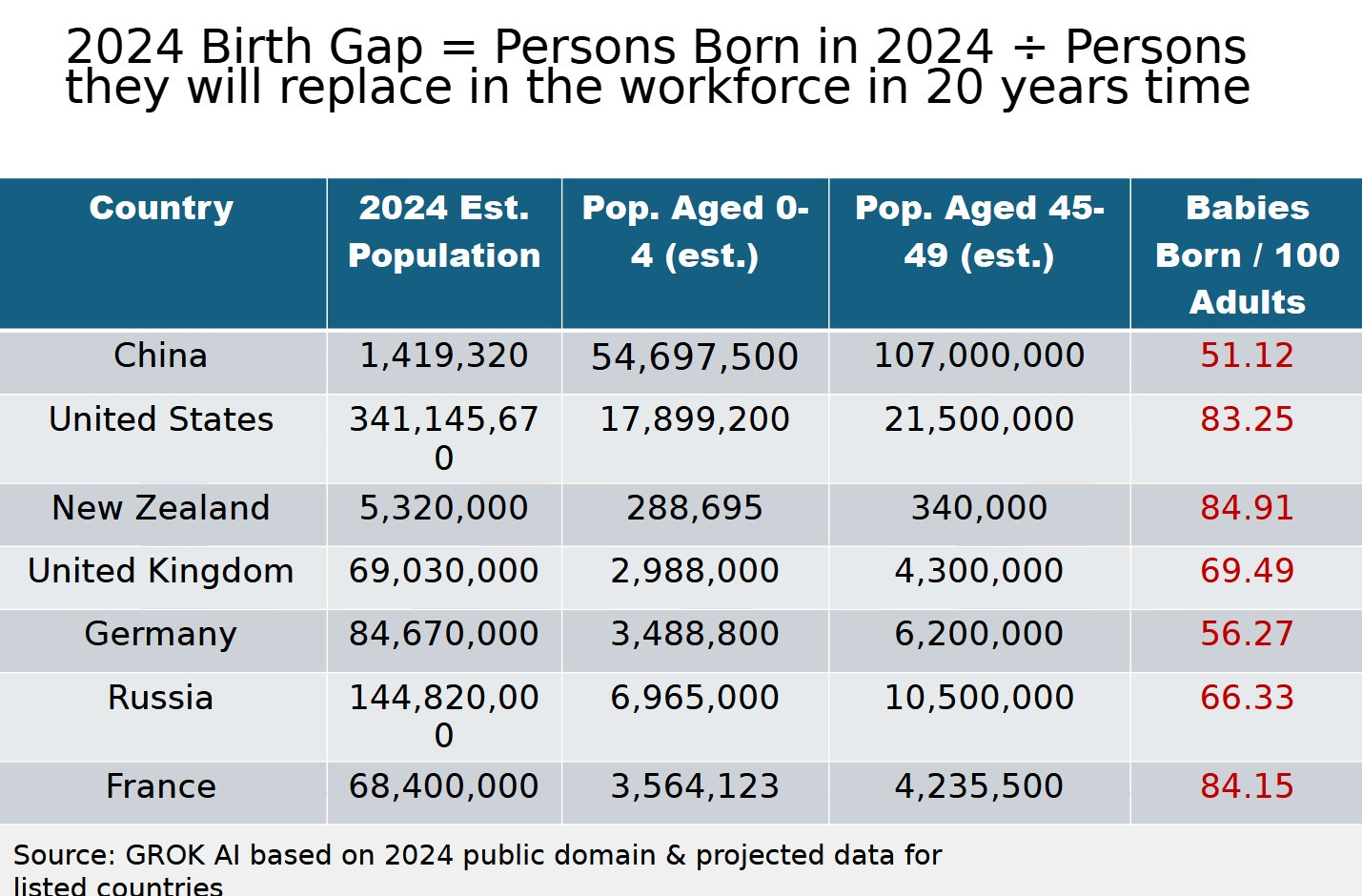
This shift is occurring atop fertility systems already below replacement. The replacement threshold is approximately 2.1 births per woman, yet many countries entered 2020 well beneath this level. Since 2021, the decline has accelerated rather than stabilized. In Hong Kong, the total fertility rate has fallen, placing it around two-thirds below replacement. At this level, each successive generation is dramatically smaller than the last.
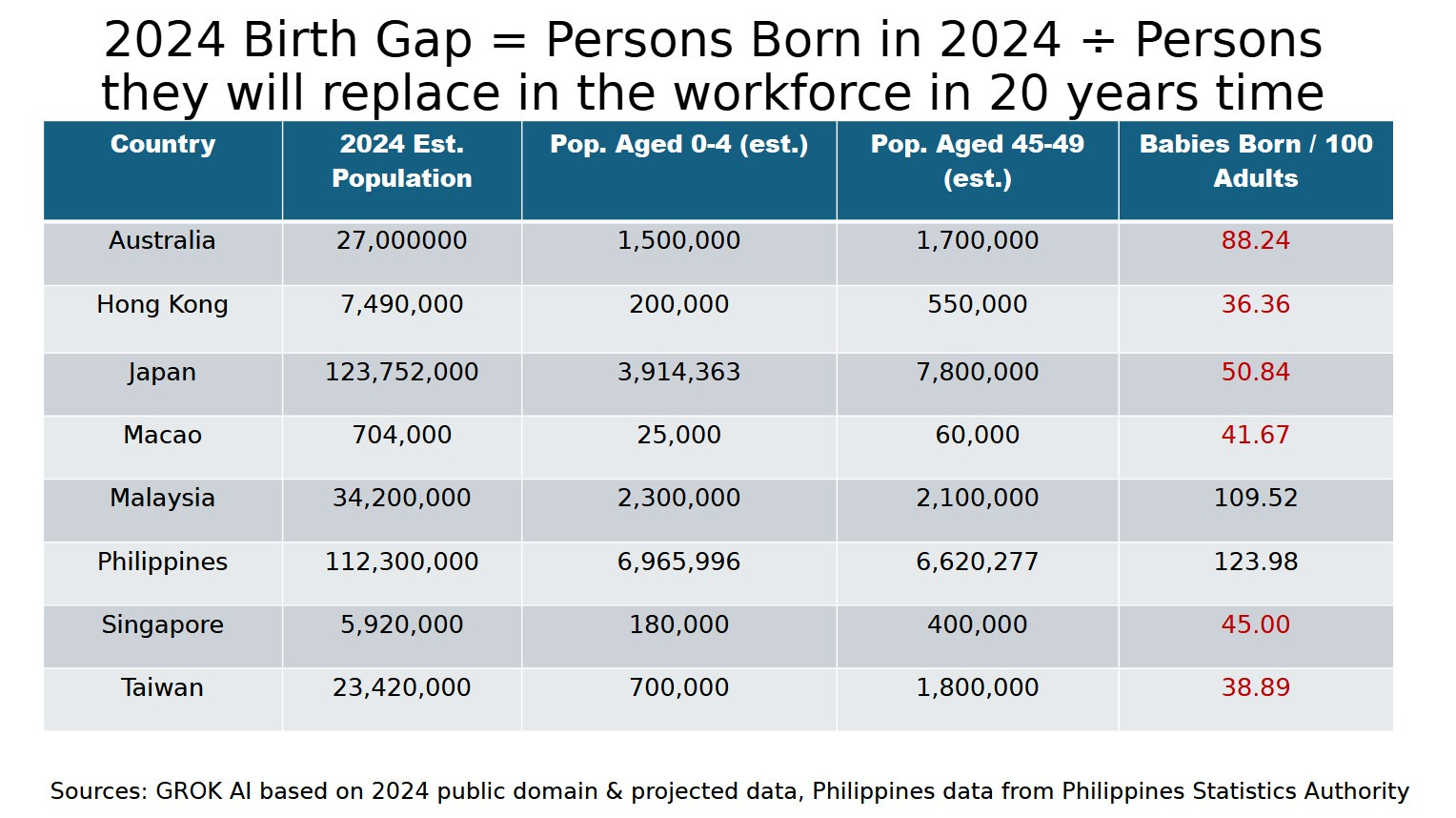
The consequences for labour force replacement are concerning. Fewer births today mean fewer workers in two decades, while elevated mortality accelerates the loss of experienced labour now.
Looking Forward with Clarity
Population decline does not resolve on its own. When ignored, its effects compound aggressively; when acknowledged, there is the possibility of damage mitigation and solutions. We must begin strengthening health, confronting recent policies honestly, and making decisions choices grounded in evidence.
The opportunity to respond has not yet passed. By facing this reality directly, we can begin the important work of developing real solutions. This is not a moment for denial or distraction, but for responsibility and decisive action.
As many of you know, the Trozzi Team is developing a comprehensive nutraceutical formulation grounded in my research. Progress has taken longer than anticipated due to limited funding, and significant work remains ahead. That said, I am deeply grateful to those who have stepped forward to support this effort by raising 30% of the startup costs. We will not stop until this product is available, affordable, produced, and distributed without compromise. To those who have supported our fundraising campaign, I extend my sincere gratitude. If you are in a position to contribute and have not yet done so, your support would make a meaningful difference in helping us bring this product to market.
Related Material
Rebel News - Senior government data scientist challenges suspension over COVID-19 vaccine data analysis (Read Here)


Data results in facts. Dr Sally has done meticulous work in gathering the data. Ed Dowd has completed similar data gathering, specifically from the insurance industry. It's necessary to digest this data to prepare for survival strategies. It's also necessary for pursuing justice for the "death cult system" that's foisted eugenics on the world. All governments are complicit along with the unelected bureaucrats that execute the system.
Does anybody think this wasn't a planned depopulation by injection result? A conspiracy theory perhaps? Gee when Bill said, "If we do a really good job with healthcare and vaccines we could reduce the population maybe 15% or so" I wonder if he realized how bad that statement incriminated him and his buddies.
Playing God is a risky business though, because despite the careful planning and execution of the plandemic and it's devastating consequences, something went terribly wrong for the perpetrators. They didn't achieve plausible deniability and couldn't stop the inevitable collapse of their money making schemes. They never planned for the backlash when the truth emerges in a scheme so heinous, so huge, so anti human...
As we watch the world devolve and decline, moving closer and closer to destruction of vital regeneration capacity we need to call out the tyrants who put us here so future generations can have a chance to survive and hopefully one day, prosper. We can't let them get away with this, our future is uncertain and maybe full of death and misery otherwise.