Undeclared Elements & Lanthanides Reported in the COVID-19 “Vaccines”
Study Reports 55 Undeclared Elements in COVID-19 Injections, Including 12 Lanthanides, Raising Safety and Technology Concerns

Governments and pharmaceutical companies described the COVID-19 injections as “safe and effective vaccines,” even though their stated ingredient lists alone raised serious safety concerns. Since the rollout, independent researchers have discovered additional contamination and undisclosed elements in the shots, making the picture even more concerning.
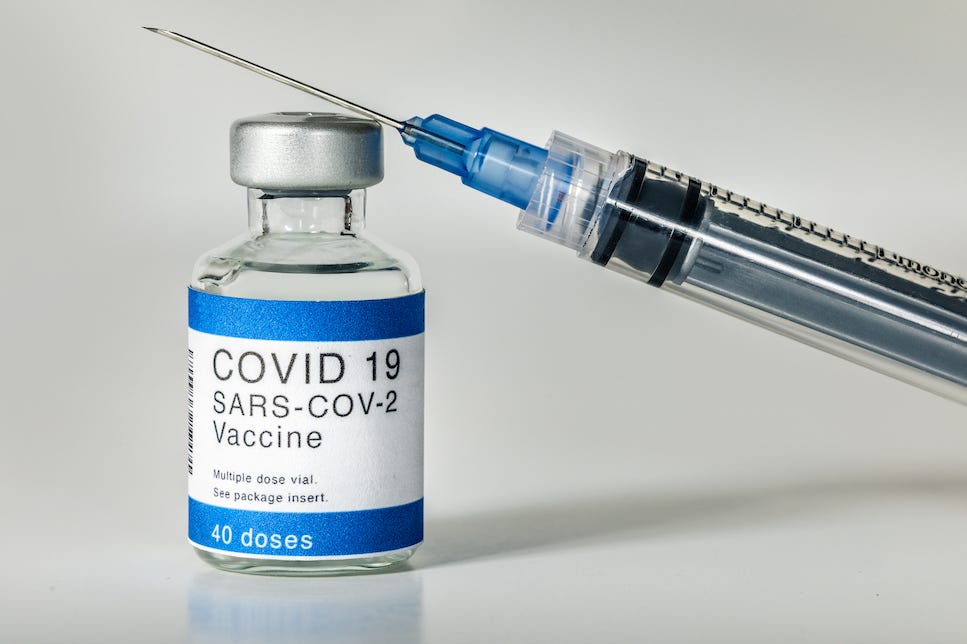
One study, published in October 2024, reported detecting 55 undeclared chemical elements, including 12 toxic rare-earth metals known as lanthanides, in samples from six major COVID-19 injection manufacturers. The findings raise fundamental questions about product purity, manufacturing standards, regulatory accountability, and informed consent.
Thank you to Katrina (@verummultum) for bringing this research to our attention and highlighting the troubling questions it raises about the contents of the COVID-19 injections.
What are lanthanides?
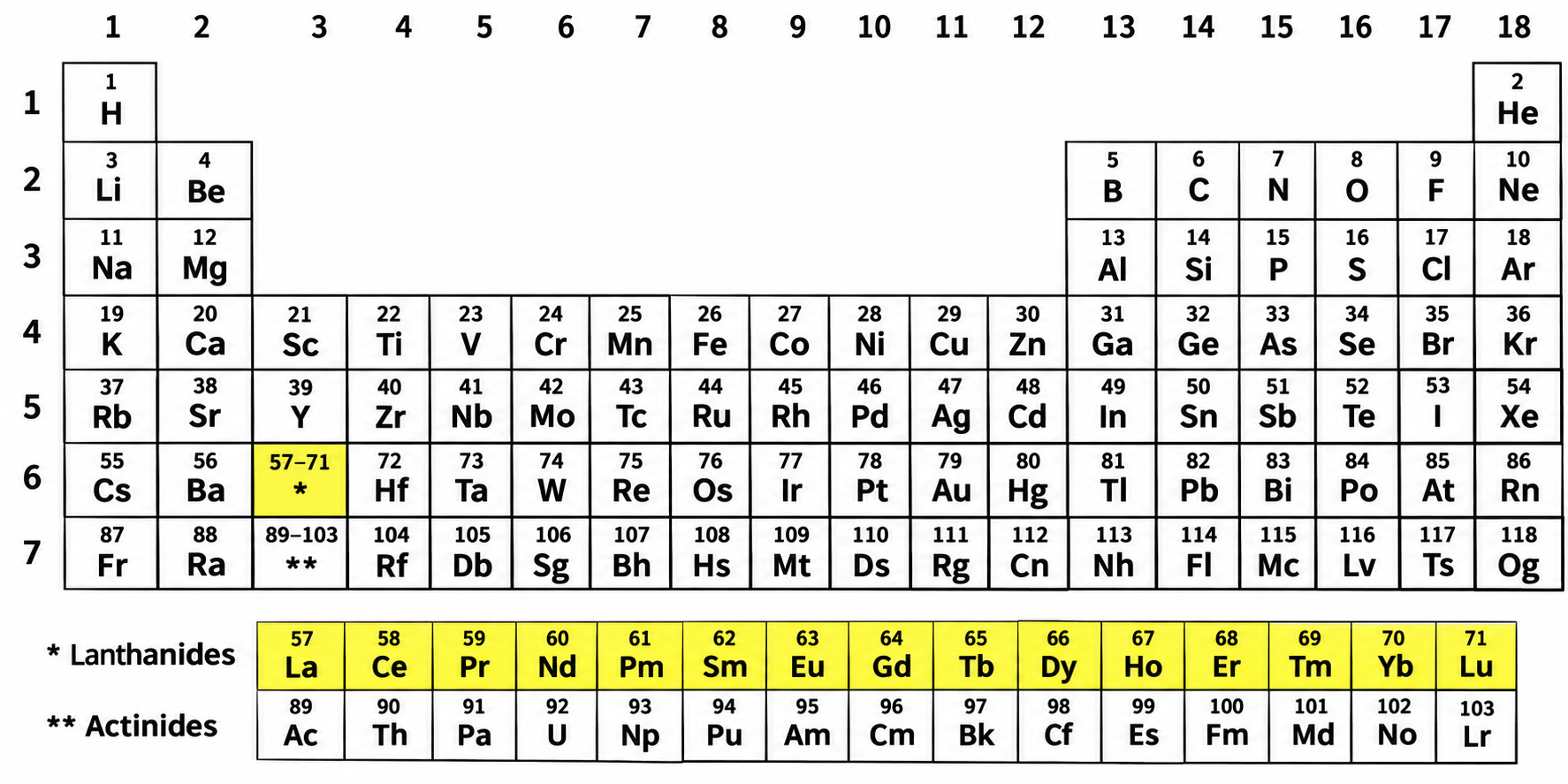
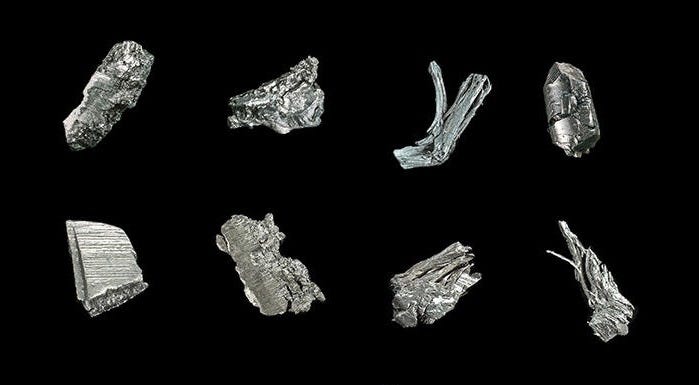
Lanthanides are the 15 metals from lanthanum, atomic number 57, to lutetium, atomic number 71 (see table and caption below). They are generally used because they excel in ways that ordinary metals don’t, such as making powerful magnets, giving screens and lights their colour, carrying signals down fibre-optic cables, and serving as contrast agents in MRI scans.
Several lanthanide ions, especially lanthanum and gadolinium, are close in size to calcium. This lets them occupy some of calcium’s binding sites, block the channels calcium uses, and interfere with the signals that depend on it: nerve impulses, muscle contraction, and communication between cells. These ions usually carry a +3 charge, while calcium carries +2. The extra charge can make them bind more tightly to negatively charged sites, disrupting the normal release and movement of calcium.
The toxicity of lanthanides depends on the element, its chemical form, the dose, and the route of exposure. Experiments have shown that lanthanum and gadolinium can block calcium, potassium, and sodium channels and alter neurotransmitter release. Certain gadolinium-based MRI contrast agents have also been associated with nephrogenic systemic fibrosis in people with severe kidney disease.
Another major concern is the accumulation and retention of lanthanide compounds and nanoparticles in the liver, spleen, kidneys, and bones, where they can sometimes persist for extended periods. Gadolinium retention has been demonstrated even in people with normal kidney function. Experimental studies have linked certain lanthanide exposures to oxidative stress, inflammation, mitochondrial dysfunction, and liver and kidney damage. Some compounds have also demonstrated reproductive and developmental toxicity in animal studies, although these findings cannot be generalized to all lanthanides or levels of human exposure.
What Was Tested
In October 2024, a paper titled At Least 55 Undeclared Chemical Elements Found in COVID-19 Vaccines from AstraZeneca, CanSino, Moderna, Pfizer, Sinopharm and Sputnik V, with Precise ICP-MS reported 55 undeclared chemical elements in samples from six manufacturers, including 12 of the 15 lanthanides. The paper was written by Lorena Diblasi, Martín Monteverde, David Nonis, and Marcela Sangorrín, and published on 11 October 2024 in the International Journal of Vaccine Theory, Practice, and Research.
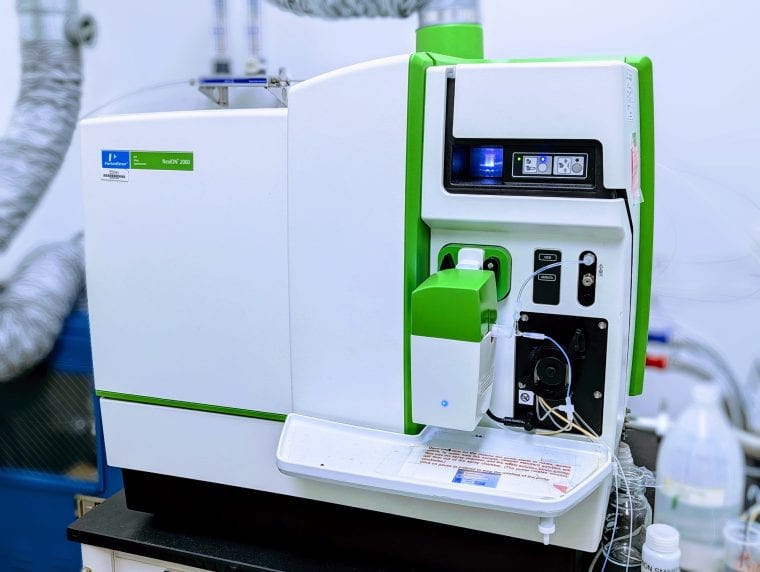
The authors examined 13 vials from different production lots of AstraZeneca/Oxford, CanSino Biologics, Moderna, Pfizer/BioNTech, Sinopharm, and Sputnik V. Four of those lots were tested a second time, bringing the total to 17 analyses. The researchers used inductively coupled plasma mass spectrometry (ICP-MS) at ICYTAC-CONICET in Córdoba. They also combined their findings with earlier work using scanning electron microscopy and energy-dispersive X-ray spectroscopy (SEM-EDX).
What Was Identified
Using ICP-MS, the researchers reported detecting 55 undeclared chemical elements, a number that rose to 62 when combined with earlier findings using another testing method (SEM-EDX).
Among these were 12 of the 15 lanthanides. The percentages below show how frequently each was detected in the 17 analyzed samples:
Cerium: 76%
Lanthanum: 35%
Gadolinium: 35%
Terbium: 29%
Erbium: 29%
Praseodymium: 18%
Neodymium: 18%
Europium: 18%
Dysprosium: 18%
Holmium: 18%
Ytterbium: 18%
Samarium: 12%
The researchers also identified all 11 elements they classified as toxic heavy metals. Their detection frequencies across the analyzed samples were as follows:
Chromium: 100%
Arsenic: 82%
Nickel: 59%
Cobalt: 47%
Copper: 47%
Tin: 41%
Thallium: 24%
Cadmium: 18%
Lead: 18%
Manganese: 18%
Mercury: 6%
The authors argue that accidental contamination is extremely unlikely, pointing to the repeated detection of the same undeclared elements across different manufacturers.
Manufacturing Consistency
Each vial was vortexed (rapidly mixed) before sampling. Despite this, the researchers found differences in elemental composition between samples taken from the same vial and between repeated analyses of the same production lot on different dates.
The authors argue that these differences indicate that the fluid was not uniform. Their findings suggest that the composition of one sample may not reliably represent the contents of an entire vial, raising concerns about manufacturing consistency.
Concerning Mechanisms
The 2024 paper builds on earlier investigations, including SEM-EDX research conducted by a German group of approximately 60 scientists. These were submitted to authorities in 2022 and described unexpected elements, as well as particulate material in COVID-19 injection samples.
The paper notes that several of the undeclared elements are also used to modify graphene-based and self-assembling materials. Lanthanide-containing up-conversion particles are also being investigated experimentally in optogenetics, a technique that uses light to control cellular activity. The powerful properties of these elements, combined with their reported presence in the injections, raise serious questions about the injections’ true mechanisms.
Conclusion
During the COVID-19 period, millions of people faced employment requirements, travel restrictions, and other policies that pressured them to accept these products. Against that background, the detection of 55 undeclared elements, including 12 lanthanides, along with inconsistencies between samples, is a major revelation requiring further investigation.
The public is owed clear answers about the composition of these injections and the origins of the undeclared elements. Without this information, informed consent and a true assessment of their risks are impossible.
Discussion about this post